
Alabama State Board debates resolution, administrative-code language aimed at banning classroom indoctrination
Get AI-powered insights, summaries, and transcripts
Sign Up Free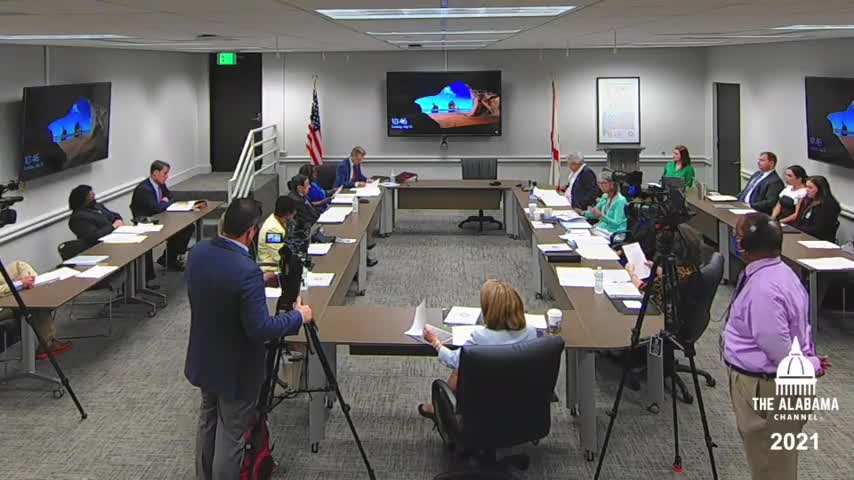
Summary
Members of the Alabama State Board of Education debated draft resolution and administrative-code language intended to bar K–12 instruction that “indoctrinates” students in social or political ideologies favoring one race, but they did not vote; staff will draft a consolidated text and accept edits ahead of a possible August vote.
Members of the Alabama State Board of Education spent much of a work-session discussion reviewing draft language for a resolution and related administrative-code language intended to prohibit K–12 instruction that would “indoctrinate students in social or political ideologies that promote one race or ___ above another.” The board did not vote; members asked staff for a consolidated draft to review after lunch and set deadlines for written edits ahead of a possible August vote.
Board members and staff repeatedly emphasized that current K–12 courses of study do not include graduate-level critical race theory and said adopting the resolution would not change state-required curricula. “We do not alter our standards,” Dr. Richardson said in response to a question about whether the resolution would change state course standards. He added that critical race theory “is a graduate level concept, but it’s not taught anywhere in any of our courses of study.”
Why it matters: board action could become a statewide policy reference for local school systems, and several members said they want stronger, enforceable language in the administrative code rather than a statement of belief. Several board members and members of the public told the board they want clear mechanisms for local transparency and consequences when parents say they were not consulted on local curriculum decisions.
Discussion and next steps
Board members suggested edits including (1) moving a clear prohibition—language reading that local districts shall not offer instruction intended to indoctrinate—into administrative code text; (2) striking a paragraph that read the board “resolves” that the United States or the state are not inherently racist; and (3) adding a clause recognizing slavery and racism as betrayals of U.S. founding principles while also saying individuals today should not be punished for ancestors’ actions. One member proposed including a statement that the State Department of Education would not apply for related federal grants.
Governor Ivy and Dr. Mackey (state superintendent) agreed to collect board comments and to produce a consolidated draft. Staff asked members to submit final suggested edits to the superintendent’s office by July 30 so a revised packet could be circulated by Aug. 5 and the board could consider a vote on Aug. 12 if it so chose. Staff said the board could also adopt administrative-code changes as an emergency rule or follow the normal rulemaking timeline.
Dissent and concerns
Several members urged caution. Miss Bell asked the board to consider whether the draft would unintentionally alter the accuracy of history or chill classroom discussion; she said she had “prayed” about the issue and did not want to create new problems for students. Another member said parents are seeking educational transparency and asked for a policy that lets parents know coursework and materials being taught locally.
Public and staff clarifications
Board staff and others said the draft resolution and an administrative-code provision are intended to make clear that teachers may continue to present factual, age-appropriate instruction and discuss contemporary events, while prohibiting instruction designed to push students to a political position. Staff said any local curricula that are currently in place would not be removed by the resolution; “there is nothing in the courses of study that would go away or change because the current courses of study don’t include any of [those graduate concepts],” Dr. Richardson said.
Ending note
No formal vote or motion was recorded during the work session. The board directed staff to produce a consolidated draft incorporating suggested edits for members’ review and to accept written comments through July 30. A follow-up draft will be returned to the full board after lunch and again on the August agenda for further consideration.