
County health officer warns of Medicaid changes, outlines local impacts and rural-health funding bids
Get AI-powered insights, summaries, and transcripts
Sign Up Free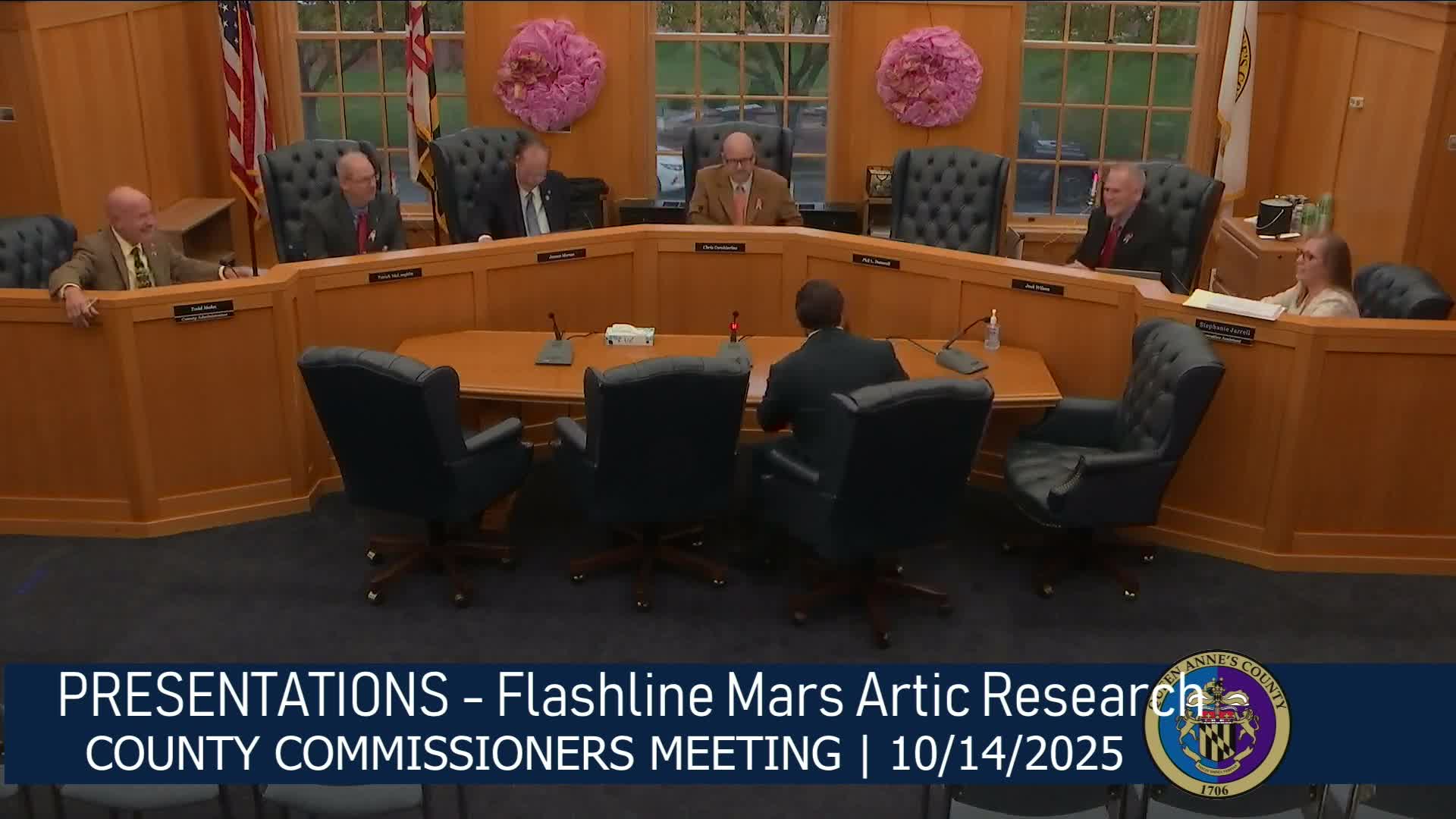
Summary
Bryce Strang, Queen Anne's County health officer, told the county commissioners on Oct. 14 that recent federal changes to Medicaid and other programs will begin taking effect in 2026 and could materially affect local health services, hospital finances and coverage for county residents.
Bryce Strang, Queen Anne's County health officer, told the county commissioners on Oct. 14 that recent federal changes to Medicaid and other programs will begin taking effect in 2026 and could materially affect local health services, hospital finances and coverage for county residents.
Strang said Maryland Medicaid and local health departments are still evaluating many details of the law commonly referred to in the meeting as “OBAA,” and urged residents enrolled in Medicaid to keep contact information current so they receive notices from Maryland Medicaid when rules change. “The number one rule right now is that people on Medicaid need to keep their contact information current in the system,” Strang said.
The health officer walked commissioners through current surveillance data for COVID-19, influenza and RSV, noting four seasonal waves for COVID-19 over the past two years, a busy flu season last winter and an ongoing expectation of another winter spike. “These are lab‑tested cases,” he said about case counts. “Hospitalizations continue to go down on average, as we progress.”
Strang framed the policy changes expected under the federal law and their local effects: immigrant eligibility changes beginning Oct. 1, 2026; work requirements for expansion adults (ages 19–64) expected in January 2027; and shorter retroactive coverage windows for some groups. He said the county is monitoring state guidance and called out statewide estimates that roughly half of Medicaid expansion adults — approximately 175,000 Marylanders — could lose coverage under the new rules. “We are anticipating half of the expansion adults, which is about 175,000 Marylanders total, to lose their coverage,” he said.
Strang said those coverage changes will likely increase uncompensated care statewide and eventually increase strain on local budgets. “Loss of billions of dollars worth of federal funding to the state for certain provider programs and, of course, the millions of dollars it’s going to take to do the 6‑month renewals versus the 12‑month renewals,” he said, summarizing budget pressures that may follow.
A major part of Strang’s update focused on the county’s pursuit of federal rural-health transformation funding created by the same federal law: a $50 billion program over five years that the state will allocate among counties and specific projects. Strang told the commissioners he submitted a proposal package that included expansion of behavioral‑health inpatient services in Chestertown and development of outpatient stabilization and partial‑hospitalization services at the Carter Center in Kent County. He asked the commission to consider providing local support for the Chestertown project when state budget deliberations occur.
On the Chestertown behavioral‑health proposal, Strang described an operational shortfall and upfront renovation costs. “We’re looking at a potential $1,400,000 shortfall annually based on current hospital rates,” he said, and added the renovation to ready a facility for the level of care could be “$4 to $7,000,000.” Commissioners and county staff discussed the possibility that redirecting some Medicaid inpatient costs away from emergency‑room boarding could offset part of the shortfall if admissions patterns changed.
Strang also discussed other program changes affecting access to care: temporary disruptions for telehealth under Medicare during a federal government shutdown, shifts in Medicare Advantage plan participation, WIC funding infusions from USDA and a Maryland premium‑assistance program for people who buy insurance through the Maryland Health Connection. He offered practical guidance to the public: consult your health care provider about vaccines; check pharmacy availability; and use Maryland’s immunization‑registry tools and new FluMist at‑home options where appropriate. “Vaccines are the best option to reduce the risk of severe illness and hospitalizations,” he said.
The presentation included data slides that Strang said showed that deaths remain concentrated among people age 60 and older and that influenza vaccination rates in Maryland typically hover around 32–33 percent. He recommended residents consider personal and household risk factors when making vaccine decisions and to contact the county health department if they lack a health‑care provider.
Commissioners asked for additional, local EMS and admissions projections to support the Chestertown funding request. Commissioner discussion referenced a planned ask to the Maryland General Assembly’s Health and Human Services budget committee in January and the possibility of submitting a joint letter from the county and neighboring jurisdictions to support state funding for the stabilization center.
Strang concluded by asking commissioners to watch for state guidance and for the county to continue coordinating with regional hospitals, behavioral‑health providers and state health officials while the federal and state policy details are finalized.