
Council delegates Lancaster Station decisions to NCTC board amid concerns over inbound Metrolink arrivals
Get AI-powered insights, summaries, and transcripts
Subscribe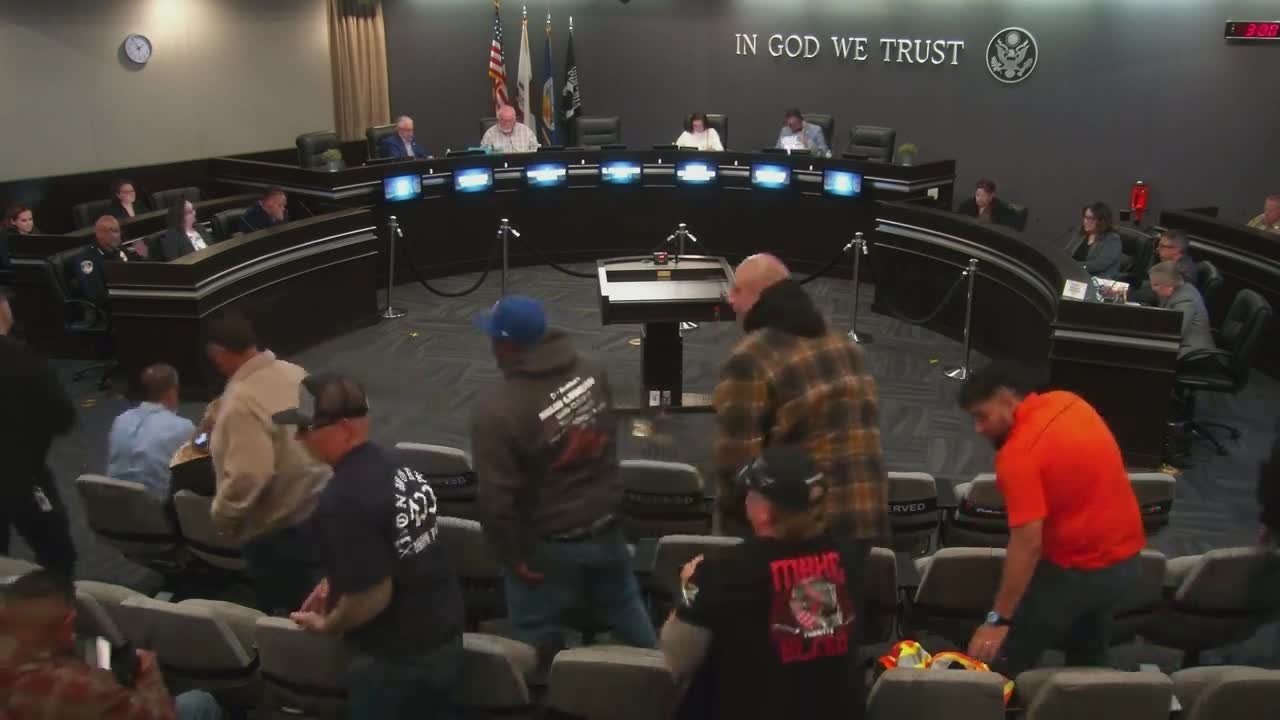
Summary
Lancaster City Council voted to delegate authority over Lancaster Station to mayor‑appointed NCTC board members so the regional board can consider measures — including restricting inbound Metrolink service and establishing a bus bridge — to address the arrival of unhoused people and transit‑related public‑safety and cleanup costs.
The Lancaster City Council voted to delegate decisions about Lancaster Station to the North County Transportation Coalition (NCTC) board, instructing the city’s NCTC representatives to pursue regional options to address incoming Metrolink arrivals.
Councilmember Ken Mann framed the issue as a longstanding regional problem: "their solution ... is to give them a ticket, put them on the Metrolink, and send them north," he said, describing his first‑hand observations on Metrolink trains from Downtown Los Angeles to Lancaster. Mann and other councilmembers said cities to the south have historically directed people to end‑of‑the‑line stations and that the city must seek regional remedies ahead of major events such as the World Cup and the Olympics.
Councilmembers discussed options that NCTC could explore, including temporarily closing the station to incoming passengers, negotiating gate restrictions with Metrolink, and establishing a bus bridge operated by Antelope Valley Transit Authority (AVTA) to Palmdale or Acton for inbound trips. A council speaker said the city had installed facial‑recognition cameras at the station and that those data indicate an annual increase of about 700 people arriving who do not appear to be Lancaster residents; the speaker also stated the city spends over $4,000,000 annually to clean up related impacts. (The transcript attributes these figures to council remarks; the city did not present a separate data packet in the hearing.)
Supporters of delegation, including Councilmember Lauren, said bringing the issue to the NCTC board would allow multi‑city collaboration: "when it becomes a we problem and not a them problem, we get better ideas," she said. Opponents at the microphone warned of consequences for transit‑dependent riders. John Lake, a resident who testified in opposition to closing inbound service, said the likely result would be longer trips, transfers and additional fare and capacity problems; "Impeding the movements of the unhoused at the expense of transit dependent people ... this is gonna destroy ridership," Lake said.
After public comment the council moved and seconded a motion to delegate Lancaster Station status to the mayor‑appointed city NCTC board members, authorizing those representatives to pursue changes with Metrolink and other agencies. The motion passed with four yes votes.
Councilmembers and several public speakers emphasized that any operational changes should avoid harming commuters. Council members said the intent is to stop what they described as a steady flow of nonresident arrivals while continuing to provide services and options for Lancaster residents who are unhoused. The NCTC board meeting to consider the matter was scheduled for the following Monday in Santa Clarita, according to council discussion.
The delegation gives Lancaster’s NCTC representatives a mandate to negotiate at the regional level; any actual changes to Metrolink schedules, ticketing or station operations would require agreement from Metrolink, NCTC, AVTA or other agencies and could have operational and fiscal impacts that the city acknowledged it may need to address.