Get Full Government Meeting Transcripts, Videos, & Alerts Forever!
Get email alerts on the Ebikes E Motorcycles topic
No spam. Unsubscribe anytime.
Bountiful council hears police report on rising e‑bike incidents and high‑powered e‑motorcycles; no ordinance adopted
Summary
Bountiful City Council received a police briefing on enforcement challenges posed by e‑bikes and high‑powered e‑motorcycles, including trail and park damage, evasive juvenile riders and possible steps such as education, targeted impoundment and a parks ordinance; no formal action or vote was taken.
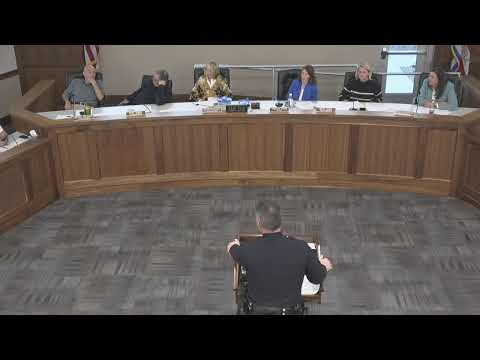
Police and council members in Bountiful discussed enforcement challenges tied to the rapid growth of electric bicycles and high‑powered electric motorcycles during a council work session on Oct. 14, 2025. Police Chief Bealer told the City Council the devices present classification and enforcement problems under current state statutes and city ordinances, and council members discussed education, coordinated state legislation and potential city ordinances to limit e‑motorcycles in parks and on certain trails.
Bealer summarized state and local law and why they complicate on‑the‑street enforcement. “The Utah law recognizes currently a three‑class system for e‑bikes,” Bealer said, but he added that “the emergence of high powered e motorcycles and out of class e‑bikes has blurred the lines between classes and created confusion among users and enforcement agencies.” He described e‑motorcycles commonly seen in Bountiful (sometimes referred to in the session as “Siron”/“Suron” style vehicles) as having 750 watts or more and, in many cases, not street legal unless converted with mirrors, lights and a license plate.
The issues, Bealer told the council, include difficulty distinguishing class 1, 2 and 3 e‑bikes by sight; modified or disabled pedal‑assist systems that allow higher speeds; damage to parks and trails; and repeated instances of riders fleeing officers. Between March 22 and Aug. 31, 2025, Bealer said the department recorded 45 incidents involving e‑bikes or e‑motorcycles: “Three of those incidents were classified as accidents,” he said, and added that two of those three could not be fully described because one involved a hit‑and‑run and another subject did not cooperate with follow up. He said 39 incidents were traffic stops or juvenile problems, one was a theft and two were requests for information about the law.
Council members asked about possible next steps. Councilmember Bradshaw highlighted weight and safety differences between pedal bicycles and electric vehicles and recalled prior legislative efforts to define e‑bikes by their factory configuration to prevent post‑sale modification from changing a vehicle’s legal classification. Bradshaw said she has suggested a registration system and license plate for e‑motorcycles to a small legislative work group led by Representative Cutler and tied to law enforcement legislative coordination.
Councilmember Price Yoush suggested requiring riders to dismount and walk bicycles through city parks as a near‑term, enforceable restriction; Councilmember Higginson emphasized education and said he supports keeping most e‑bike use encouraged as active transportation while opposing high‑powered e‑motorcycles that endanger people or damage property. Several council members expressed support for drafting an ordinance to prohibit e‑motorcycles in city parks and on trailheads under city control, while acknowledging many trails lie on federal (Forest Service) or county property and therefore require interagency coordination.
On enforcement tools, Bealer said his department had discussed more aggressive measures, including impoundment under state tax impound authority for unregistered e‑motorcycles. “A state tax impound is definitely pricey,” he warned, and said the cost would fall on the vehicle owner in the form of tow and impound fees. He also said the department has relied heavily on education and social media outreach to explain classifications and safety but that outreach alone “hasn’t made a difference” in stopping evasive behavior.
No ordinance, resolution or formal motion was introduced or voted on during the meeting. The council asked staff to continue tracking incidents, coordinate with neighboring cities and state lawmakers, and bring options back for future consideration; Councilmember Bradshaw and others volunteered to support testimony or evidence gathering if Representative Cutler’s work group seeks local input.
The discussion touched on these specific legal references and local code sections cited by police: Utah statutes that define vehicle types and e‑bike classes and Bountiful City Code sections addressing motorized low‑profile devices and prohibited acts in parks. Bealer and several council members noted federal land rules (Wasatch‑Cache National Forest) that disallow e‑bike use on certain Forest Service trails and underscored a need for consistent, regional approaches.
Council members closed by urging more outreach and coordination rather than immediate mass enforcement, with several asking staff and police to draft possible park‑specific language and to report back after the state legislative session’s proposals become clearer.
Ending
The council took no formal vote; instead members asked staff and the police chief to return with draft ordinance options, education plans and information about interagency and legislative developments. Council members said they want to preserve safe, active transportation while limiting park and trail damage and reckless use of unregistered high‑powered e‑motorcycles.