Get Full Government Meeting Transcripts, Videos, & Alerts Forever!
Get email alerts on the School Budget topic
No spam. Unsubscribe anytime.
West Bend School District projects flat mill rate as budget, state aid shifts reshape tax impact
Summary
A West Bend School District staff member outlined how a projected flat mill rate of $6.14 for 2025-26 and changes in state aid and local property growth could leave individual homeowners facing higher, lower or unchanged tax bills depending on local assessments and municipality-level value changes.
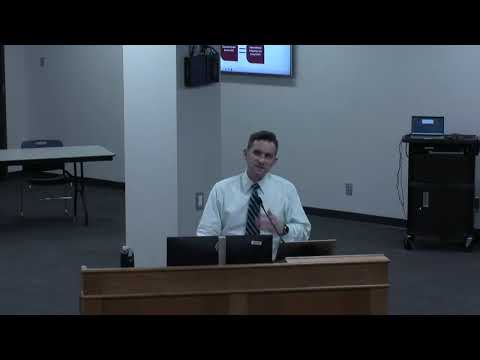
A West Bend School District staff member said the district’s proposed 2025-26 budget will be finalized at the Oct. 27 school board meeting and that the district currently projects a flat mill rate of $6.14.
The staff member told residents that a flat mill rate does not guarantee an unchanged property tax bill for individual owners, saying: "The short answer is not necessarily. Your individual property tax bill can go up or down or stay the same if the mill rate stays flat." The presentation explained that four factors determine an individual tax bill: the owner’s assessed property value, the municipality’s total property value, how that municipality’s value changes relative to others inside the district, and the amount of levy set by taxing authorities.
Why it matters: The presentation synthesized state and local funding changes that could shift more of school financing onto property taxes in the district. District staff said statewide equalization aid did not increase in the state budget this year, and the Legislature raised the revenue limit by $325 per student—an increase that, when not matched by state aid, is borne by property taxpayers.
District and state figures presented: Staff said West Bend’s total taxable property value is projected to rise from about $8,000,000,000 to about $8,700,000,000 in the coming year (a projected 9.3% increase in the district, versus an 8% state average). The presenter noted specific municipal projections inside the district, including a projected 14.4% increase for the town of Jackson and a notably smaller increase projected for the town of Polk. The staff member described the district as one of roughly two-thirds of Wisconsin districts projected to receive less state aid this year and said the West Bend projection is a decrease of about $1,800,000 in equalization aid.
The presenter described how the state funding formula directs more aid to districts with lower property value per student or with higher cost-per-student increases, and said that large operational referendums elsewhere can increase those districts’ costs and draw more state aid. The presenter used Milwaukee Public Schools as an example, saying that after its operational referendum the district is projecting a more than $77,000,000 increase in state aid.
Staff reiterated timing and next steps: final state property-value and aid figures were due Oct. 15, and the district’s final budget and levy recommendation will be delivered to the board for approval on Oct. 27; if approved, levy information will be forwarded to municipalities for inclusion on December tax bills. "We do project the mill rate to be flat. We will know for sure how that lands on Wednesday when all that data comes out," the staff member said.
The presenter encouraged residents to consult the district’s annual meeting materials and to contact district staff for individual property-level questions. The presentation noted that changes to a homeowner’s assessment — for example, from new construction or a reassessment — can change a tax bill even if the mill rate is unchanged.
The budget presentation contained no formal motions or votes; the staff member said the board will consider the final budget and levy at the Oct. 27 meeting.