
Newport News public defenders describe caseload, staffing and school outreach plans after city added pay supplements
Get AI-powered insights, summaries, and transcripts
Subscribe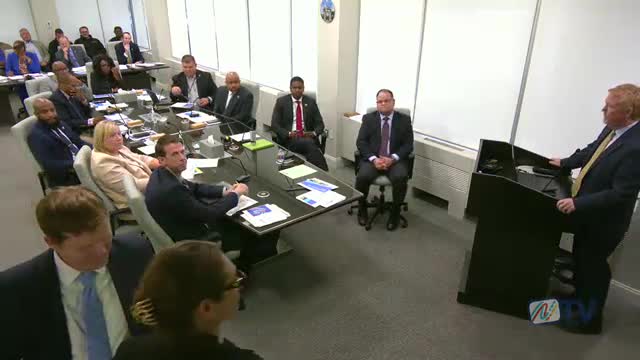
Summary
City‑funded pay supplements helped the Newport News Office of the Public Defender hire additional attorneys; the office outlined staff roles, partnerships and a proposed high‑school outreach pilot to demystify the criminal justice system.
Beau Webb, chief public defender for Newport News, told the council on Oct. 14 that city‑approved pay supplements this fiscal year have boosted staff morale and helped the office add three attorneys, leaving it ‘‘so close to being fully staffed for the first time since the middle of the pandemic.’’ Webb said the public defender’s office was established in 2005 and is an independent state agency overseen by the Virginia Indigent Defense Commission.
Jessica Crossett, chief deputy public defender, explained the office structure: 20 attorney positions (19 filled at the time of the briefing), 10 support staff including legal assistants, two investigators, a mitigation specialist who connects clients to treatment and programs, and a new peer navigator placed through a partnership with Recovery Corps (a branch of AmeriCorps) that supports clients with lived‑experience recovery navigation.
Crossett said public defenders represent indigent people charged with offenses from traffic violations to serious felonies, from the initial appointment by a judge through appeals where necessary. ‘‘If this person qualifies for court‑appointed counsel, the law says that first the judge has to appoint the office of the public defender if there is one in that jurisdiction,’’ Crossett said, explaining the appointment process and the role of the Virginia Indigent Defense Commission in oversight, credentialing and training.
Andrew (last name not provided), a member of the public defender management team, described existing partnerships such as STARS, a mock‑trial and outreach program with a high school. He proposed a pilot to expand interactive panels at other high schools to teach young people about rights during police encounters and to ‘‘demystify the scary criminal justice system.’’ Andrew said the office would partner with the Commonwealth’s attorney, police and schools and requested city help with school contacts and coordination.
Council members praised the office and offered to help expand outreach. Councilman Coleman, chair of the public safety committee, invited the office to participate in committee work and supported expanding high‑school engagement. Several council members thanked city budget staff and the manager for adding pay supplements that the presenters said improved recruitment and retention.
No formal council action was taken during the presentation; presenters asked for support and assistance with outreach contacts and noted the office’s interest in continued collaboration with city departments and the public safety committee.