Get email alerts on the Recycling Policy topic
No spam. Unsubscribe anytime.
Lane County adopts code changes to implement Oregon Recycling Modernization Act
Summary
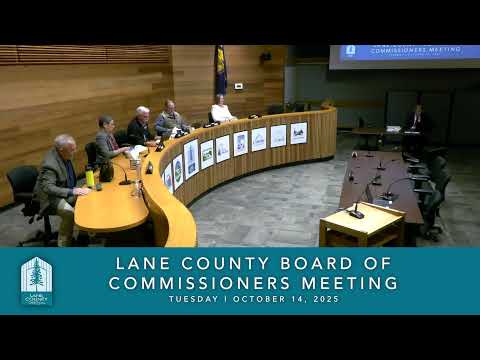
The Lane County Board of Commissioners on Oct. 14 adopted Ordinance 2505 to amend Chapter 9 of Lane Code to align local recycling and solid-waste rules with the state Recycling Modernization Act (SB 582) and related ORS/OAR requirements; vote was 5-0.
The Lane County Board of Commissioners on Oct. 14 approved Ordinance 2505, a set of amendments to Lane County Code Chapter 9 intended to bring county recycling and solid-waste regulations into compliance with the Oregon Recycling Modernization Act (Senate Bill 582) and related state law and administrative rules.
The changes, initiated by the county Waste Management Division, revise definitions, update urban growth area recycling rules and measures for contamination and multifamily service, and align local terminology (for example, replacing “hauler” with “service provider”) with Oregon Revised Statute provisions and Oregon Administrative Rules (OAR) chapter 340. The motion to approve the second reading and adopt the ordinance passed on a roll-call vote, 5-0.
County waste-reduction staff told commissioners the updates are necessary because the state law—enacted in 2021 and effective for some program changes on July 1, 2025—requires producers of packaged products to fund expanded recycling services, facility upgrades and broader access to curbside and depot collection. Angie Marzano, waste reduction program supervisor, said the changes aim to make recycling easier and more consistent across Lane County and to reflect the current system the county operates.
Marzano said Lane County’s voluntary recovery goal is 63 percent of materials at the county’s 15 transfer sites but that the current measured recovery rate is 49.7 percent and “continues to go down while generation goes up.” She described the state law as a mechanism to fund infrastructure and service upgrades primarily through producer responsibilities. Commissioner Farr asked whether staff had cost estimates for the expansion of services; Marzano said local governments filed needs assessments with the Department of Environmental Quality after the law passed. As an example, she cited Cottage Grove, where a franchise provider has purchased an automated truck and containers—an investment staff estimated at about $600,000—to start automated curbside commingled recycling beginning in 2026.
Before the vote, Vice Chair Seneca disclosed a potential conflict related to a family connection with St. Vincent de Paul; she said she did not believe it created a direct conflict but declared it “out of an abundance of caution.” No challenges to participation were raised. Vice Chair Seneca moved to approve the ordinance and Commissioner Buck seconded; the clerk called the roll and the motion passed 5-0.
The ordinance updates Lane Code language and program requirements for curbside, commingled and depot collection, sets standards for measuring contamination, and clarifies minimum space requirements for multifamily recycling. Staff said the changes do not create new service mandates beyond those required by state law but create a local code pathway to implement the state-mandated system changes.
The board took no further public testimony on the ordinance; staff requested board approval to adopt the ordinance on second reading and proceed.
The ordinance as adopted directs county staff to continue implementing the code amendments and to coordinate with state agencies and local service providers on phased infrastructure changes and reporting required under ORS and OAR implementing the Recycling Modernization Act.
Supporters and opponents did not appear at the meeting; staff asked the board to adopt the ordinance so the county’s code aligns with the statutory deadline and program requirements.
AI generated
The text on this page is AI generated. Summaries, highlights, analysis, and video transcripts are all produced from the original source material.
AI can make mistakes, so if you spot one, and we will fix it for everyone.
Note: the source content is unaltered by us. Any content source we link to, be it a video, an audio recording, or a document, is presented exactly as its publisher released it. That publisher is usually a government body, sometimes an individual official or another organisation.