Get Full Government Meeting Transcripts, Videos, & Alerts Forever!
Get email alerts on the Department Of Revenue Topics topic
No spam. Unsubscribe anytime.
Wyoming Revenue Department presents five interim study requests including exemptions, Amendment A and digital notices
Summary
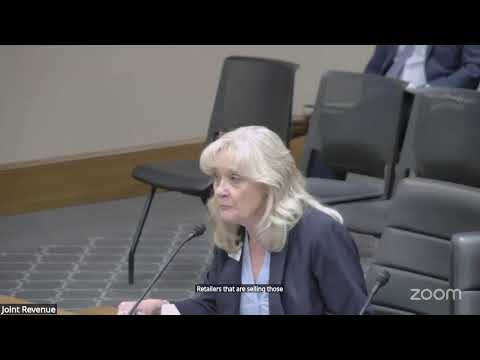
Department of Revenue Director Brenda Henson asked the Joint Revenue Committee to consider five interim study topics: governmental property tax exemptions, implementation of Amendment A (residential subclass), economic-incentive reporting, combining sales/use tax chapters, and permitting electronic vendor notices.
Brenda Henson, director of the Wyoming Department of Revenue, asked the Joint Revenue Committee on the record to consider five interim study topics the department submitted for the 2025 interim.
Henson told the committee the first topic seeks a clearer statutory and constitutional definition of governmental property tax exemptions, citing past interim work on “government owned property related to state grazing leases” and House Bill 81 as background. “We have not clearly identified what is a governmental purpose pursuant to the constitution,” she said.
Her second request would examine implementation of Amendment A, the constitutional change that created a classification for residential real property and a potential owner‑occupied subclass. “We know that the voters of Wyoming approved Amendment A,” Henson said, and the department would like the committee to examine whether residential real property should include income‑producing properties and how to collect owner‑occupancy data from property owners.
Henson also proposed a study of economic incentive tax‑exemption reporting requirements to better determine whether exemptions achieve their intended economic development goals. “Anytime this body provides an exemption for economic incentive, the question is always did that exemption achieve the goal or the purpose that this body had in mind,” she said.
The department’s fourth request would examine whether to merge chapter 15 (sales tax) and chapter 16 (use tax) of Title 39 to reduce duplication and improve statutory clarity. Finally, Henson asked the committee to consider allowing the Department of Revenue to send certain reminder notices to vendors electronically rather than requiring some statutes’ hard‑copy mailings.
Henson closed by saying, “those are the 5 topics, and I'd stand for any questions.” Committee members asked clarifying questions about implementation timelines for Amendment A and whether a merged sales/use chapter would be primarily a housekeeping change. Henson said the department could administer certain drafted amendments for 2025 but that some pending floor amendments could affect implementation details.
The department provided the committee with the written packet referenced during the presentation and indicated staff and legislative service office work would be needed for statutory changes or drafting study materials.