Get Full Government Meeting Transcripts, Videos, & Alerts Forever!
Get email alerts on the Aircraft Noise topic
No spam. Unsubscribe anytime.
Resident urges Lafayette to coordinate regional response to flight‑training noise, cites wildlife impacts
Summary
A Lafayette resident told councilors that flight-training traffic from Rocky Mountain Airport and nearby fields is producing frequent low-altitude flights over the city, causing noise, disrupting residents and schools, and posing risks to wildlife such as bald eagles.
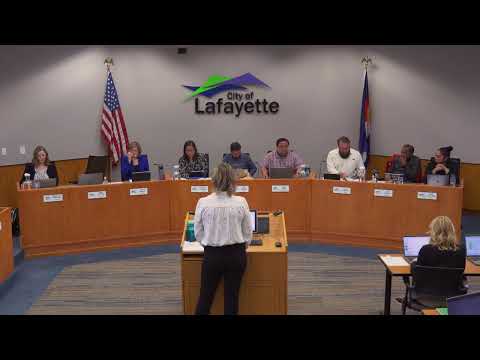
Thomas Glenn, a Lafayette resident, asked the City Council on Oct. 14 to lead or join a regional effort to address aircraft noise and low-altitude flight paths originating at Rocky Mountain Airport and training operations in nearby municipalities.
Glenn described observing “three bald eagles soaring over kind of the heart of the city” and said flight-training aircraft are flying near the birds. He said an FAA memo dated June 10 rerouted traffic so departures from Rocky Mountain Airport fly over Superior and Lafayette, with arrivals bringing traffic down through Lafayette. Glenn estimated the airport recorded about 300,000 takeoffs and landings in 2024 and said “a couple hundred aircraft per day are flying right over the heart of the city,” sometimes at “a thousand feet or less.” He raised concerns about noise pollution, disruption to schools, sleep impacts for residents, and environmental risks including leaded fuel used by piston aircraft.
Glenn asked the council to develop “concrete plans going forward” and to coordinate with neighboring jurisdictions such as Superior, Louisville, Erie and Broomfield. He said the issue also affects county open-space land purchased for quiet enjoyment and could harm wildlife.
Why it matters: Residents raised both quality-of-life and wildlife-safety concerns tied to federal airspace management and local flight‑training operations. Local governments have limited authority over flight paths managed by the FAA, but municipalities can coordinate with airports, regional partners and federal representatives to seek mitigations, noise abatement procedures, or voluntary changes by flight schools.
The council did not take formal action on the complaint during the Oct. 14 meeting; Glenn said he would follow up with the photo he shared with staff.