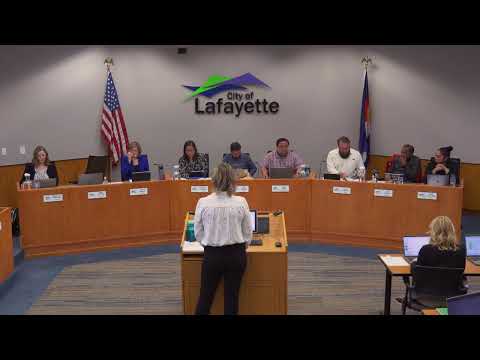
Lafayette homeowners say sewer backups flooded basements; urge city to investigate and compensate
Loading...
Summary
Six households on Glenwood and Sandler drives reported raw-sewage backups March 8 that residents say caused extensive property damage. Speakers at the Oct. 14 Lafayette City Council meeting urged the city to publish maintenance records, accept responsibility, and work toward compensation and an operations plan.
Six Lafayette homeowners told the City Council on Oct. 14 that raw sewage flooded finished basements on March 8 after a city manhole became blocked, and they urged immediate city action to repair damage and prevent future incidents.
Sharon Stetson, a lifelong Lafayette resident who said she served two terms on the council in the 1980s, described discovering sewer water in her basement days after the event and asked the council “to mitigate this problem, to accept responsibility for the actions of its employees, and to reimburse the families for the damage incurred.”
Ron Knox, who said he lives at 634 Glenwood Drive and has lived in Lafayette more than 25 years, told the council crews told him Manhole 429 was obstructed by tree roots and debris. He said the obstruction “prevent[ed] sewage from flowing through the line” and caused Category 3 backups that destroyed finished basements. Knox said he and other owners requested maintenance records and were told “no responsive records exist,” and he asked the council to place the matter on the next regular agenda, direct staff to explain the record gaps, and work with affected owners toward fair, timely resolution.
Karen Raven, whose property at 202 Sandler Drive was affected, told council staff had said a root mass and debris obstructed flow at the manhole. Raven said the city has not provided documented evidence of cleaning or inspection in the last eight years for that segment and that gaps in records make it impossible to confirm whether routine maintenance occurred.
Shelley Knox said the city and its insurer had “denied responsibility,” and she argued the Colorado Governmental Immunity Act does not bar claims when a municipality negligently operates or maintains a sanitation system. “Immunity is not a shield for negligence,” she told the council, and said the homeowners intend to pursue legal remedies if the city continues to deny the claim.
Speakers pressed for several specific actions: placement of the incident on the next regular agenda for formal direction, a written explanation from staff about missing inspections and maintenance records, a negotiated, timely settlement or mitigation for affected homeowners, and a citywide, written operations-and-maintenance plan that includes regular inspection and cleaning schedules, root-control measures, contingency staffing or contractor capacity, and annual public reporting of work performed.
City staff did not provide a detailed response during public comment. Residents said parts of several homes remain gutted and uninhabitable; the exact dollar damages claimed by homeowners were described at the meeting (for example, one speaker said he “lost a 15,000 square foot, 1,500 square foot basement that was fully furnished”) but full loss totals were not compiled on the record.
Why it matters: Residents say this reflects a systemic problem of missed maintenance and record-keeping that could expose the city to liability and recurring harm to other neighborhoods. Several speakers cited staffing vacancies and a partially disabled vacuum-jet truck as operational constraints that they say contributed to missed cleaning cycles.
The council did not take action on the claims during the Oct. 14 meeting; residents asked council to direct staff to investigate and to negotiate relief before litigation. The city’s formal legal posture on individual claims remained denial of liability on the public record at the hearing.