Get Full Government Meeting Transcripts, Videos, & Alerts Forever!
Get email alerts on the Lake Encroachments Leasing topic
No spam. Unsubscribe anytime.
Fort Scott commissioners move to address encroachments, ask staff for lease template and owner notifications
Summary
City commissioners discussed encroachments on Lake Fort Scott property — including sheds, boats, docks and private ramps — and asked staff and legal counsel to draft a Kansas-friendly lease template, research owner identification and prepare notice procedures such as a 30-day removal window and dock registration.
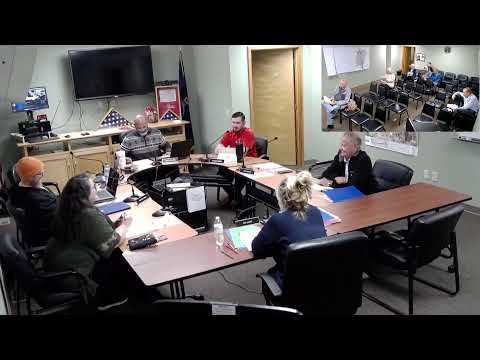
Fort Scott City commissioners discussed a range of encroachments on city-owned land at Lake Fort Scott on Oct. 15 and directed staff and legal counsel to prepare a boilerplate lease agreement and notification procedures for owners of structures and stored vehicles.
Commissioners focused on freestanding structures, carports, sheds, boat trailers, private boat ramps and docks that extend beyond the city's established easements. They identified the city's 30-foot lakefront easement and a 50-foot threshold for docks as recurring regulatory reference points during the discussion.
The meeting matter arose after commissioners and staff toured the lake and documented multiple types of encroachments. Commissioners said they were concerned about safety, potential environmental hazards (including storage of potentially caustic materials), blocked access in some locations and long-term control of city property around the water supply.
Rather than immediately seeking to remove every item, commissioners discussed a range of responses: posting notice to unknown owners, running license-plate checks to identify owners of trailers and vehicles, publishing notices in the newspaper, placing visual tags on items, and giving owners a fixed period to remove property before the city takes further action. Commissioners repeatedly cited a 30-day removal window as a working option for notifying owners before removal or enforcement steps.
The commission also discussed leasing undeveloped city lots around the lake as an alternative to selling land. Options discussed included establishing fair-market lease rates, using sealed bids with reserve amounts, first-come/first-served approaches, and long-term leases (for example, 99-year leases were mentioned as a common municipal approach). Commissioners said leases would let the city retain ownership, set restrictions (for example, prohibiting hazardous materials and nonremovable permanent structures), and provide contractual remedies if lease terms were violated.
Other issues flagged for follow-up included: developing a dock-registration system to link specific docks to responsible parties; confirming whether shoreline hardening (boulders or riprap) had prior authorization; and clarifying whether existing private ramps and docks that extend beyond the easement are permitted or constitute encroachments.
Commissioners asked legal staff to identify Kansas statutes and local code options that govern notices, penalties and enforcement timelines. The commission noted that Kansas law allows local governments to establish procedures and that some jurisdictions assess fines for persistent code violations; commissioners asked for guidance on what penalties or time-based fines might be lawful and practical.
The commission asked staff to return with: a Kansas-friendly boilerplate land-lease agreement for parcels at Lake Fort Scott, a recommended notice and enforcement process (including suggested timeframes such as 30 days), options for lot division and leasing process (sealed bids vs. other methods), and recommendations for dock registration and shoreline fee administration. Commissioners said some cases will be handled individually because they are unique encroachments, while others could use a consistent lease-and-notice approach.
The discussion closed with an agreement to reconvene on the issue after legal and staff research and with documentation and templates that the commission can consider at a subsequent meeting.
Ending: Staff was asked to prepare documents and legal analysis and to report back to the commission at a future meeting so the city can move from largely ad hoc handling of lake encroachments to a defined leasing and enforcement process.