Get Full Government Meeting Transcripts, Videos, & Alerts Forever!
Get email alerts on the Math Instruction topic
No spam. Unsubscribe anytime.
Algebra Project presents NSF-backed "accessible calculus" plan and college math tutors to Englewood board
Summary
Representatives from the Algebra Project described an NSF-funded accessible-calculus curriculum for high-school math and introduced college math literacy workers who are supporting classrooms; the district was asked to approve summer professional development participation paid for by the grant.
Representatives from the Algebra Project described a classroom model and professional-development plan at the Englewood Board of Education meeting on May 7, saying the approach integrates elementary calculus concepts into Algebra 1, geometry and Algebra 2 to prepare students for college-level quantitative work.
Bill Crombie, presenting the project rationale, said the Algebra Project has developed "a conceptual architecture for the elementary calculus, which is accessible to students at the level of the first 3 years of high school mathematics." Crombie said the curriculum reframes standard calculus concepts as applications of algebraic and geometric ideas and argued that approach can make calculus readiness achievable by twelfth grade.
Crombie said the district has participated in a beta test this year with two high-school Algebra 2 teachers and asked the board to approve district participation in a two-week summer workshop in Miami for a team that would include those two teachers plus additional coaches and teachers. Crombie said the workshop cost would be covered by the accessible-calculus grant from the National Science Foundation.
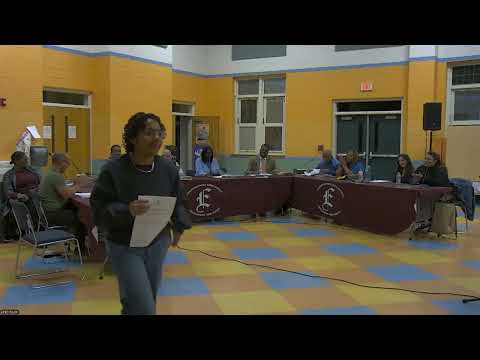
Quincy Dawson of Kennesaw State University, who described his role as director of youth math literacy initiatives with the Algebra Project, said the program also places college students in classrooms as "college math literacy workers". Dawson introduced two of the students, Elijah and Mikayla, and said the students are engineering majors who "work alongside teachers and alongside students to really emphasize mathematical literacy" and typically average about four hours a week in classrooms. "College math literacy workers'... ask probing questions to get students to really think," Dawson said.
The presenters described classroom supports including regular professional-development sessions at which high-school teachers will co-facilitate lessons from the accessible-calculus modules, the use of Desmos (an online graphing tool) across the first three years of high-school math, and lessons that align to increases in statistics and probability on state tests. Crombie and Dawson said they are working to create materials other schools could adopt.
The meeting record shows the Algebra Project sought board approval for summer participation by the district team, and presenters emphasized that the grant covers the workshop cost. The transcript does not show a formal board vote on that specific approval request during the May 7 session.
Why this matters: The Algebra Project's model aims to increase college calculus readiness by integrating calculus-related concepts earlier in the high-school sequence and adding classroom capacity through college tutors. If adopted, district teachers would receive targeted professional development and classroom supports funded by an external grant.
Next steps: Presenters said they would supply additional details about workshop scheduling and lesson sequences; board members thanked the group and asked questions about classroom implementation and coverage.