Get Full Government Meeting Transcripts, Videos, & Alerts Forever!
Get email alerts on the State Legislation topic
No spam. Unsubscribe anytime.
State legislators brief Cupertino council on energy, wildfire, housing and health issues
Summary
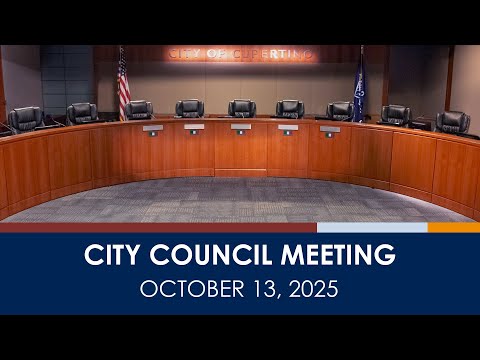
Senator Josh Becker and Assemblymember Patrick Aarons briefed the Cupertino City Council at a special meeting on Oct. 13 about California legislation that could affect local residents, particularly on energy, wildfire response, housing and health care.
Senator Josh Becker and Assemblymember Patrick Aarons briefed the Cupertino City Council at a special meeting on Oct. 13 about California legislation that could affect local residents, particularly on energy, wildfire response, housing and health care.
Becker, who identified himself as chair of the Senate Energy Committee and as chair of the Bay Area Caucus, told the council “it was difficult year in the legislature,” saying state budget outlooks shifted after federal actions and that health‑care funding uncertainty may prompt additional legislative or budget action. He described work on energy and wildfire laws, cap‑and‑trade revenue distribution and a package of bills aimed at making utility wildfire mitigation costs less rate‑based.
Becker said the legislature examined the state’s cap‑and‑trade system and its revenues, which he described as “about $4 to $5,000,000,000 a year” under normal conditions, and discussed changes to return more money to residents through a climate credit timed to have more immediate effect when people need it. He said a bill he authored described in the meeting as “SB 254” addressed wildfire financing and utility bills; he said the session set up a "$20,000,000,000 wildfire fund" for victims and that utilities would contribute "$9,000,000,000" toward that fund under the bill’s structure.
Becker described other energy items he labeled major achievements for the year, including streamlining for battery storage and other clean‑energy infrastructure and work on a so‑called "Western" grid alignment intended to let states share clean energy across a broader region. He also said one package he worked on would finance some transmission infrastructure publicly and estimated sizable long‑term savings when projects are financed differently.
Becker and councilors discussed bills that were vetoed and bills expected to return. When Councilmember Mohan raised the governor’s veto of "SB 326" (as cited in the meeting), Becker said cost concerns in a tight budget year drove the veto and that a related report required next year should inform future legislation. He also said another energy bill discussed during the session could return in a revised form; Becker characterized the broader housing and grid conversation as continuing into the next legislative year.
Assemblymember Patrick Aarons said he intends to provide regular updates to Cupertino and summarized bills and priorities in his first year in office, including authoring or co‑authoring bills related to student financial aid, transitional housing placements, protections for mobile home residents, and bills removing punitive penalties for truancy. He told the council his office helped constituents on issues including DMV and EDD, and that his district office staff were available for local casework.
Aarons said affordability, housing near transit, protections for mobile home parks, and workforce development are on his priority list. In response to council questions he described a proposal he said would give "pro‑housing" cities more limited discretion on some design elements as a potential compromise, and he said discussions with stakeholders would continue.
Council members asked how residents should weigh in on state bills. Becker noted constituents can email legislators (which his office logs in a constituent management system) and that staff track counts of for/against messages on bills. Aarons said his office schedules regular community events and a monthly pancake breakfast where constituents can raise ideas and concerns.
On energy and storage, commenters including Councilmember Wong asked how the state can expand battery storage and other clean‑energy resources. Becker pointed to rapid growth in battery installations since 2019 and described continuing work to integrate behind‑the‑meter batteries and demand‑management programs. He also mentioned streamlining to speed siting of battery projects and other technologies.
The presentation closed after questions; council members thanked both legislators and discussed future briefings.
Ending: Both legislators said they would return for follow‑up conversations and encouraged Cupertino officials and residents to contact their district offices for assistance or to submit ideas for future bills.