
Englewood board narrows five strategic priorities, debates how to measure academic growth
Get AI-powered insights, summaries, and transcripts
Subscribe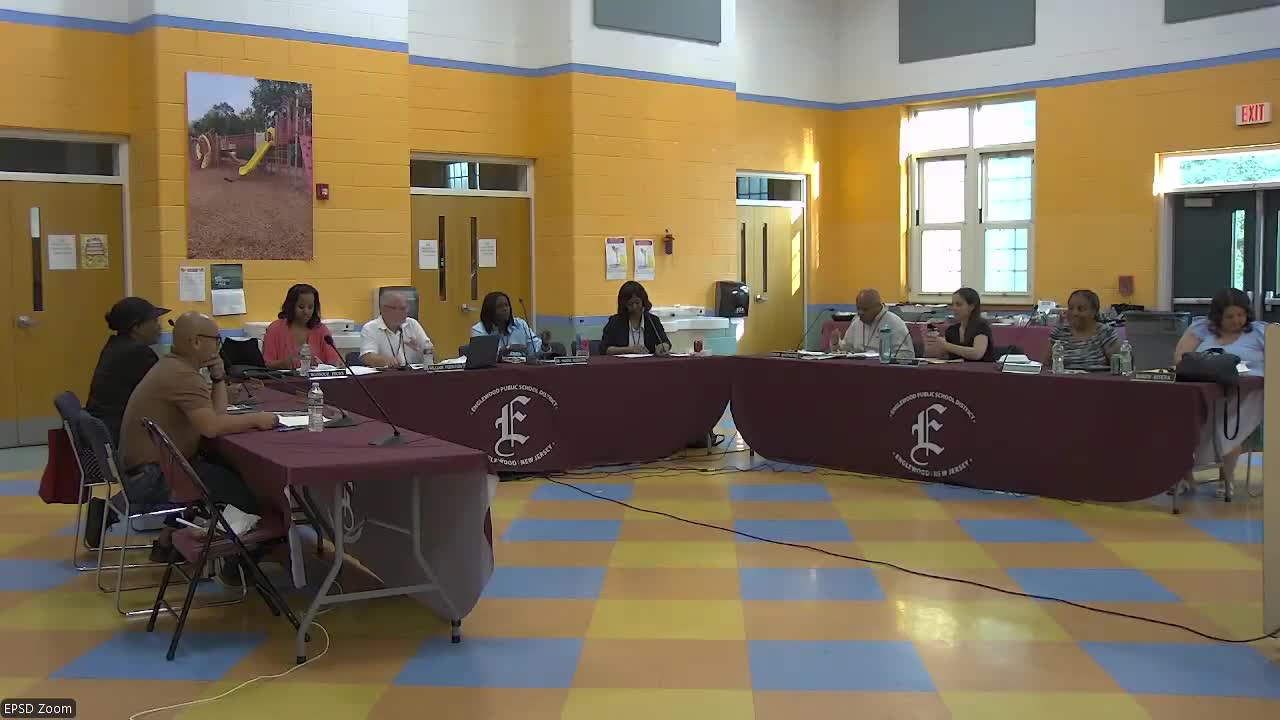
Summary
At a special goal-setting meeting, the Englewood Board of Education and district leaders agreed on five priority themes but split over how to measure academic improvement — debating state tests versus district benchmark screeners and whether a 10% growth target is realistic.
The Englewood Board of Education met in a special session focused on setting district and board goals and agreed on five priority themes — academics, college-and-career readiness, staff recruitment and retention, family and community engagement, and finance — while leaving the exact wording and numeric targets to be finalized after staff refines metrics and reviews end-of-year data.
The discussion centered on how the board should measure student academic growth. Superintendent Dr. Hazleton presented a draft academic goal tied to the district strategic plan and said a 10 percent increase in targeted achievement measures was “a doable number.” Board members and administrators debated whether growth should be measured with the New Jersey Student Learning Assessment (NJSLA) state exam or with adaptive universal screeners the district is adopting (i‑Ready for next year; the district is transitioning from HMH/MAP testing). Several trustees urged a higher target or a differently framed metric that recognizes individual student growth rather than a single district average.
Why it matters: the board’s district goals will be used as part of the superintendent’s evaluation and posted publicly; choosing the metric affects what the board can hold administration accountable for and how the community interprets progress against already-discussed funding levels and strategic priorities.
Administrators described the distinction between the two types of measures: the NJSLA is a yearly summative test that provides a statewide snapshot, while an adaptive universal screener (i‑Ready) gives diagnostic, interim growth data teachers can use to adjust instruction. Director-level staff explained the universal screener reports beginning-, mid- and end-of-year diagnostics and can be disaggregated by student, classroom, grade and subgroup so building leaders and teachers can plan tiered instruction.
Superintendent Dr. Hazleton told the board the district will present validated end‑of‑year benchmark data on June 26 to inform the final goal language and any numeric target. She also said the district recently secured a competitive grant for professional development, noting, “we secured $68,000 in a competitive grant to provide additional professional development for our teachers.”
Board debate focused on three linked issues: (1) which assessment should define the goal (NJSLA vs. adaptive screeners), (2) whether the growth metric should be a district average or an individualized growth requirement, and (3) what numeric target is ambitious but attainable. Several trustees urged setting a clear, time‑bound SMART statement for each headline goal and moving operational “how” items (curriculum, action plans) into the administration’s action plan rather than the board‑level goals.
Board member Jason Matthews pressed for ambitious standards tied to college and competitive readiness, saying the district must produce stronger results given available resources: “We got $86,000,000 for 3,000 students. We gotta produce.” Trustees also raised concerns about subgroup outcomes and how targets would be set and measured for special education and other subgroups.
The board asked administration to refine the five headline goals into concise, measurable statements and return with final draft language and the June 26 validated data. Trustees signaled they will likely keep five goals (the district evaluation tool accommodates three to five goals) and that action plans and concrete indicators of success — whether quantitative or evidence-based qualitative measures — should be provided with the draft.
Ending: The board paused final approval and asked the superintendent to revise goal statements and metrics after the June 26 data presentation; board approval of the finalized statements will appear on a future public agenda.