Get Full Government Meeting Transcripts, Videos, & Alerts Forever!
Get email alerts on the Elected Official Pay topic
No spam. Unsubscribe anytime.
Trustees debate linking elected-official pay to salary scales versus percentage raises
Summary
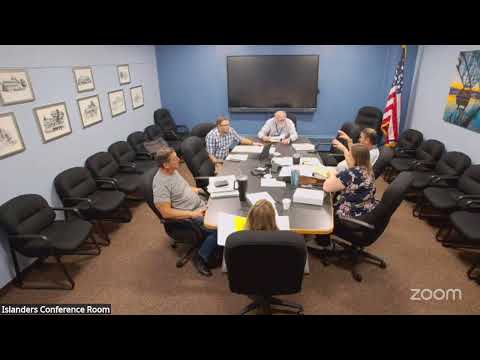
During the budget workshop trustees spent significant time discussing the town's practice of placing newly elected officials on multi-step salary scales and whether elected positions should instead receive a simple annual percentage increase or have pay set by annual vote.
A lengthy discussion at the Oct. 14 workshop focused on how the town sets pay for elected officials and whether elected positions should be placed on multi-step salary scales tied to hire/election year or receive a uniform percentage increase.
Staff presented a comparative table showing elected-official pay across neighboring towns and the town's current treatment of elected positions under a sliding pay scale. Several trustees said elected roles should not be tied to a multi-step employment scale the same way nonunion staff are: they argued that a simple annual percentage increase, or an annual vote by the board, would be more transparent.
Trustees described prior practice in which newer elected officials were placed on a lower step (for example, a 10% lower starting step in some cases) and then moved up according to a schedule; some said those step differences resulted in uneven and nontransparent outcomes for successors and predecessors. Others favored keeping scales because scales can save long-term money compared with a single flat rate if turnover produces lower starting pay for replacements.
Staff and trustees agreed to continue the conversation at the next session and to present a clear table showing current pay by office, the fiscal effect of a percentage-based annual increase (for example, 2% or 3% across-the-board), and the cost difference compared with current step treatment.
Ending: Trustees asked staff to bring a one-page comparative summary showing current elected-official pay, the projected cost of a uniform percentage increase, and the projected long-term fiscal effect of the scale approach before the public hearing process.