Get Full Government Meeting Transcripts, Videos, & Alerts Forever!
Get email alerts on the Board Committees topic
No spam. Unsubscribe anytime.
Board gets outside training on committee roles, agenda-setting and meeting etiquette
Summary
A New Jersey School Boards Association representative led professional development on committee structure, responsibilities and best practices; board members raised concerns about respect, rushed items and scheduling.
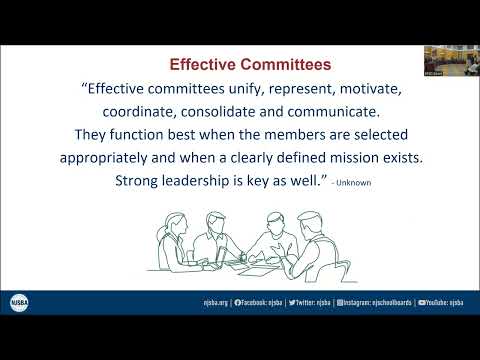
The Englewood Public School District Board of Education heard a professional-development session on committee structure and practice from Matt Lee, a field representative for the New Jersey School Boards Association, who described how effective committees are organized and how they should support the full board.
Lee told the board that committees exist to "lessen the work of the board as a whole" by taking a deep dive into assigned topics, researching options, and preparing recommendations for the full board to decide. He reviewed two main models — standing committees and a committee-of-the-whole — and outlined chair responsibilities such as working with an administrative liaison to set agendas, keeping minutes, organizing follow-up and reporting committee recommendations to the full board.
Why it matters: Committees are where much of the board’s substantive oversight and preparation happens. Board members who use committee time for the board’s role — setting priorities and seeking information — can make full-board meetings more efficient and increase public transparency.
Board members asked for clearer calendar and agenda practices, and several said committee meetings sometimes feel rushed or drift into operational "how" questions better handled by administrators. One board member noted that when disagreements arise in committee meetings, participants still need to treat each other respectfully; another warned against rushing finance-related work that requires more meeting time.
Lee recommended that committee chairs work with administrative liaisons to plan agendas and a yearly meeting calendar, circulate committee agendas and minutes in advance, and organize committee work so full-board decisions are driven by committee recommendations rather than last-minute motions at action meetings. He also advised scheduling committee meetings for the year and canceling those not needed rather than scheduling ad hoc sessions.
Board members discussed meeting logistics, including a recurring request from the board that administrators play a more active role in committee presentations so meetings focus on decisions and priority-setting rather than extended Q&A. Members also pressed for limits on how many committees a single member is expected to attend and asked the administration to avoid scheduling multiple committee meetings in a single week whenever possible to reduce conflicts for working board members and staff.
The session closed with board members agreeing to continue refining committee structure and calendars and to circulate the presentation materials to all members.
Ending: The board did not take formal action on committee structure at the meeting; members asked staff and the board president to use the training to inform future bylaw and scheduling decisions.