Get Full Government Meeting Transcripts, Videos, & Alerts Forever!
LAHA funding eyed to help Widgeon Woods townhome owners after major construction cost overrun; city staff propose targeted deferred-loan assistance
Summary
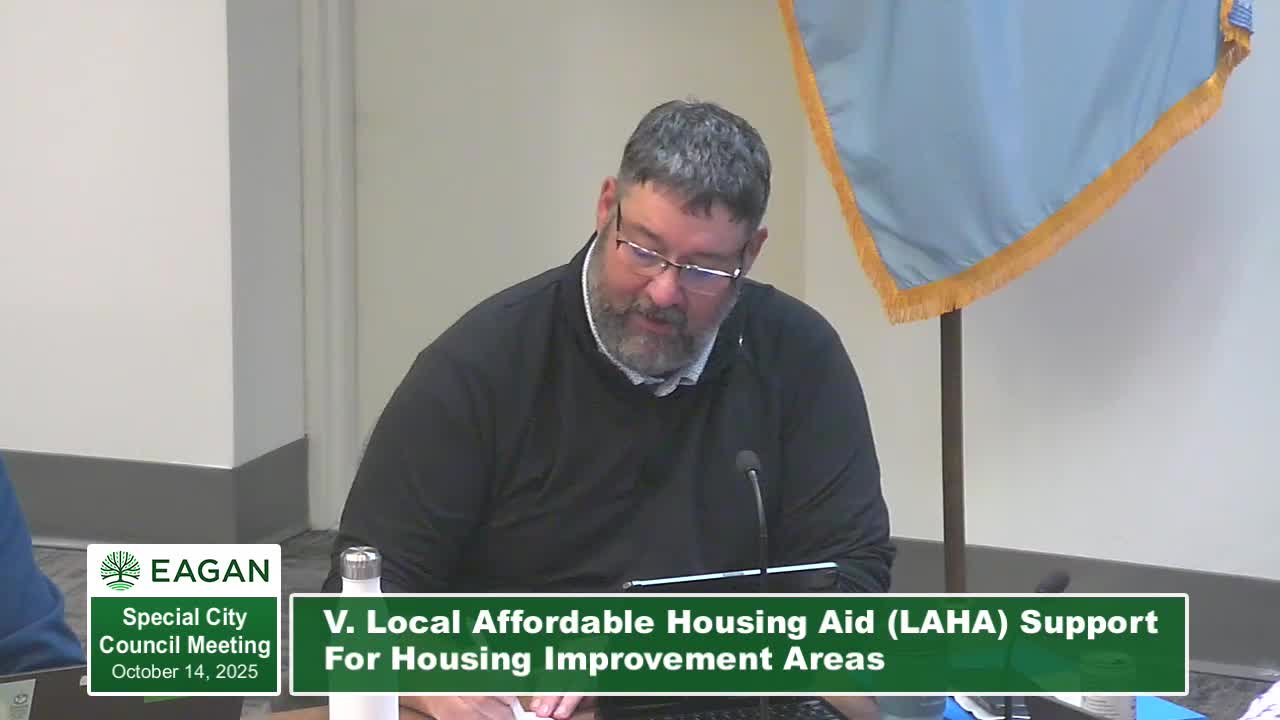
City staff told the Eagan City Council on Oct. 14 they will propose using Local Affordable Housing Aid (LAHA) funds to provide targeted, income-qualified relief for homeowners at the Widgeon Woods townhome development after contractors uncovered extensive rot and structural damage that increased project costs.
City staff told the Eagan City Council on Oct. 14 they will propose using Local Affordable Housing Aid (LAHA) funds to provide targeted, income-qualified relief for homeowners at the Widgeon Woods townhome development, where post-construction work uncovered extensive rot and structural damage and project costs rose far above the original budget.
"LAHA was approved by the state legislature in 2023 and slightly modified in 2024," Economic Development Director Jill Hutmacher told the council. She reminded members that LAHA distributions have statutory constraints, including a commitment window: cities have three years to commit each installment and a fourth year to expend committed funds.
Widgeon Woods (the development at issue) applied in September 2024 for a housing improvement area (HIA) financing package seeking roughly $2.4 million to support common-area siding and deck replacements. The city reviewed the HIA application, scheduled and held required public hearings, and adopted the development agreement earlier in 2025. Construction began after council approval, and contractors uncovered extensive water and structural damage in multiple buildings as siding was removed.
Because state building code requires uncovered structural defects to be remedied during construction, the project scope and price rose substantially; staff estimated the additional work has increased the project cost by as much as 50% in some places. Contractors and the homeowners'led HOA negotiated interim remedies and construction loans, but the…
Already have an account? Log in
Subscribe to keep reading
Unlock the rest of this article — and every article on Citizen Portal.
- Unlimited articles
- AI-powered breakdowns of topics, speakers, decisions, and budgets
- Instant alerts when your location has a new meeting
- Follow topics and more locations
- 1,000 AI Insights / month, plus AI Chat