West Village residents press Manhattan licensing committee over restaurant lines, sidewalk seating and enforcement
Loading...
Summary
Residents and business representatives clashed at a Manhattan City licensing committee meeting over multiple nearby restaurant applications, pressing for consistent enforcement, barriers and a reservation-based system to prevent sidewalk congestion and unsafe pedestrian paths.
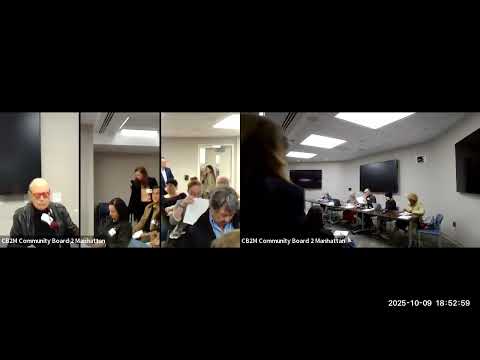
Manhattan City Licensing Committee — Several restaurant operators seeking sidewalk seating or changes to their liquor licenses faced sustained criticism from nearby residents at a licensing committee meeting, where neighbors said packed sidewalk dining and unmanaged queues are reducing pedestrian clear paths and creating safety and quality-of-life problems.
Neighbors and community groups said the repeated pattern of crowded sidewalks and serving from outside barrier lines has grown as multiple nearby restaurants have added outdoor seats in recent months. The meeting included applications or alteration requests for a cluster of businesses on Grove Street, Seventh Avenue South and nearby side streets, including Commerce Inn (50 Merchants LLC), Bouvet/Bouvette, Via Coroda, Isodi and multiple Bar Pizzolino locations, among others.
Why it matters: Residents said the combined effect of many popular restaurants operating near each other has left narrow sidewalks with lines and people waiting near subway grates and building entrances. Committee members and residents asked operators for enforceable, consistent steps to protect the required clear walk path — including barriers and a reservation/text-notification system to eliminate static lines on sidewalks.
Representatives for the license applicants described their proposed configurations, hours and barriers. Jody Williams, appearing on several applications, said operators are working toward barriers and clearer service aisles and that they would install interim stanchions while they order permanent fixtures. Donald Bernstein, representing Pastis, explained sidewalk and roadway seating changes and DOT approvals for that site.
Residents voiced repeated complaints that barrier setups on several sidewalks had not matched the licensed diagrams. Nancy Paisley, a long-time resident, told the committee: “I do not think with the oversaturation of licenses that we currently have that we should be granting…a license to a new place, particularly one that has had operational difficulties before.”
Block and neighborhood leaders urged the committee to link approvals to verifiable compliance. Richard Eric Weigel, president of the Grove Street Block Association, said the restaurants have sometimes been professionally operated but that sidewalk barriers “have never been” consistently in place at some locations. West Village Residents Association representative Augustine Hope asked the committee to consider asking applicants to demonstrate a period of compliance before the board grants changes in method of operation.
Applicants acknowledged the complaints and said they were taking steps. Jody Williams told the committee they would “use the ugly ones until they get the new ones” and indicated the businesses are preparing text-notification or reservation options to reduce street lines. Several applicants said they would adopt or expand a text-based waitlist so patrons would not physically queue on the sidewalk.
Clarifying details provided at the meeting included specific sidewalk-cafe proposals: Commerce Inn (50 Merchants) proposed a 3-table, 6-seat sidewalk setup on Commerce Street; other applications listed sidewalk seat counts ranging from single-digit table configurations up to larger layouts that would require DOT clearance. Committee members repeatedly asked applicants to confirm that waitlist and service operations would occur from inside the stanchioned areas so servers would not be serving from the pedestrian clear path.
What’s next: Committee members asked applicants to provide corrected, up-to-date diagrams where the paperwork did not match the on-street setup, and they proposed a standard stipulation across the cluster: operators must use an electronic/text-based waitlist/notification system and keep patrons from forming static lines on sidewalks. The committee indicated it would track implementation and expected applicants to return with documentation showing barriers, training and a functioning notification system.
Ending: Residents and operators expressed a shared desire for lively sidewalks and orderly pedestrian flow; the meeting underlined that local license approvals will hinge on documented, consistent compliance with barrier, service and queue-management requirements.