Get Full Government Meeting Transcripts, Videos, & Alerts Forever!
Legislators Hear Plan to Let Claremont Tap Future State Aid to Cover $5M School Deficit
Summary
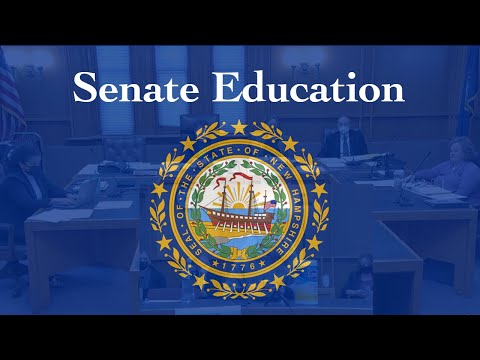
Senate Education Committee held a public hearing on legislation (amendments to HB 292 and HB 2978/3004h) that would let the Claremont School District borrow against future state adequacy payments to cover short-term cash shortfalls after auditors discovered roughly $5 million in unrecorded liabilities.
Senate Education Committee Chair Senator Rebecca Ward convened a public hearing Tuesday to consider emergency legislation that would allow the Claremont School District to access a revolving fund secured by its future state adequacy payments as it works to cover an estimated $5,000,000 deficit and keep schools open through the year.
The hearing centered on a proposed “adequacy revolving loan fund” included in a senate amendment (2978s) to House Bill 292 and an expanded house amendment (3004h). Jamal Shaughnessy, attorney for the Claremont School District, told the committee the district faces an immediate cash-flow crisis after auditors and new administrators identified years of accounting breakdowns and unrecorded vendor obligations.
"The district spent millions of dollars that they never had," Shaughnessy said, summarizing findings compiled by interim district leaders and the new business administrator, Matt Angel. "We are asking for a revolving mechanism to access funds the district is already entitled to receive under current state law."
Why it matters: the district, which receives approximately $16 million in state adequacy aid annually, has used a short-term reimbursement anticipation note (RAN) from Claremont Savings Bank to meet payroll and vendor obligations this fall. That RAN is limited to $4,000,000 and must be repaid in April, leaving the district vulnerable to a repeat cash squeeze in spring and early summer when teacher contracts and commitments for the next school year are issued.
Nut graf: The legislative amendments would let Claremont draw against future adequacy distributions on a temporary basis, with interest set by the state treasurer and reporting requirements to the Department of Education and state treasury. Supporters say the change is narrowly tailored to prevent school…
Already have an account? Log in
Subscribe to keep reading
Unlock the rest of this article — and every article on Citizen Portal.
- Unlimited articles
- AI-powered breakdowns of topics, speakers, decisions, and budgets
- Instant alerts when your location has a new meeting
- Follow topics and more locations
- 1,000 AI Insights / month, plus AI Chat