Zionsville council adopts balanced 2026 budget with staff raises, public safety hires
Loading...
Summary
The Town of Zionsville council adopted Ordinance 2025-20 on Oct. 6, approving a balanced 2026 budget that adds three firefighters, two police officers, a 2% pay increase for town employees and capital spending while warning of revenue declines tied to Senate Enrolled Act 1.
ZIONSVILLE, Ind. — The Town of Zionsville Town Council voted 7-0 on Oct. 6 to adopt Ordinance 2025-20, the town’s 2026 budget, approving a plan that the administration said is balanced and includes new hires and modest pay increases.
Tim Berry, representing the town’s financial advisors, presented the budget to the council and said the proposed plan lists expected revenue at just under $49,000,000 and proposed spending at $48,373,000. “So the budget we are presenting to you tonight is balanced,” Berry said.
Why it matters: Councilors framed the vote as a response to near-term revenue pressure from state changes and a multi-year decline in locally available revenue. The administration included a one-time excess levy appeal and department reductions to bridge gaps while preserving front-line staffing.
The budget’s major features - Public safety: The budget funds three additional firefighters and two police officers (the officers are in training and will join patrol after the start of the year). The town also increased the pension base for public safety staff. - Employee pay: A 2% across-the-board pay increase for town employees and higher longevity pay for employees with 20-plus years of service. - Capital: Planned capital spending includes nearly $2,000,000 for the fire department (vehicles, equipment, building needs), about $2,500,000 for the Department of Public Works (vehicles, equipment, road rehab and projects) and just under $400,000 in the police budget for vehicles and equipment.
Budget balancing steps and outlook Town officials said departments averaged 2–3% operating reductions and the administration instituted a soft hiring freeze in the spring. Officials also reduced professional services budgets and planned to revert unused funds to the general fund to help close the gap.
Berry warned the council that state changes under Senate Enrolled Act 1 will reduce local revenue over the next three years: roughly $1,354,000 in 2026 (including the one-time excess levy appeal included in this budget), about $1,800,000 in 2027 and nearly $2.5 million in 2028 under current projections. He noted municipalities have the option to impose a local income tax rate up to 1.2% that could offset some of the long-term loss.
On assessed-value timing and tax-rate impact Berry told the council the budget and the taxpayer-impact figures the town showed are based on 2025 assessed values because Boone County’s certified net assessed value (CNAV) for 2026 had not been posted by the state at the time of the meeting. “There were 7 counties left to submit their net assessed values, and Boone is 1 of those 7,” Berry said, citing the state Department of Local Government Finance map. He said that delay affects certain capital funds and that the advertised amounts were set “appropriately high enough to allow for that.”
Policy responses discussed Councilors and the administration discussed two main strategies to manage the longer-term revenue shortfall: (1) creating a stormwater utility to shift stormwater costs out of the general fund, and (2) promoting commercial development to grow commercial assessed value as part of the town’s ongoing comprehensive planning process.
Checks on staffing and costs Mayor Stare and council members repeatedly emphasized protecting core services and employee retention. The administration said it does not anticipate staff reductions in 2026 despite the cuts and other balancing measures.
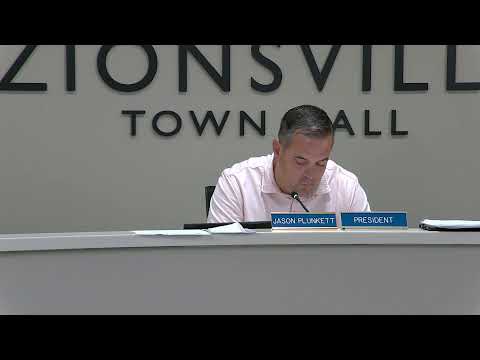
Votes and next steps President Plunkett moved to approve Ordinance 2025-20, with a second from Vice President Burke. The motion passed 7 in favor, 0 opposed. Officials said the council will monitor certified assessed values and circuit-breaker losses as state figures are finalized and will return with any needed adjustments.
Items to watch Councilors flagged a related operational cost that could affect future budgets: Judge Spencer’s research on a court-certified interpreter for an expanded municipal court, estimated at roughly $1,300 to $3,900 per year. Mayor Stare said the town intends any expansion or new costs to be “cost neutral” as it assimilates White’s Town court into Zionsville’s court operations.