Get Full Government Meeting Transcripts, Videos, & Alerts Forever!
Get email alerts on the Absentee Ballot Security topic
No spam. Unsubscribe anytime.
Resident urges board to change absentee-ballot handling in nursing homes; commissioners say law or county clerk role may limit action
Summary
A resident urged the Middlesex County Board of Elections to oversee distribution and collection of mail‑in ballots in nursing homes using two election workers, while commissioners said ballots are issued by the county clerk and implementing the suggestion may require statutory authority or designation of early-vote locations.
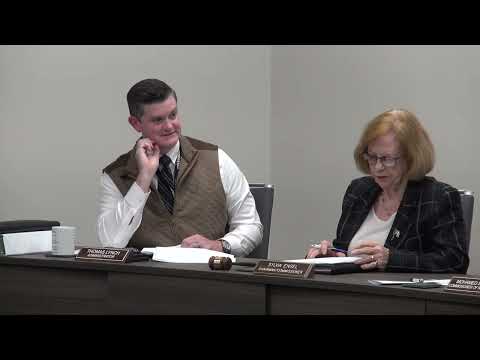
At the Middlesex County Board of Elections meeting on Oct. 1, a resident urged the board to change how absentee ballots are distributed and collected in nursing homes, saying staff and room conditions can leave ballots insecure and vulnerable to mishandling.
Chella Sacrony, who identified herself as a Milton resident, described observing ballots left in unsecured locations and said some residents were physically unable to find or access their ballots. "I have seen ballots in less than secure locations, under piles of personal belongings, under food trays, under laundry," she said. "Some residents did not know where their ballots were or were simply physically unable to access them." Sacrony asked the board to direct distribution and collection with "2 people, 1 from each party," saying facility staff are not bound by the same rules as board employees and that residents are vulnerable.
Commissioners and staff acknowledged the concern but said the ballots originate from the county clerk's office and that the board's authority to intervene is uncertain under current statutes. One commissioner said: "This is a question of what we as a minister of the election can do because the ballots come out from the county clerk's office. I don't know if we would need some sort of statute to authorize" election staff to accompany deliveries to institutional settings.
Another commissioner suggested a possible workaround: designating institutional settings as early‑vote locations so the county could run voting there, noting that the county could choose the number of early‑vote locations but that doing so would have cost and logistical implications. "You can do as many early vote locations as you want," a commissioner said, before noting the county would bear associated costs and machine requirements.
Commissioners expressed interest in exploring options that would increase ballot security for nursing‑home residents but did not adopt any new policy at the meeting. Staff said the suggestion was worth investigating and that follow‑up would be required to determine whether statutory changes or county clerk coordination were necessary.
Ending — The board did not take formal action to change procedures during the meeting; commissioners directed staff to consider the suggestion and report back if legal or operational options are available.