
Beaverton enrollment drops; district to rerun 10-year projection after largest post‑pandemic decline
Get AI-powered insights, summaries, and transcripts
Sign Up Free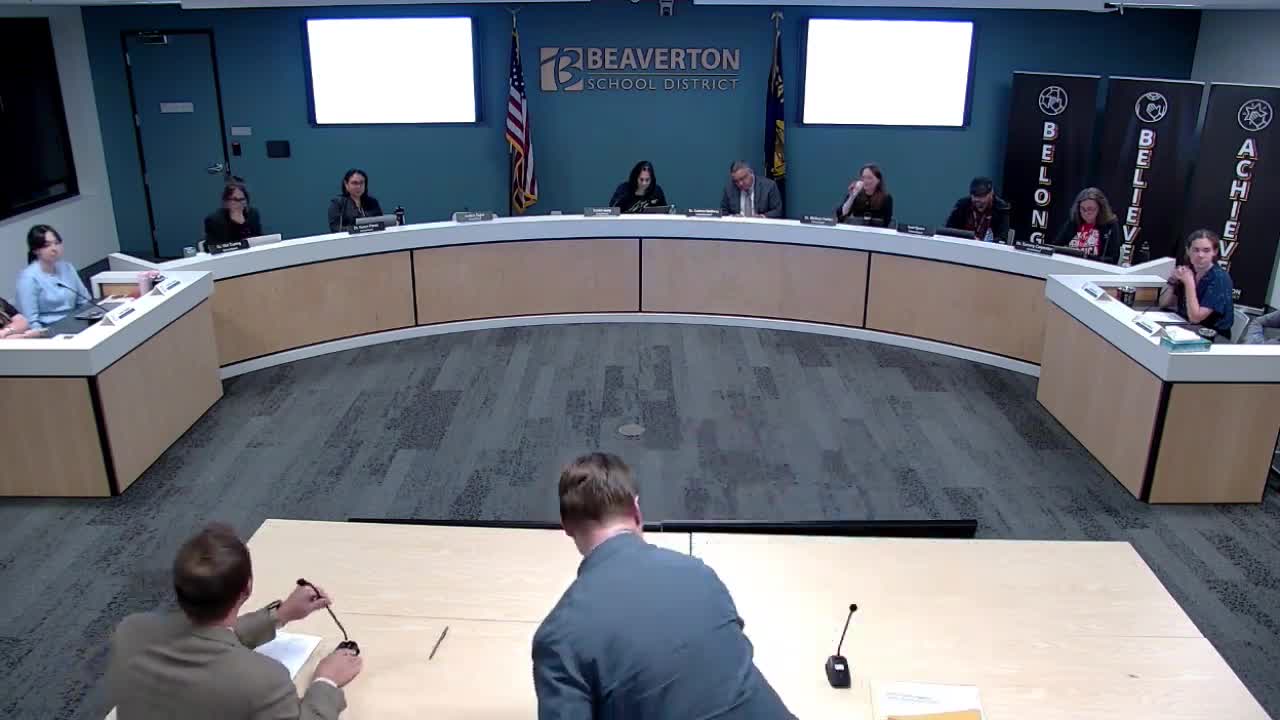
Summary
The district reported a notable enrollment decline on its Oct. 1 snapshot, driving a plan to commission a new 10‑year forecast and prompting finance staff to model lower revenue for next year; kindergarten cohorts were especially small.
Beaverton School District officials told the school board on Oct. 14 that districtwide enrollment fell again in the October 1 snapshot, marking the largest decline since the COVID‑19 drop and leaving total enrollment about 10.5% below the 2019 peak.
Robert McCracken, the district demographer, said the largest declines were at the elementary level and that kindergarten class sizes have been shrinking for years. “This year was the largest drop in enrollment since 2020,” McCracken said, and he noted a particularly small kindergarten cohort and an unexpected absence of the typical rise from kindergarten into first grade.
McCracken reiterated that declining birth rates and reduced in‑migration to the district were two likely drivers. He pointed to housing and labor-market shifts — including local layoffs at major employers — as additional factors that can affect family movement and enrollment.
The district has contracted with Flow Analytics to run a new 10‑year projection using the 2025 enrollment as the new base year; staff said that forecast will likely show lower long‑term enrollment than the 2022 vintage forecast. The district plans to present Flow’s updated forecast in early 2026 once the company finishes its analysis.
Mike Schofield, the district’s finance chief, told the board the business office used the demographer’s enrollment numbers in spring budgeting and has since updated state reporting after further declines. He said the district absorbed additional shortfalls this year with reserves and staffing adjustments and that revenue impacts from the enrollment decline will be reflected in next year’s budget planning. “We used that same number…we pulled about 20 to 27 teachers out of the system,” Schofield said, and noted that the current shortfall was roughly 300 students lower than earlier projections.
Board members asked detailed questions about the drivers of decline, regional differences and how the district will allocate staff and funding next year. McCracken said kindergarten size is closely tied to birth rates — which have been falling since about 2007 — and that Flow Analytics’ forecast assumptions had repeatedly overestimated capture rates since the pandemic. Schofield said the district will annualize the current‑year count to set the average daily membership for next year’s aid calculations and that the funding impact will appear in the spring budget cycle.
No board action was taken at the Oct. 14 meeting; staff said they will return with the Flow Analytics 10‑year forecast, and that budget forecasts will incorporate the updated enrollment numbers during winter/spring budget development.