Get Full Government Meeting Transcripts, Videos, & Alerts Forever!
Get email alerts on the Student Assessment Results topic
No spam. Unsubscribe anytime.
South Pasadena Unified highlights AP gains; board hears CAASPP and ELPAC results and next steps
Summary
District staff presented 2025 CAASPP, ELPAC and AP results to the board on Oct. 14, reporting a 96% AP exam passage rate for 2024–25 and increased AP participation; staff said they will disaggregate CAASPP and EL data to set school-plan targets.
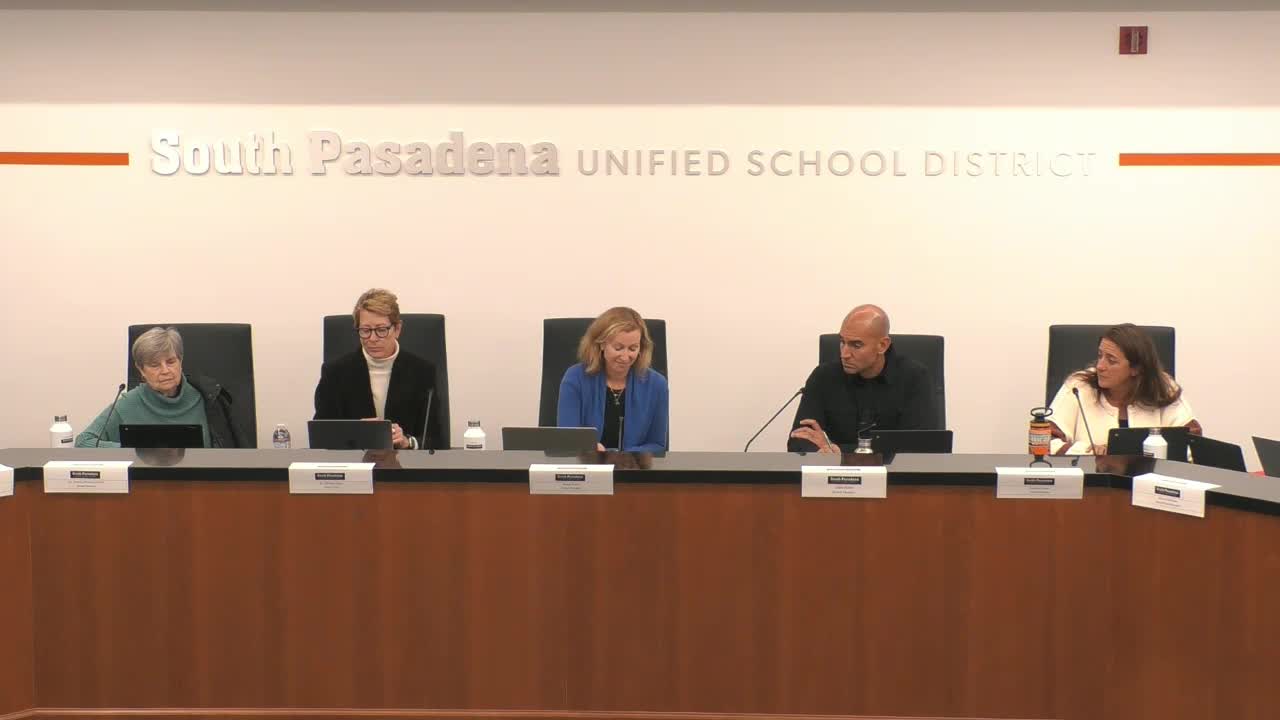
District staff presented the 2025 CAASPP (state assessments), summative ELPAC (English learner assessment) and Advanced Placement results to the board at its Oct. 14 meeting.
Ms. Gervais and Mrs. Cheadle, coordinator of educational technology, curriculum and assessment, told the board that AP exam participation increased from 578 students taking 1,295 exams in 2023–24 to 621 students taking 1,556 exams in 2024–25, and that the district's overall AP passage rate rose to 96% in 2024–25. District presenters highlighted 100% passage rates for AP 2‑D Art and Design, Calculus AB and Physics 1, and high passage rates in several history and economics courses.
On English language development and summative ELPAC performance, staff presented the English Learner Progress Indicator, reporting that 64% of the district's English learners made annual progress in 2023–24 compared with 46% statewide. Staff said they will disaggregate CAASPP and ELPAC data site by site and by subgroup, correlate results with local intervention data and use that review to shape school plan targets and professional development.
Ms. Gervais said CAASPP and other local assessments are used together and that school administrators will present school plan revisions in December. Mrs. Cheadle noted that teachers rely on a local system (SIRS) to see prior-year student results and that staff must re-enter data annually into that system for teachers to access longitudinal information.