
Legislative audit finds Kansas revenue department has procedures for vehicle sales taxes but flags county oversight gaps
Get AI-powered insights, summaries, and transcripts
Sign Up Free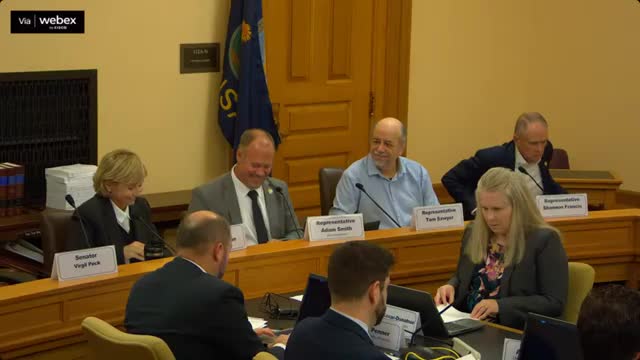
Summary
A Division of Legislative Post Audit review found the Kansas Department of Revenue (KDOR) has many training, monitoring and enforcement practices for motor-vehicle sales and use taxes but identified weaknesses in county remittance controls and in statewide vehicle-registration data that limit KDOR’s ability to spot and correct problems quickly.
Macy Smith, an auditor with the Division of Legislative Post Audit, told the Legislature’s Special Committee on Taxation on Oct. 15 that KDOR “generally has procedures in place, but they did have a few areas they needed to strengthen” when it comes to ensuring sales and compensating use taxes on motor-vehicle transactions are remitted to the state.
The audit covered fiscal year 2023 and reviewed KDOR’s training and guidance, and its monitoring and enforcement practices aimed at dealerships and county treasurer offices. Smith said sales and use tax at the state level is 6.5 percent and the audit examined whether KDOR’s procedures help ensure that dealers and counties remit the correct amounts to the state.
The audit found KDOR offers guidance documents, training and staff contacts — and that the agency had improved dealership controls since an earlier 2003 review. It found dealerships cannot renew a dealer license if they are not in good standing, and KDOR performs risk-based audits of dealers. “Dealerships cannot renew their license if they are not in good standing,” Smith said, noting that license renewal is an important enforcement tool.
Where the audit raised concerns was oversight of county remittances and the quality of vehicle registration data entered into the state’s Movers system. Smith told the committee that one county in an 11-county sample had significant overdue remittances during fiscal 2023, at times accounting for roughly $10 million of late sales- and use-tax receipts over a 12- to 15-month period. Smith said KDOR had not had formal, progressively escalating enforcement procedures for delinquent county remittances but recommended they implement such procedures; KDOR reported back that it had begun running monthly reports of county accounts and distributing those lists to supervisory staff.
The auditors also said errors and duplications in the Movers registration database prevented KDOR and the auditors from doing a reliable statewide review of reported sales prices and taxes. “We saw the Movers database had significant data entry errors that prevented KDOR from doing a statewide analysis,” Smith said. The audit team’s spot sample of 88 registrations showed many reported sale prices fall well above or below a vehicle’s fair-market estimate; Smith emphasized that data-entry errors, used-exception certificates or legitimate condition-based price differences can all explain wide variances.
KDOR Secretary Daniel Burkhart told the committee that KDOR deploys frequent updates to the Movers system and works closely with county treasurers, and he said some county remittance problems had reasonable causes such as a past cyberattack. He said the agency has authority to take stronger enforcement actions against dealerships, including license revocation, when warranted.
Committee members asked whether dealerships face penalties for improperly applying tax exemptions and whether the state could do more to force late counties to remit taxes. Smith and KDOR staff said the department is pursuing a pilot project to use county registration data to better screen exemptions and questionable sales for commercial transactions and is refining reports for that purpose.
The audit recommended KDOR put sales-tax guidance into the dealer portal, expand recurring dealer training, document more of its procedures in writing, implement a formal county enforcement escalation process to address late remittances, and make better use of Movers data for statewide monitoring. In responses to LPA recommendations, KDOR reported that it had posted updated guidance to the dealer portal, added portal messages about training availability, begun the county-account monthly reports and piloted targeted reviews of commercial exemption certificates.
Why it matters: motor-vehicle taxes are collected at sale or registration and flow to the state general fund; gaps in county remittance processes or registration-data quality increase the risk that the state receives less or receives it late. The audit’s recommendations focus on process improvements rather than evidence of fiscal loss statewide, and KDOR has reported partial implementation of those recommendations.
What’s next: LPA noted it does not independently verify full implementation unless a follow-up audit is commissioned. Committee members asked KDOR to provide further detail on enforcement options, the Movers cleanup plan and the results of the commercial-exemption pilot as those efforts proceed.