Get Full Government Meeting Transcripts, Videos, & Alerts Forever!
Get email alerts on the Housing Rezone Overlay topic
No spam. Unsubscribe anytime.
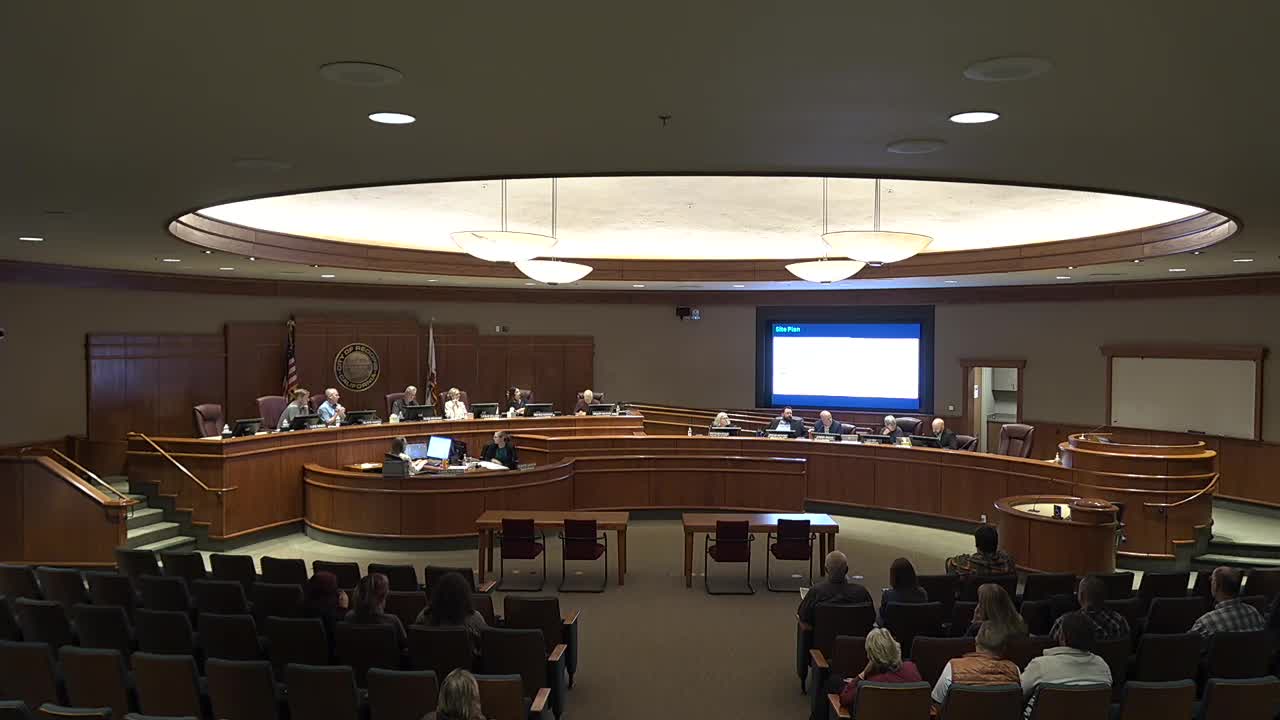
Commission backs housing-opportunity overlay rezones to support state-required by‑right affordable housing
Summary
Planning staff proposed, and the commission recommended to council, a zoning text and map amendment that implements a housing-opportunity overlay and by-right development incentives to meet state housing-element requirements and to encourage projects with a 20% lower-income affordable set-aside at higher densities.
The Planning Commission recommended that City Council adopt zoning text and map amendments to implement a housing-opportunity overlay district and to align incentives with the city’s certified housing element and recent state requirements.
Senior Planner David Schlegel explained the change as part of the housing-element implementation. The housing element identifies vacant higher-density sites that have been included in consecutive planning cycles. State law expects jurisdictions to facilitate development on those “carryover” sites; staff said the proposed overlay will allow by‑right development on qualifying parcels when projects include at least 20% of units affordable to lower‑income households. The change reduces a city incentive threshold that previously required a 35% affordability set-aside to obtain a 20‑unit-per‑acre density allowance; the proposed revision makes the 20% affordable set‑aside the trigger for higher-density, by‑right approval in RM-12/15/18 zones and adds an overlay map identifying eligible parcels.
Schlegel told commissioners that the state assigned a 20‑units-per‑acre planning-density benchmark and that the city’s housing-element work previously demonstrated capacity at lower densities using local data, but state reviewers asked for an overlay and explicit incentives. Staff said the changes will increase theoretical buildable capacity on the identified parcels from about 1,100 units to about 1,510 units if projects use the higher-density allowances.
The planner noted site constraints on several parcels (floodplain or required secondary access) and said projects still must meet objective development and infrastructure standards; Schlegel also said the Legislature made the housing-element rezone action statutorily exempt from CEQA via a July action and cited the transcripted phrase for that exemption.
Outcome: the commission voted to recommend adoption of the ordinance and map amendments to City Council. Staff said the next step is to return the package to council for first and second readings and finalize the map for the zoning ordinance.
Why it matters: the text and map amendments are intended to satisfy state housing-element obligations and to provide by‑right incentives for mixed- and multi-family projects that include a minimum share of lower-income affordable units. The overlay identifies specific parcels where those incentives would apply; staff emphasized that site-specific constraints and objective standards still govern development feasibility and required public improvements.