Get Full Government Meeting Transcripts, Videos, & Alerts Forever!
Get email alerts on the Juvenile Justice topic
No spam. Unsubscribe anytime.
Judge Leroy McCullough praised for juvenile court reforms and decades of youth mentorship
Summary
In remarks captured in the meeting transcript, Judge Leroy McCullough described his long tenure on the bench and colleagues credited him with reducing juvenile detention counts, founding a long-running youth program and serving on a minority justice commission.
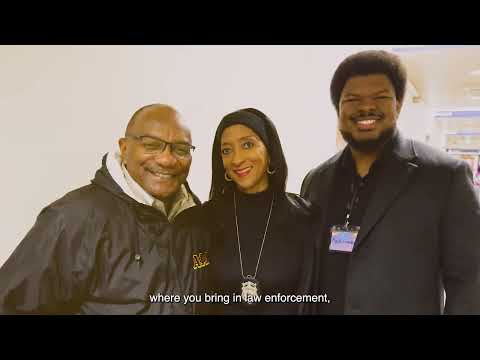
Judge Leroy McCullough, a King County Superior Court judge since 1989, described his work on the bench and received praise from colleagues in remarks recorded in the meeting transcript.
Colleagues highlighted McCullough’s work in juvenile justice, his long stewardship of a youth outreach program and his mentorship of other judges and community members. According to the transcript, he spent nine years at the juvenile court, where speakers said detention counts fell from as many as 200 children on some nights in the 1990s to as few as eight on some nights after expanded services were implemented.
“I have been a superior court judge since 1989 and have enjoyed it immensely,” Judge Leroy McCullough said, adding that “making a person’s life better means that you make that person’s family better.” He described his motivation as lifting individuals so their families and communities improve as well.
A colleague identified in the transcript only as Commenter 2 credited McCullough with innovations at the Children and Family Justice Center and with reducing nightly detention caseloads. “He led what’s now called the Charles Johnson Youth and Law Forum for 30 years. And there are hundreds of students that go through every year,” Commenter 2 said.
The transcript records that McCullough and others served on a minority justice commission that brought together law enforcement, public defenders and students to increase community understanding of the justice system. Commenter 2 said the commission included high school and middle school students so they could learn about legal careers.
Another speaker in the record, identified only as Commenter 3, said McCullough “has shown us how to be dignified in the bravery that we need to implement and use on the bench, how to balance compassion with accountability.” Commenter 3 added that McCullough considers the potential systemwide impact of individual cases.
McCullough thanked his staff, colleagues at the King County Superior Court, his First AME Church family, the NAACP and the University of Washington School of Law, and said he has enjoyed photography, theater and outdoor activities. He closed a portion of his remarks with, “Keep up the good work.”
The transcript does not record any formal votes, motions or next steps tied to these remarks.