
Englewood reclassifies parts of dual-language program amid budget cuts; parents press for clearer outreach
Get AI-powered insights, summaries, and transcripts
Subscribe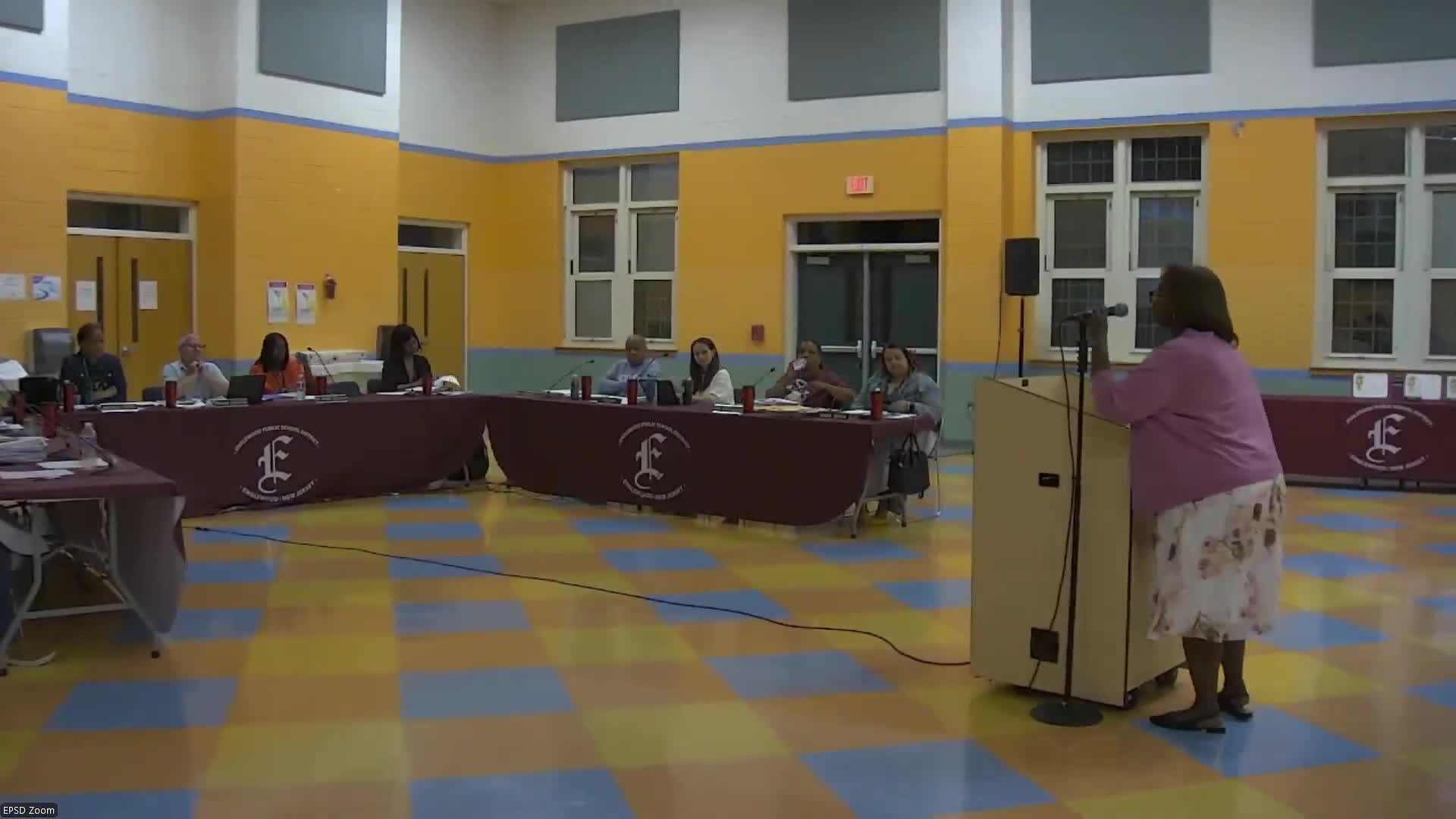
Summary
District officials told the board they will reclassify several dual-language classrooms and change admission procedures because of declining enrollment and funding shortfalls. Parents and community members at the meeting urged clearer outreach, more accessible enrollment information and restoration of cut positions if grant funding arrives.
The Englewood Board of Education heard a detailed presentation on the district’s bilingual, English as a second language and dual-language programs on June 25, during which Director of Bilingual and World Languages Mercedes Gill described recent program changes prompted by enrollment shifts and budget constraints.
Gill told the board that “most of the decisions are directed by the New Jersey Administrative Code 6A:15” and that the district must align program planning, staffing and monitoring to state requirements. She said the district currently serves about 2,807 students; 619 are identified as multilingual learners, 542 participate in a state-approved program and 77 have submitted written refusals to participate.
The presentation and follow-up discussion recapped several changes the district is making: replacing the longstanding lottery with an application process for program entry; reclassifying certain grade-level classrooms to an independent dual-immersion model (one bilingual teacher managing instruction rather than two separate “Spanish world” and “English world” teachers) for some cohorts; eliminating a bilingual coach and a middle-school Spanish teacher position because of funding shortfalls; and launching a Seal of Biliteracy pathway for seventh and eighth graders.
Gill said the shift from a lottery to an application was intended to better match student needs with program placements: “What was happening was that we were enrolling students in a dual-language program, and then they were sitting there and we realized this is not the appropriate placement for that,” she said. She also showed year-to-year enrollment trends that, she said, prompted the reclassification: prekindergarten 4 enrollment fell from 23 this year to a projected 14 next year; kindergarten enrollment has declined (35 → 36 → 28 → projected 21 over four years). Gill attributed some declines to high population mobility and to the district’s more selective placement process.
Board members and parents pressed for details on outreach and retention. Several speakers said families were not getting clear or repeated information about the program. Parent Randy Larrot brought his son Lucas to the mic; Lucas, a current first-grader in the program, told the board, “Every day, I learn in 2 languages, English and Spanish. Please support dual language in our schools.” Parents and community members said some communications are buried on the district website and that notices sent only by email can be missed.
Parents and board members offered concrete suggestions: add a clear link or brochure for the dual-language program at registration, place program information on school marquees and bulletin boards, resume a bilingual coach if grant funding becomes available, and hold early-year parent sessions and demonstrations so prospective families can see classrooms in action. Several parents asked whether English-speaking households were being reached; others recommended strategies to recruit non-Spanish-speaking families as well as Spanish-speaking families.
Gill and Superintendent Dr. Hazleton said the district is pursuing grant opportunities. Gill said she and grants staff are working on the Title I consolidated application and that a request to cover a previously cut bilingual teacher position and after-school programming is included; she said, if funded, the district would move to reinstate the two‑teacher “two‑way” model where feasible. “Should we regain funding, believe me, I’ll be the first one to request to reestablish the two‑way model,” she said.
The board and staff agreed to follow up on several items: (1) provide clearer, easier-to-find program information on registration materials and the district website; (2) share the application and eligibility criteria publicly and in multiple languages; (3) report aggregated academic outcome data for dual-program students (Gill said she will present WIDA/access scores and other disaggregated outcomes in September); and (4) pursue grant funding to restore cut positions and after-school supports.
The discussion underscored the program’s long history in Englewood — Gill noted the district has offered dual-language programming for more than 16 years — and the board left the meeting with a clear charge to improve communications and to monitor the effects of the reclassification if projected enrollment does not recover.
Ending
District staff said they will return to the board with additional enrollment and outcome data in the fall and will share copies of the presentation with parents. Gill asked for parent volunteers to help with outreach and said she would coordinate registration and recruitment efforts with the superintendent’s office.