Get Full Government Meeting Transcripts, Videos, & Alerts Forever!
Get email alerts on the Landmark Center topic
No spam. Unsubscribe anytime.
School board appeals building-permit denial for Pocahontas Landmark Center and agrees to joint talks with supervisors
Summary
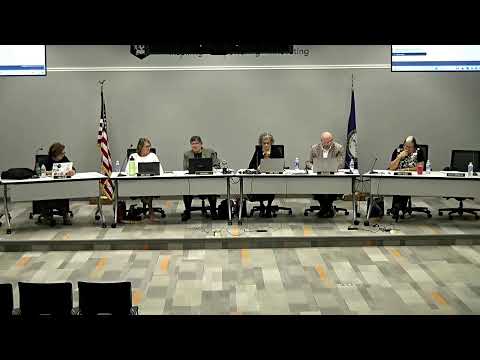
Powhatan County School Board voted to appeal the county building official’s denial of permit 742‑2025 for the Pocahontas Landmark Center and approved a motion to convene a joint working group with the county to study options for the property.
Powhatan County School Board members voted to appeal the county building official’s denial of permit 742-2025 for the Pocahontas Landmark Center and agreed to begin cross‑board meetings with supervisors to evaluate the building’s future.
The board made the appeal motion during the open meeting after discussions about the building’s condition, grant eligibility and community interest. "I make a motion to appeal the county building official denial, permit 742‑2025, with the county’s local board of building code appeals," a board member said during the motion.
The board then debated a separate, higher‑profile proposal from a member who urged placing the question on an upcoming election ballot so “each voter [could] speak representing their individual thoughts.” That ballot proposal drew immediate legal pushback from the board’s legal advisor, who said local referendum placement of the kind proposed would require statutory or charter authority and could be not permitted under Virginia law. The board did not place any referendum on the ballot at this meeting.
Why it matters: the Pocahontas Landmark Center is an emotional, historic and controversial asset in county discussions. Board members and residents argued about preservation, repair costs and the proper decision maker — the school board or the board of supervisors — while several speakers warned that delaying repairs would increase deterioration.
What the board agreed to: after extended debate, the school board passed a motion to convene a working group composed of the chairs and vice chairs of the school board and the board of supervisors, the superintendent and the county administrator to meet and report back with feasibility information and options. "I make a motion that the chairs of both board of supervisors and school board and the county administrator and the school superintendent schedule some meetings to try and work out how we can best facilitate the saving and/or anything of these buildings," a board member moved; another member seconded and the motion passed.
Discussion highlights and concerns - Grant eligibility and funding: Board members referenced the Virginia School Construction Assistance Program (SCAP) as one possible funding source but noted strict eligibility rules. A county administrator (identified in the meeting as Mr. Hagee) had previously advised that SCAP requires property ownership and that projects must primarily serve pre‑K–12 students. Board members noted the program’s usual state share (as described in the meeting) could be about 10% of total project cost with the locality covering the remainder. - Urgency over building condition: multiple board members and members of the public argued that the building requires immediate weatherproofing to prevent further deterioration, with one speaker saying, “If there was any hopes to even save that, a roof needs to be on this building. So do we really want to be subjected to us not being fiscally responsible and letting the buildings that we’re responsible for continue to deteriorate for 2 more years?” - Legal limits on ballot action: the board’s legal advisor told members that putting this exact question on a local ballot is likely not allowed unless explicitly authorized by statute or the locality’s charter. Board members said they would seek counsel and examine alternatives, including a bond referendum if applicable. - Community division and tone: speakers and board members repeatedly noted heated social‑media debate and community rancor. One board member said the proposal was intended as “an olive branch” to let all voting residents officially voice an opinion; others worried the move might be legally impermissible or would do little to secure immediate repairs.
Outcome and next steps: The board approved (1) an appeal of the building‑permit denial to the county’s local board of building code appeals (motion introduced in open session) and (2) a narrower working‑group process to meet with county leadership to develop feasibility information and options. The working group was directed to report back to both boards; details of the meeting schedule and membership logistics were left to staff to coordinate. Board members said they would solicit legal review on ballot and referendum questions and seek cost estimates and a condition assessment from the county.
Public comments: Dozens of residents urged preservation of the Landmark Center, urged transparency and warned about the tone of public debate. Several residents asked that the asset be returned to the board of supervisors as surplus property so supervisors could explore community uses, fundraising and repairs. Others insisted the school board retain ownership and pursue renovation.
What the meeting did not decide: the board did not adopt a final plan for renovation versus demolition, did not authorize immediate large capital spending, and did not place any referendum language before voters. Legal questions and costs were left for follow up.
Votes and formal actions related to this agenda item are listed in the meeting-wide ‘Votes at a glance’ article.