Get Full Government Meeting Transcripts, Videos, & Alerts Forever!
Get email alerts on the Renewable Energy Pilots topic
No spam. Unsubscribe anytime.
Board hears presentation on proposed solar PILOT; members say they are generally comfortable ahead of next meeting’s vote
Summary
District staff reviewed a proposed payment-in-lieu-of-taxes (PILOT) for a private solar array proposed by IPP Solar; staff compared it to an earlier agreement and described the proposed rate and 15-year term. Board members asked questions and indicated they were largely comfortable moving toward a vote at the next meeting.
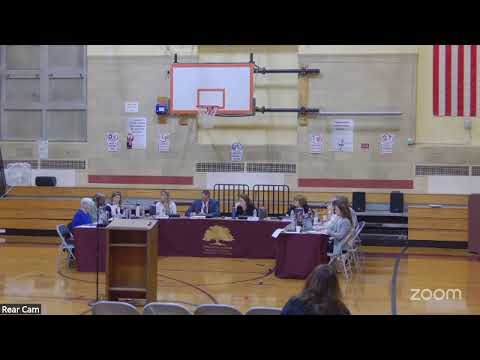
The Arlington Central School District Board of Education discussed a proposed PILOT (payment in lieu of taxes) agreement for a private solar array and heard background from district staff and consultants on Oct. 14.
Superintendent Stan Benante introduced the item as a continuation of a prior meeting presentation about an IPP Solar proposal for a Pleasant Valley site. District staff member Kevin reviewed local comparable arrangements, saying a recent array at Green Haven was already under an agreement that would pay the district for the solar improvement at a rate similar to the IPP proposal.
District counsel/staff member Steve explained how the PILOT is structured under state law and described the pilot rate that is proposed. "This pilot is a 6,000 per megawatt hour, tax rate," he said, adding that similar previous agreements in the district have used a $6,000 figure. Steve also summarized the typical term: "All pilots in the state are 15 years," and that the price in prior deals escalated 2% annually over the pilot term.
Board members asked operational questions. Jeff asked whether the town-owned array on Route 55 is municipally owned; Kevin replied that Route 55's array is owned by the town and therefore not subject to the district tax because the town is the owner. The board also discussed implementation timing: Kevin said the Green Haven agreement (the earlier example) was approved by the board on Nov. 28, 2023, but payments from that agreement had not yet started.
Board chair Stan Benante asked for a temperature check on whether members were comfortable advancing the proposal to a vote at the next meeting; members indicated they were "reasonably comfortable" but encouraged colleagues to raise any additional concerns before the vote.
Why it matters: PILOT agreements change how a solar project's tax value is assessed and paid to taxing jurisdictions. If approved, the proposed PILOT would set payments from the solar developer to the district for the project's rated term; district staff said the proposal is modeled on a prior local arrangement.
Outstanding details: Staff attributed a $6,000 rate to the proposal, but the transcript contains inconsistent unit wording (Steve referred in different moments both to "per megawatt hour" and to "per kilowatt hour"). The transcript records staff descriptions and board questions but no final vote; the board is scheduled to vote at a later meeting. District staff said payments from a comparable project were expected to begin soon.