
Council committee weighs same‑day trash put‑out and mandatory container rules as city ramps up rodent plan
Get AI-powered insights, summaries, and transcripts
Subscribe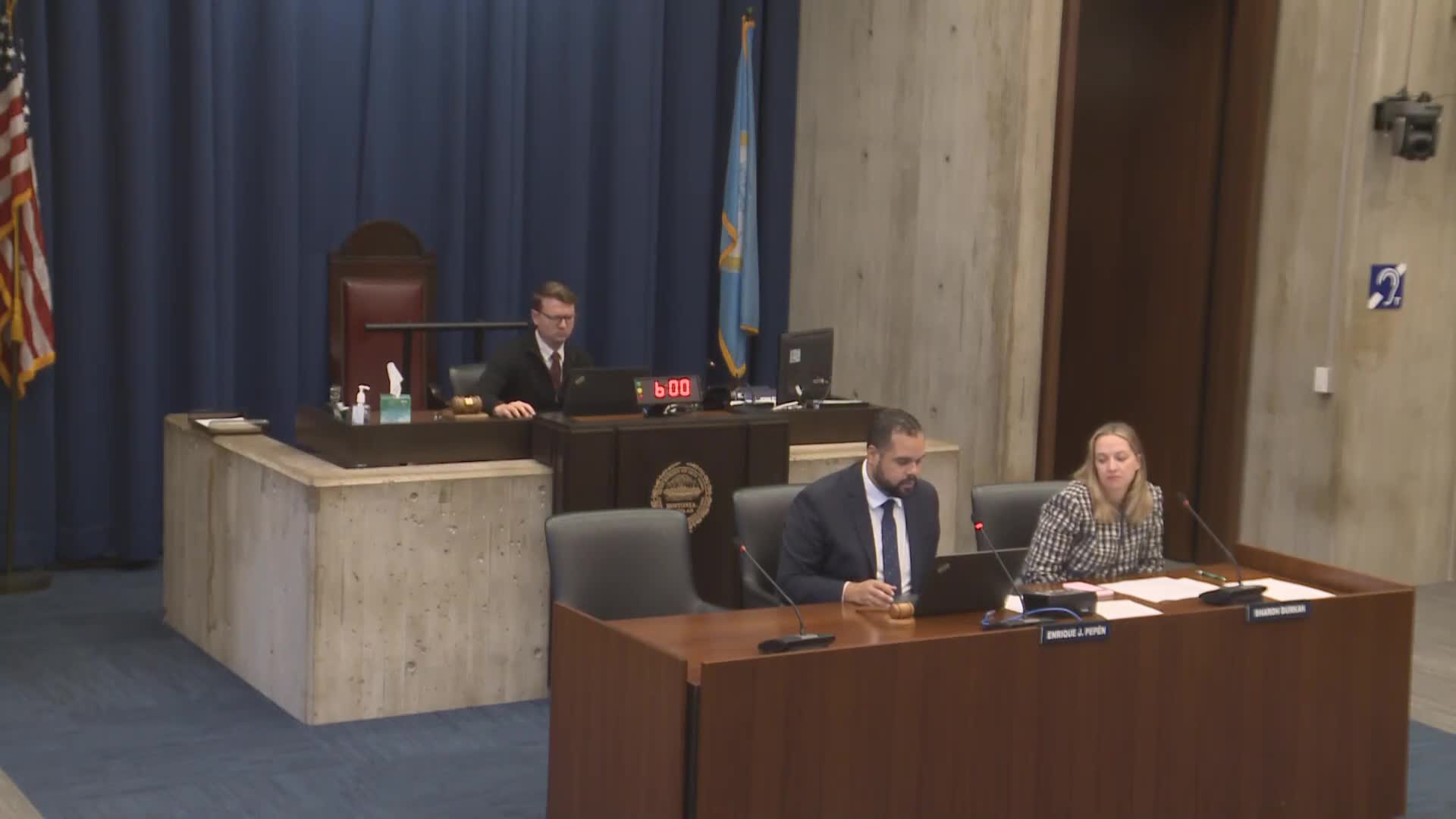
Summary
Boston City Council committee members and city officials discussed shifting to same‑day residential trash put‑out, enforcing commercial containerization and other measures to reduce rodent activity during an Oct. 2 hearing. City staff outlined pilots, contract limits and budget pressures; residents urged faster action.
Boston City Council members and city sanitation officials on Oct. 2 discussed proposals to require same‑day put‑out and pick‑up of non‑containerized residential trash and to increase containerization of commercial waste as part of the city’s effort to curb a growing rodent problem.
The hearing before the Committee on City Services and Innovation Technology, chaired by Councilor Enrique Pepin, reviewed the Boston Rodent Action Plan (BRAP) and a range of operational, contractual and community steps city staff say are needed to shorten the time trash sits on sidewalks and reduce food sources for rats.
"The way trash is managed in our city affects every Boston resident's daily life," said Councilor Sharon Durkin, a sponsor of the docket. Durkin framed the hearing around two near‑term proposals: moving to a same‑day put‑out/pick‑up window for residential paper/bag trash and requiring commercial trash — especially food waste — to be secured in containers rather than left in bags.
John Ulrich, assistant commissioner of environmental services at the Inspectional Services Department and chair of the Boston Rodent Action Plan, described BRAP as "a coordinated citywide effort where departments are working together" to test traps, rodent‑resistant barrels, sensors and outreach. Ulrich and other staff said pilots and data collection are under way and further community input is scheduled.
Dennis Roche, superintendent of waste reduction for Boston Public Works, described current collection operations and limits. "Trash typically begins at 6 a.m. every morning. Wraps up hopefully by about 4 p.m.," Roche said, explaining the city’s two‑neighborhood routing is designed for fiscal and operational efficiency and that a move to later, single‑load collection or more trucks would raise contract costs.
City staff said containerization for all trash is technically required by state sanitation law but has not been enforced citywide because dense neighborhoods such as Beacon Hill and the North End lack space for bins and some collection equipment cannot operate in narrow streets. Roche said the city's current approach has been to avoid a citywide enforcement policy that would penalize neighborhoods unable to store containers.
Officials laid out specific near‑term and medium‑term steps under BRAP: continued data collection from sensors and traps in pilot areas (including Boston Housing Authority sites), a community education and awareness effort (ads on the MBTA and targeted outreach), working with a Harvard Kennedy School class to analyze tradeoffs, and using a consultant to model alternative contract options that could create a later morning window for residents to set out trash.
Staff also provided budget and operations figures during questioning: city collection contracts are roughly $45 million annually, disposal costs about $30–40 million, curbside composting about $5 million, and the Public Works department's budget on the order of $100 million. Roche said disposal currently costs about $110 per ton for trash and roughly $73 per ton for recycling, noting recycling markets have weakened.
Council members pressed for stronger enforcement, targeted outreach in language communities and more rapid pilots in dense neighborhoods. Councilor Ed Flynn called the situation "a public health crisis," and urged centralized leadership and enforcement. He also referenced a Tufts University study mentioned at the hearing linking rats to a pathogen of concern.
Residents who testified described local impacts. Paul O'Connor of the Back Bay said rats had caused repeated, costly damage to his parked car. Block‑captain leader Ali Foley described neighborhood cleanup pilots and urged expanded outreach to landlords and property managers. Heidi Nichols Baldacci of Beacon Hill said her condo association has worked with ISD and an exterminator but still faces persistent rat activity.
City staff said enforcement resources are limited: the code enforcement team that enforces trash rules is a small unit (staff of about 17), and many changes — such as mandating containerization or instituting per‑bin fees like other North American cities — would require up‑front investment and contract renegotiation. Roche noted existing downtown and dense neighborhoods are being prioritized for pilots and for potential contract changes; current trash contracts run through June 30, 2027, and new contract specifications are being developed for the next bid cycle.
No ordinance vote or formal council action was taken at the hearing. Committee members and staff agreed to continue community engagement, to publish findings from pilots and from the Harvard Kennedy School review, and to hold additional public meetings (staff announced a public meeting scheduled for Oct. 16). The city intends to present options and cost estimates before any contract changes are made.
The hearing closed with members and residents urging accelerated action and better outreach to renters, non‑English speakers and small businesses. City staff said they would return to the committee with analyses and pilot results before recommending enforceable citywide policy changes.