
Council orders hearing on expanding composting after program demand outpaced capacity
Get AI-powered insights, summaries, and transcripts
Subscribe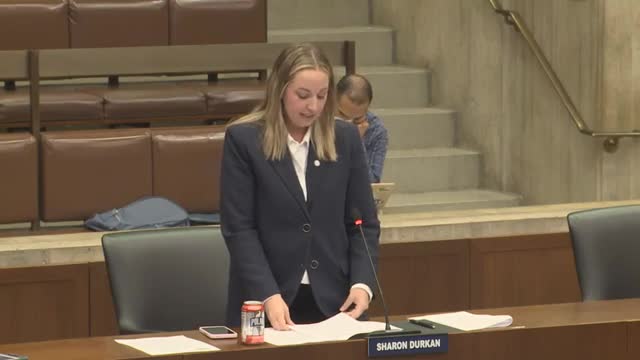
Summary
Councilors approved a hearing order to study expanding Boston’s composting services — including curbside and Project Oscar bins — to inform how to scale capacity, serve larger residential and commercial properties, and help meet state 2030 waste diversion goals.
The Boston City Council on Oct. 1 adopted a hearing order directing a committee review of city composting services and options to expand capacity after councilors said demand has outpaced the current program.
Councilor Durkin, sponsor of the order, said curbside programs and Project Oscar neighborhood drop-off bins have been “incredibly popular” and that contracted composting capacity is strained. “Expanding city composting, including to commercial properties and larger residential buildings, will be crucial in helping us reach our environmental goals,” Durkin said, citing the state’s 2030 solid-waste master plan goals.
Councilors emphasized multiple reasons to expand services: reducing food waste to meet the Massachusetts Department of Environmental Protection’s organics diversion targets, improving neighborhood quality of life by limiting rodent attractants, and expanding access for large multi-unit buildings that are not currently eligible for curbside service. Councilor Flynn noted the need for outreach and multi-lingual education so residents in non-English speaking neighborhoods can participate effectively.
Councilor Coletta Zapata and others noted the program’s current limits — city curbside service covers households in buildings with fewer than seven units and excludes some commercial and larger residential properties. Councilors flagged food recovery and upstream approaches as complementary strategies.
The council added multiple co-sponsors and referred docket 1748 to the Committee on City Services and Innovation Technology for a public hearing to explore capacity, contracting, barriers to expansion and potential funding or operational models. Councilors asked the committee to invite BPS, the Department of Public Works, public-health and community partners and to consider Project Oscar siting patterns in neighborhoods such as Allston and Brighton.