Get Full Government Meeting Transcripts, Videos, & Alerts Forever!
Get email alerts on the Arpa Spending topic
No spam. Unsubscribe anytime.
Boston officials say ARPA funds mostly committed; $129 million remains as departments work to spend by Dec. 31, 2026
Summary
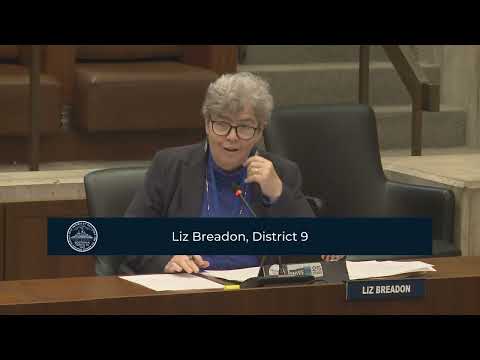
Boston City Council Committee on COVID-19 Recovery members heard an update Sept. 24 on Boston's use of federal American Rescue Plan Act (ARPA) funds, including how much the city has spent, where remaining dollars are committed and the steps the administration is taking to meet the U.S. Treasury expenditure deadline of Dec. 31, 2026.
Boston City Council Committee on COVID-19 Recovery members heard an update Sept. 24 on Boston's use of federal American Rescue Plan Act (ARPA) funds, including how much the city has spent, where remaining dollars are committed and the steps the administration is taking to meet the U.S. Treasury expenditure deadline of Dec. 31, 2026.
The nut graf: City officials told councilors $429,400,000 of the $558,700,000 received directly by the city has been spent as of the latest Treasury quarterly report; $129,300,000 remains. City staff said most remaining balances are committed to housing projects and other multi-year contracts and that departments are tracking outstanding purchase orders and expecting to spend the funds on schedule.
Eliza Salmon, director of ARPA implementation in the finance cabinet, said the city allocated the ARPA State and Local Fiscal Recovery Fund award across 127 projects managed by 20 departments and that the largest share, 43 percent, went to housing. "My name is Eliza Salmon. I'm the director of ARPA implementation in the finance cabinet," she told the committee and said the administration was tracking balances, meeting regularly with departments and updating the public spending dashboard at boston.gov/recover.
Rick Wilson, director of administration and finance at the mayor's office of housing, detailed housing investments the administration said are using the funds. Wilson said ARPA money has supported down-payment and mortgage assistance ($12.3 million to nearly 400 first-time buyers), $50 million toward homeownership development to create 239 units, roughly $24 million for permanent supportive housing estimated to produce about 246 units, and a $52 million acquisition opportunity program that the administration said will convert nearly 700 rental units to income-restricted housing (including a 374-unit project at Fairlawn Estates in Mattapan). He said many projects are in construction or have closed and are drawing down funds.
Donald Wright, deputy chief at the Office of Economic Opportunity and Inclusion, summarized small-business spending and workforce initiatives funded by ARPA, including a $13 million small-business relief fund that awarded nearly 1,000 grants and a $10 million "space" program intended to reactivate vacant storefronts. Wright described a separate $7.3 million scale program, contract opportunity funds and technical assistance contracts intended to help minority-, women- and locally owned businesses compete for larger contracts.
On oversight and audit questions, Councilor Erin Murphy and Councilor Ed Flynn pressed city staff on the pace of spending, risks if obligations fall through and whether programs will be measured for effectiveness. "Spending the money appropriately with transparency, with accountability is more important," Flynn said. Salmon and the administration's staff described weekly or biweekly check-ins between the finance cabinet and managing departments to confirm projected payment schedules and to hold departments accountable to contract end dates.
Salmon said the ARPA SLFRF award was provided to the city upfront and is "in hand," which the finance cabinet said reduces the short-term risk that federal cancellations would remove the funds. She and other presenters also said the city's flexibility to reallocate ARPA dollars in 2025—6 is constrained: most changes are limited to reassigning funds among existing obligated projects that meet ARPA eligibility rules and that reallocation must be consistent with the original obligation deadlines.
Councilors asked several project-specific and reporting questions the administration said it would follow up on. Requests recorded during the hearing included: a list of ARPA awardees by neighborhood and business name for the space and scale grants; a list of ARPA-funded awards and contracts to veteran-serving organizations; project-level timelines and remaining balances for large housing and deep-energy retrofit projects; and documentation on audits and any corrective actions. The committee chair said the dockets would remain in committee and that staff would provide follow-up materials.
Council members and presenters also discussed several named projects and program outcomes cited by department speakers: Welcome Home Boston homeownership projects, energy retrofits for large multifamily buildings (including a pilot for small property owners), ARPA-funded pass-throughs to the Boston Housing Authority for ventilation and window upgrades (city staff cited approximately $32 million passed through), and supportive housing acquisitions including the Envision Hotel and other conversions intended to add permanent supportive units.
No formal votes were taken during the hearing. Staff and councilors agreed to a second round of follow-up questions and additional data requests; officials said they expected department balances to be spent down as projects reach construction milestones and invoices are processed.
The hearing closed with one public commenter who urged careful attention to which neighborhoods and populations benefit from ARPA-funded programs and questioned whether some investments (for example certain mobility projects) reach lower-income and immigrant residents.
Ending: The committee kept both dockets (0476 and 0482) in committee and requested additional project-level reporting and lists from the administration ahead of future oversight meetings.