Get Full Government Meeting Transcripts, Videos, & Alerts Forever!
Get email alerts on the School Budgeting topic
No spam. Unsubscribe anytime.
Englewood Board of Education reviews 2026–27 budget schedule and debates earlier draft and public input
Summary
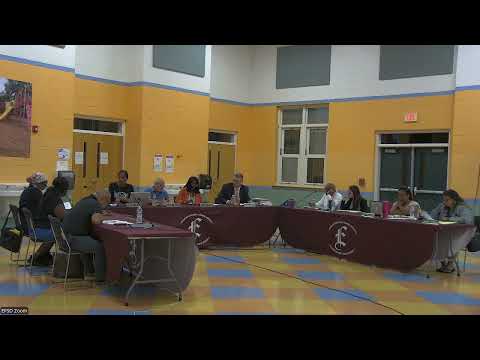
At a special meeting called to discuss the 2026–27 budget planning process, the Englewood Board of Education reviewed a more detailed timeline from the district’s business office and debated whether the full board and the public should see draft budget documents earlier in the calendar.
At a special meeting called to discuss the 2026–27 budget planning process, the Englewood Board of Education reviewed a more detailed timeline from the district’s business office and debated whether the full board and the public should see draft budget documents earlier in the calendar.
The board’s business administrator, Michael Steinmetz, presented a draft schedule that he said begins with pre-meetings with administrators before Thanksgiving, includes entry of budgets into the district accounting system in December, a rough-draft update to the finance committee by Jan. 31, a tentative budget motion around March 16, county review in April, and a publicly advertised budget hearing and board adoption by May 5 (dates described by Steinmetz as estimates and subject to change pending the state budget cycle). Steinmetz stressed the schedule is contingent on state aid timing and said many districts must revise plans when the governor’s budget address changes revenue expectations.
Why it matters: the board must approve the district’s final budget, and state aid timing can alter the dollars available for staffing, programs and services. Board members said the district’s prior budget cycle felt rushed and urged procedures to allow earlier board and public review so feedback can be considered before submission to the county and state.
Steinmetz described the draft calendar and the business office’s role. He said the administration will “coordinate all stages of budget development to ensure compliance with state regulations, to provide timely, accurate, and understandable budget information,” and to “submit the budget to the New Jersey Department of Education.” He also noted the district’s accounting software and a more detailed checklist in this year’s packet. On the uncertainty that drives timing, Steinmetz warned, “You’re building a wish list,” if staff prepare plans before state aid is finalized.
Board members pushed several changes to the timeline and process. Board member Rachel proposed that the full board see an earlier draft in December or January — not just the finance committee — so members and the public would have time in February and March to offer substantive feedback. Rachel said that under the current schedule the first time the full board typically sees the budget is in mid-March, leaving little window for incorporative feedback before submission to the county.
Board member David supported the idea of quicker full-board access to budget numbers once the governor’s address is released: “the administration cannot spend a dime without board approval,” he said, arguing that board members should have prompt access to firm numbers so they can request items be added or adjusted before the county submission. Karen (board member) clarified that under the present draft schedule board members will receive a draft within seven days of key state guidance, but she warned the timeline could slide if the state delays release.
Members discussed converting the finance committee into a committee of the whole so all board members would receive drafts earlier and have more opportunities for discussion. Supporters noted this would give the entire board access to January drafts; opponents cautioned that committee-of-the-whole meetings are public and limit discussion of certain personnel or sensitive matters.
Other procedural and transparency items discussed and clarified: - Steinmetz said the district will generate the public-notice advertisement from the accounting software and that county review typically returns around April 20, after which the district posts the state-required “user-friendly” budget (within 24–48 hours after board adoption). He agreed to add a task to the schedule to send the user‑friendly budget to board members as soon as county approval is obtained. - Steinmetz explained he will prepare and sign the tax-certification form (referred to in the meeting as the A-4F tax certification) along with the town manager’s signature as part of the closing steps. - Board members asked for and Steinmetz offered training on how to read the board secretary’s and treasurer’s reports and said he could provide a training session or smaller-group reviews that comply with quorum rules.
Public engagement: several board members recommended hosting community listening sessions earlier in the calendar to solicit priorities and program requests before final numbers are available. Board members emphasized collecting input ahead of March so that administration can factor public priorities into revisions after state aid is announced.
Public comment: resident Raymond Diaz urged the board to prioritize academic outcomes and asked whether the district’s programs are improving graduation and test scores at Dwight Morrow High School. In response, Dr. Hazleton (superintendent) said the district’s 2024–25 state assessment results were embargoed and would be presented to the community in September; she noted the district’s five‑year strategic plan and earlier growth-data reports and directed Mr. Diaz to the district website for program listings. She also confirmed that the publicly reported 2025–26 budget total is approximately $79,873,803 and that that figure excludes federal and state grant funding.
Votes at a glance: - Motion to move to executive session to interview legal firms for legal professional services: motion made and approved (mover/second not specified in the transcript). (See transcript lines where the motion was introduced and carried.) - Motion to reconvene from executive session: motion made and approved (mover/second not specified). - Motion to extend the meeting in 30‑minute increments: taken by roll call with mixed votes; board did not proceed on that extension as originally proposed. - Motion to extend the meeting for public comment only (short time): motion made, seconded and approved by roll call (mover/second not specified). The board then heard remote and in-person public comment before adjourning. - Motion to adjourn: approved.
What’s next: Steinmetz said administration will update the calendar and add the user-friendly budget delivery step; board members asked for training opportunities and recommended scheduling community engagement sessions before the March tentative motion so the public’s priorities can be considered if state aid allows changes. Several board members signaled continued interest in revising the committee structure or meeting cadence to enable earlier full-board review.
The meeting proceeded to public comment and then adjourned.