
Public commenters urge attention to domestic violence awareness and river water quality
Get AI-powered insights, summaries, and transcripts
Subscribe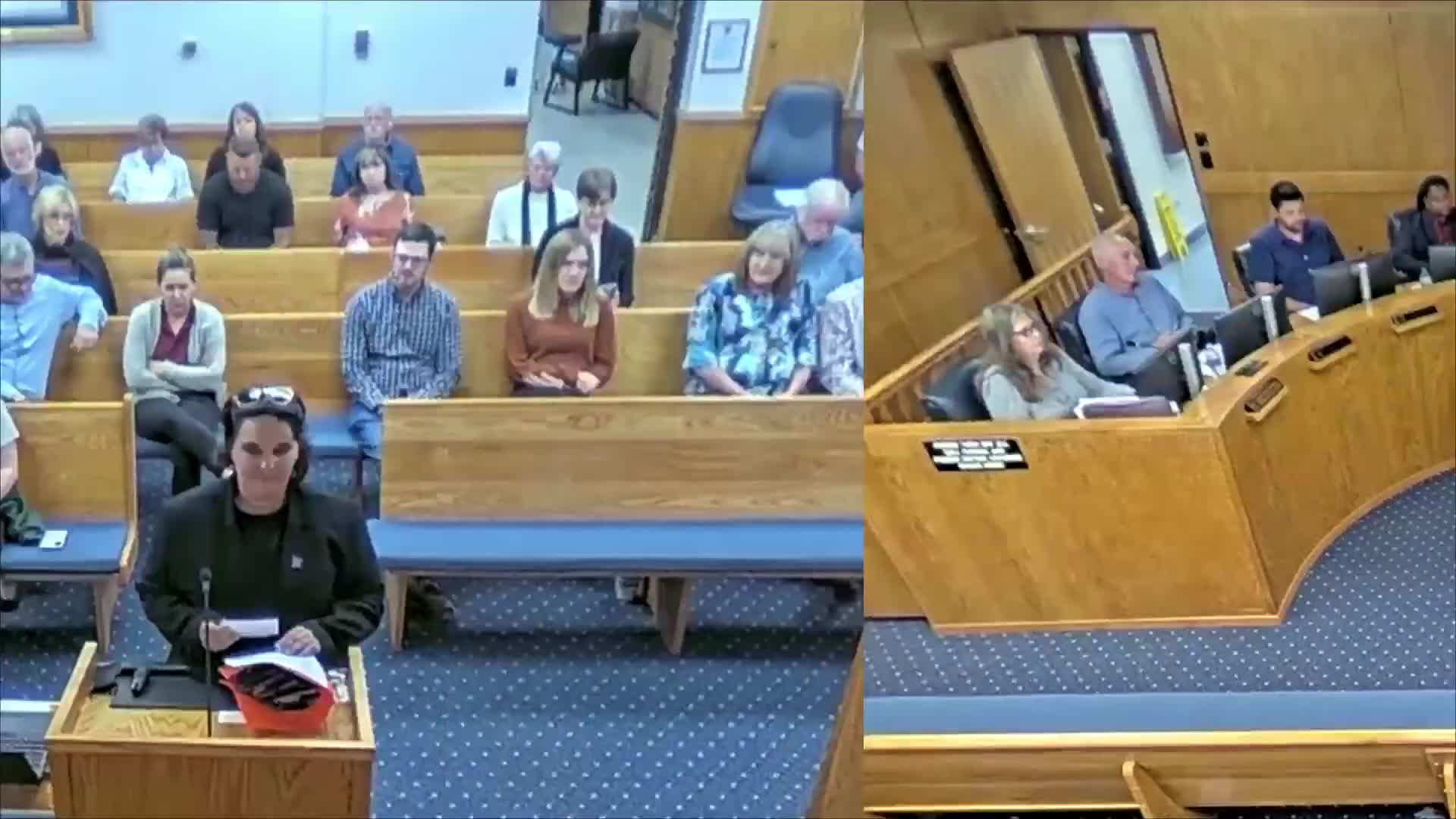
Summary
Residents and volunteer committees used the public‑comment period to ask the board to accept donated flags and a proclamation for domestic violence awareness and to consider volunteer technical assistance and water‑quality monitoring to address persistent E. coli contamination in local streams.
Several speakers used the Macon County public‑comment period to raise community safety and environmental concerns.
Pearl Phillips, who identified herself as a survivor of domestic violence, asked the board to accept flags her family is donating for each county district and a proclamation to raise awareness of domestic violence. Phillips cited state data showing a high share of homicides related to arguments or conflicts and asked the county to help shine a light on the issue. The board and staff indicated they would prepare a proclamation and copies would be shared with the board.
Representatives of the Macon County Water Quality Advisory Committee — which the speakers said includes local experts in hydrology, agriculture and stream restoration — offered the group’s volunteer services to county government. Bill McCarthy described a July letter offering free consultative assistance; the committee’s goal is to help the county prepare for future environmental incidents similar to those experienced after Tropical Storm Helene. Carolyn Porter read hydrology‑focused remarks from Katie Price (executive director, Watershed Association of the Tuckasegee River) highlighting persistent E. coli contamination in the Little Tennessee River monitoring sites and noting that human sources (septic systems and leaking wastewater infrastructure) commonly contribute to high bacteria counts, which can become chronic when bacteria reside in river sediments.
McCarthy and Porter said the advisory committee is not seeking paid work or regulatory authority but wants to volunteer technical expertise for planning and response. Commissioners thanked the speakers and indicated staff would follow up on the committee’s offer. No formal board action was taken during the public comment period.