Get Full Government Meeting Transcripts, Videos, & Alerts Forever!
Get email alerts on the Wildfire Fuels Targeted Grazing topic
No spam. Unsubscribe anytime.
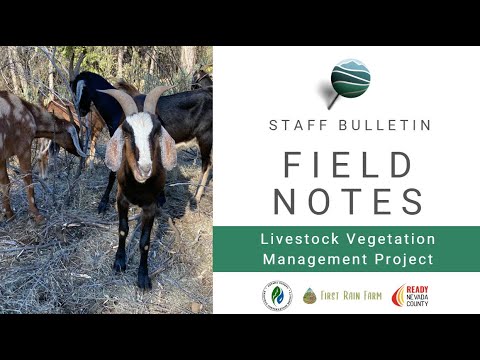
Nevada County pilot uses goats for targeted grazing to reduce wildfire fuels
Summary
Officials described a pilot targeted-grazing project using goats and sheep to reduce fuel loads on Nevada County land, measure post-treatment fuel reduction and support local ranch workforce development.
Nathan Alcorn, program director for the Nevada County Resource Conservation District, and Tim Van Wagner of First Rain Land Stewardship Services described a pilot targeted-grazing project intended to reduce wildfire fuel loads on Nevada County land. The presenters said the project uses goats and sheep to reach vegetation in steep or dense areas that machinery cannot access.
"The goals of this project are, it's a pilot project, first and foremost," Alcorn said, adding that the project will measure fuel loads and monitor vegetation regrowth. Alcorn said project metrics include weighing measurable fuel loads from a 1-square-foot area after treatment and tracking what species return and continuity patterns of fuel species.
Van Wagner said the pilot deployed three vendors across five locations and that the herd included about 150 goats and 11 sheep. "Sheep are more like grazers and goats are considered browsers," he said, describing the animals' different feeding behaviors and why both are useful. Van Wagner said goats can access terrain where machinery cannot, including steep, tree-covered slopes: "The other day I came here and they were up 20 feet up in a tree that was sideways on the hillside."
Presenters described partnerships with a land trust, OES and the Resource Conservation District as part of the project. Van Wagner emphasized the role of fencing in operations: "The electric fence is essentially how we ... corral these animals. Without them respecting this fence, we'd have animals escaping all the time." He also said one aim is to boost workforce development among the local ranching community by using local vendors to operate targeted grazing.
Speakers characterized targeted grazing as a maintenance tool rather than a heavy-treatment replacement for mechanical mastication or hand crews: "They're not the heavy treatment ... The main thing that they have to be able to do is respect the fence," Van Wagner said. Alcorn noted that because vegetation and fuels have accumulated heavily, initial heavy reductions may still be needed before grazing is used for ongoing maintenance.
Project organizers said they will evaluate measured post-treatment fuel loads, vegetation regrowth species and continuity patterns to determine the pilot's effectiveness and next steps. Funding sources, exact locations and a formal timeline beyond the pilot-stage description were not specified in the recorded remarks.