Committee hears how Minnesota counties, state and FBI stopped hundreds of falsified voter registrations; officials say no invalid ballots were cast
Loading...
Summary
The House Prevent Fraud Prevention and State Agency Oversight Committee on June 13 heard testimony about a multi‑county scheme in which two contractors pleaded guilty to conspiracy to commit voter registration fraud after submitting large batches of falsified registration forms.
The House Prevent Fraud Prevention and State Agency Oversight Committee on June 13 heard testimony about a multi‑county scheme in which two contractors pleaded guilty to conspiracy to commit voter registration fraud after submitting large batches of falsified registration forms.
Bill Glahn, a policy fellow with the Center of the American Experiment, told the committee he observed court hearings in which two defendants — Ronnie Williams (also known as Michael Gibson) and Lorraine Combs — admitted to preparing and sending hundreds of falsified voter registration forms to a foundation that then submitted applications to county election offices. “She admitted to preparing more than 500 fake voter registration forms,” Glahn said of Combs; he said the total set of identified applications was “higher than 500, but less than 600.”
The committee’s top election official, Minnesota Secretary of State Steve Simon, said state and local safeguards — including county review of paper forms, address verification by postal verification cards and matches through the statewide voter registration system (SVRS) — and cooperation with the FBI and the U.S. Department of Justice prevented any fraudulent ballots from being cast. “This is not a case about fraudulent votes,” Simon told the committee. “This is ultimately a case of the system working to detect these applications so they could be appropriately challenged and referred to law enforcement for prosecution and conviction.”
Why it matters
Committee members said the case shows both a potential vulnerability — third parties submitting large batches of paper registrations — and the effectiveness of checks built into Minnesota’s election system. Lawmakers pressed election officials on how the forms were submitted, how many counties saw suspicious batches, and whether any applications became active voter records that could have produced ballots.
What the hearings established
- Chain of submission: According to testimony, the falsified applications were prepared by contractors and provided to an entity identified in court papers as a foundation (referred to in testimony as the Anika Foundation). The foundation’s agents submitted the forms to county election offices; the foundation itself has not been charged. Glahn said the conspirators “never directly dealt directly with the counties.”
- Scope and timing: Glahn and Secretary Simon said the applications were submitted in the 2021–22 election cycle. Carver County was explicitly named in the charging documents; state officials reported that 13 counties ultimately flagged suspicious applications and provided information to the FBI. Simon said the Department of Justice announced charges on June 13, 2025, and both defendants pleaded guilty in late June/early July 2025.
- Volume and legal status: Committee testimony placed the number of suspect applications at “higher than 500, but less than 600.” Glahn described Combs as having prepared “more than 500” falsified forms. Combs’s sentencing was described as scheduled “at the end of this month” (per testimony) with a guidelines range from probation to six months; Williams’s criminal‑history exposure was described as broader, with a guideline range noted during the hearing from six to 30 months and a statutory maximum of five years. Neither defendant had been sentenced by the time of the hearing.
- How the fraud was caught: Counties and the state reported patterns that triggered follow up: similar handwriting, nonresidential or otherwise invalid addresses on the paper forms, and postal verification cards returned as undeliverable. Carver County election staff flagged suspicious batches in 2022 and contacted local law enforcement, which in turn engaged the FBI. The FBI performed forensic work on the paper forms and coordinated interviews with county staff.
- Records and voting history: The secretary’s office reviewed identified records in SVRS and reported that many suspect forms were never entered because of address deficiencies; other records were challenged and later inactivated following returned postal verification cards. Secretary Simon said state and county checks showed “no ballots had been cast or even requested for any of the potentially suspicious records.” Paul Whannel, director of elections in the secretary’s office, explained that records that fail verification are queued for county review, flagged as “incomplete” or “challenged,” and, in some cases, marked inactive if postal verification returns indicate the registrant does not reside at the address.
Questions from lawmakers
Committee members pressed election officials on remaining vulnerabilities. Vice Chair Anderson asked whether a person with a Minnesota driver’s license who is not a U.S. citizen could present that ID and vote after vouching; Paul Whannel and Secretary Simon explained the process is built around two checks — identity and residence — and said counties refer suspected ineligible voting to county attorneys for investigation. Whannel emphasized that for first‑time federal mail registrants who are returned as unverifiable, federal rules require photo ID to clear the registration at the polling place. “This is to affirm their identity,” Whannel said of the photo‑ID requirement for those first‑time registrants.
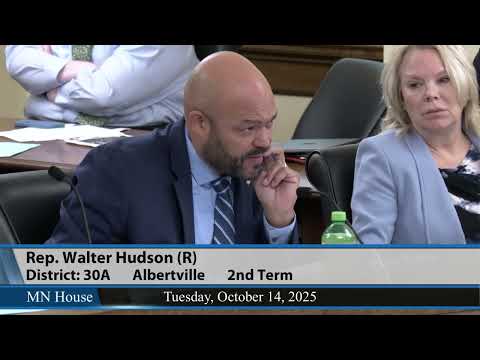
Representative Hudson and others asked about whether bad actors could have achieved the same aim by using same‑day registration and vouching. Whannel noted vouching requires the voucher be a registered Minnesota voter and involves a legally binding oath; Simon said counties’ post‑election reports and prosecutorial remedies provide further deterrence.
Process, oversight and prosecution
Simon said the secretary’s office alerted all 87 county election leads once the FBI identified suspicious applications and provided guidance on safe handling, evidence preservation and SVRS procedures. The office shared its findings with federal investigators. Simon and Whannel characterized county election staff — particularly Carver County election staff and the Carver County sheriff’s office — as pivotal to detecting the scheme.
Committee members also asked why the matter was prosecuted federally rather than by county attorneys. Witnesses said the FBI led the criminal investigation; several county attorneys deferred to federal prosecutors as the federal investigation unfolded. Chair Pinto quoted Minnesota statute 201.275 on county prosecutorial duties and members discussed how local and federal authorities coordinate when investigations overlap.
Votes at a glance
- Approval of minutes (September 17): Vice Chair Anderson moved approval. The committee approved the minutes by voice vote (ayes recorded; no recorded noes). Outcome: approved.
Discussion, direction and next steps
There was no committee vote on policy or law during this hearing. Members requested follow‑up information from the secretary’s office, including: a county‑by‑county list of the identified registrations, the current count of inactivated or challenged records tied to the investigation, and any details the FBI can lawfully share about payments to contractors and the foundation. Several members asked for the foundation’s 990 filings and related grant records; Secretary Simon said his office does not make grants to nonprofits and that the committee could pursue oversight inquiries through appropriate channels.
Ending
Lawmakers characterized the episode as both a warning about third‑party registration activity and evidence that layered checks across county, state and federal systems detected the fraud before any ballots were cast. “Thanks to the coordination and collaboration between law enforcement and election officials at the federal, state, and county level, their actions were identified, the records were flagged, no invalid votes were cast, and the perpetrators have been brought to justice,” Simon said.