
Bedford County School Board opens review of student dress code, asks administration to survey community
Get AI-powered insights, summaries, and transcripts
Subscribe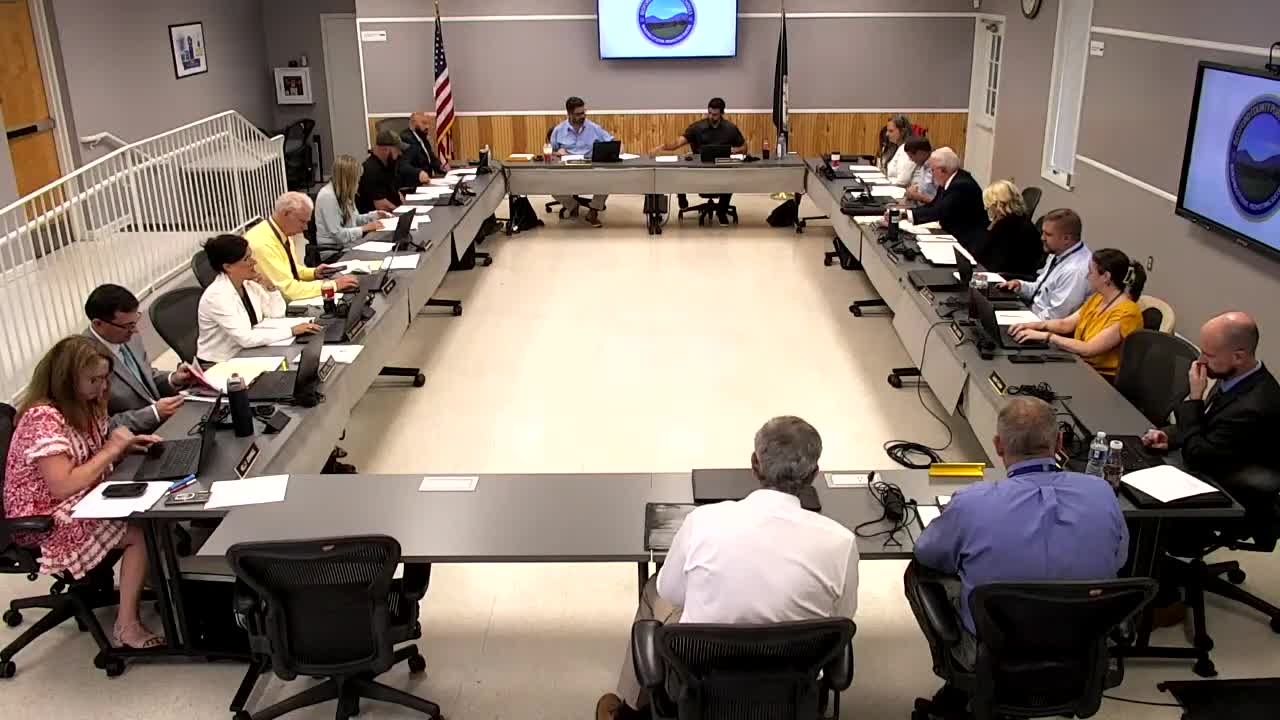
Summary
Board members discussed consistency of enforcement and barriers to compliance and agreed to ask staff to develop a community survey and return recommendations for a dress-code review committee and enforcement protocol.
Miss Purvis opened the work-session discussion on the school division’s dress code by saying she was bringing the topic “for the purpose of finding acceptable solutions,” and proposed a community-inclusive review. Board members and administrators discussed enforcement, equity, and practical steps for the coming school year.
Board members heard that the current student dress code emphasizes safety and disruption standards — clothing must “cover the torso below the armpits as well as the buttocks” — and that practices have changed several times since 2011. Administrators said principals have discretion to determine whether attire is a safety or disruption issue and that principals already maintain school-specific handbook language for items such as pajamas, transparent garments and bedroom slippers. Those handbook provisions are communicated to students during the first week of school, administrators said.
Several board members emphasized inconsistent enforcement across schools and zones as the central problem. A board member who led the review of the division’s discipline matrix said staff have worked to standardize disciplinary responses across zones and that the matrix is now available to principals and will be used this school year. Board members and administrators discussed practical implementation issues such as: who enforces gender-separated checks (female staff are often asked to address girls’ attire), whether students who lack alternatives can be punished for wearing pajamas, and the workload on teachers and principals.
Miss Purvis proposed three steps to begin the work: appoint a dress-code committee with students, parents, teachers, principals and board members; mount a year-long promotion campaign about self-respect and standards; and ask administration to develop a simple, consistent enforcement protocol. After discussion, the board agreed on a first, concrete step: staff should design a survey for parents, students and teachers to be distributed after school starts (administration suggested waiting until September to give principals time to see the issue on their campuses). Members said the survey should be shared with the board for comment before deployment and results should inform any committee work.
Administrators stressed existing tools and practices: principals said they maintain school-specific handbook language and extra clothing is available at schools to remedy violations immediately. Several board members urged greater emphasis on staff modeling (teachers and administrators) and using pictures of acceptable attire to reduce ambiguity. There was no vote or policy change at the meeting; the board directed staff to prepare and circulate a survey and to return with recommended next steps, including a proposed committee structure, timeline and draft enforcement protocol.
The discussion also touched on equity concerns: board members acknowledged parents’ comments that some students wear pajamas because they cannot afford alternatives, and asked staff to consider equity and resources as part of any recommended change.
The board did not adopt changes to the written student code of conduct at this meeting.