Get Full Government Meeting Transcripts, Videos, & Alerts Forever!
Get email alerts on the Public Safety Technology topic
No spam. Unsubscribe anytime.
Sheriff reports countywide license-plate camera network; court authorizes three additional body cameras
Summary
Sheriff Ben Stratton briefed the court on use of fixed and mobile license-plate readers and said the technology assisted a recent arrest. The court approved a vendor quote to add three body cameras under a five-year agreement.
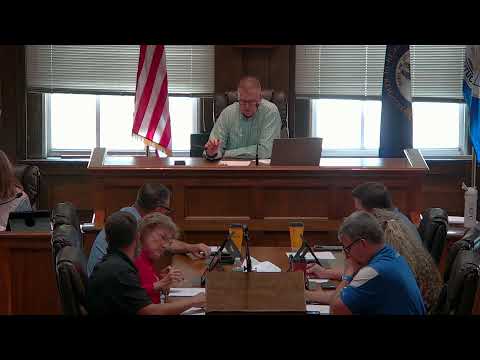
Sheriff Ben Stratton told the fiscal court that Logan County's stationary and mobile license-plate cameras have aided investigations and interagency responses, and he described plans and recent purchases for additional body-worn cameras for deputies.
Why it matters: the sheriff's description illustrates how law-enforcement technology is used in the county, and the purchase affects evidence collection, officer accountability and recurring budget obligations for hardware and software.
Sheriff Ben Stratton said the county's permanent camera mounts are positioned at county-line approaches and that the county also uses two mobile units that are moved from pole to pole. "Our cameras focus inwards. So as you enter the county, it reads your plate coming in," Stratton said, explaining the configuration and giving a recent example where the cameras helped locate a suspect with multiple active cases.
The court approved a quote to purchase three additional body cameras for the sheriff's office, under a five-year arrangement discussed during the meeting. County officials said the five-year term spreads cost and service coverage over multiple budget years. The court recorded the approval by roll call.
Stratton said the county participates in a broad law-enforcement network that increases the utility of camera data; he told the court the system is connected to more than 600 other agency systems, which can speed location and identification of vehicles and persons of interest.
No formal motion to change policy on the use of cameras was recorded; the action on the agenda was a contract/quote approval for hardware and service.