Get Full Government Meeting Transcripts, Videos, & Alerts Forever!
Get email alerts on the Budget topic
No spam. Unsubscribe anytime.
Cache County officials outline $7.9 million budget shortfall, propose COLA and market pay adjustments
Summary
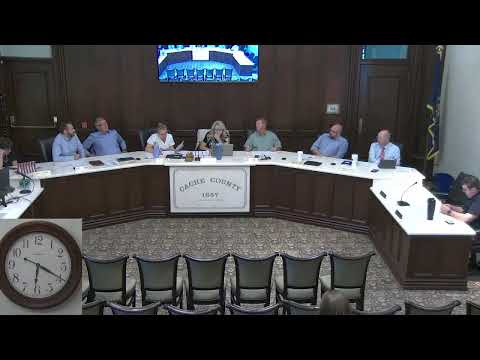
Cache County officials on Tuesday reviewed a proposed 2026 level‑2 budget that shows about $68.9 million in requested expenditures and a projected $7.9 million shortfall, county staff said at a special council meeting.
Cache County officials on Tuesday reviewed a proposed 2026 level‑2 budget that shows about $68.9 million in requested expenditures and a projected $7.9 million shortfall, county staff said at a special council meeting.
The council heard a compensation committee presentation from Amy, who said the committee recommends a 2.5% cost‑of‑living adjustment across most employees, targeted market adjustments for specific job titles and a merit program tied to performance. "Facts are neutral," Amy told the council as she walked through the data and comparison groups used to calculate pay midpoints.
The recommendation presented to the council would raise total employee compensation costs in stages: Amy reported a 2.5% COLA, followed by market adjustments and then merit increases. Using her figures, the committee estimates the COLA and market adjustments together would add roughly $695,000 to the county payroll budget and that a market adjustment for public (non‑sworn) employees after COLA would be about $266,000; merit increases were estimated at about $435,000 (figures presented by the compensation committee and staff).
Matt, who presented the overall budget and fund data, said public safety drives much of the county's spending. "The county spends 47¢ of every dollar in public safety," Matt said, noting that sheriff's department staffing, jail medical coverage and legal defense costs have risen. He told the council that ongoing costs tied to public safety include higher pay needed to retain deputies, on‑call medical staff for the jail and expanded legal costs for indigent defense.
Staff showed $4.8 million in departmental capital requests for 2026. Matt said roughly $1.3 million of that capital total is expected to come from non‑general fund sources, leaving a $3.5 million effect on the general fund. Major capital asks called out in the presentation included requests from fire/ambulance for new cardiac monitors and an ambulance, public works equipment (a grader and other heavy equipment), and a senior‑center building feasibility request the presenter temporarily excluded because it lacks a firm architect bid.
Matt also summarized the county's projected beginning fund balance for 2026 at about $21 million. Using those figures, staff said closing the $7.9 million gap would require difficult tradeoffs. Matt offered two framing examples for council discussion: funding the entire shortfall through property taxes would require a roughly 36% tax increase, which he said would amount to about $127 a year for an average taxable Cache County property as presented to the council; a split approach—using fund balance for half the shortfall and taxes for the other half—would lower the tax impact to about an 18.8% increase, or about $66 a year for an average taxable property.
Council members pressed staff on alternatives. Several members urged aggressive review of capital and one‑time items before increasing taxes. Council member Dave suggested moving fairgrounds capital requests to the county's dedicated RAPS fund, and other members asked department heads to justify equipment replacements and present a “cut to the bone” scenario that eliminates positions and discretionary spending.
Finance staff (Britney) provided historical context: the county's unassigned fund balance rose after ARPA payments in 2020 and is significantly higher now than it was in 2019, but council members noted the fund balance has trended downward over multiple years and that recent growth in the overall budget and mandated costs (including school security requirements and other unfunded mandates) reduce flexibility.
Staff said the timeline ahead includes the executive releasing a level‑3 tentative budget next week; the council will need to decide by the statutory timeline whether to set a preliminary rate for a truth‑in‑taxation hearing. Matt told the council the truth‑in‑taxation decision is time sensitive and suggested setting the maximum rate the council might adopt as a placeholder because published notices show that number to the public.
No formal budget vote was taken at the meeting. The council moved to adjourn at the end of the session.
What happens next: staff will prepare a tentative level‑3 budget and, at the council's request, provide alternative scenarios that pare capital and operating items to show the tax impact of deeper cuts. The council identified several follow‑up items for staff: a drill‑down on capital that could be deferred or funded from other sources, department‑level proposals that would substantially reduce the general fund impact, and the executive's tentative budget for council consideration the following week.