Planning commission approves 65-unit mixed-use project at 1105 East Valley Boulevard with voluntary soils report
Loading...
Summary
The San Gabriel Planning Commission on Oct. 13 approved a tentative tract map (TM 84118) allowing a 65‑unit mixed‑use condominium project at 1105 East Valley Boulevard, subject to the planning commission’s conditions and the developer’s voluntary commitment to provide existing soil testing reports within one week.
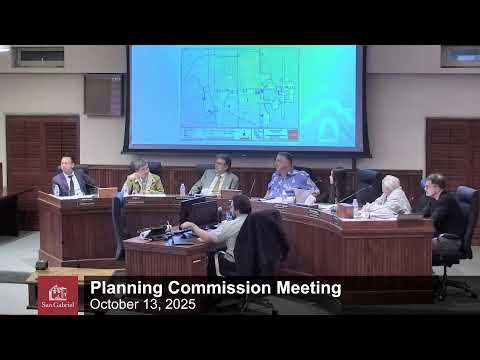
The San Gabriel Planning Commission on Oct. 13 approved a tentative tract map (TM 84118) allowing a 65-unit mixed‑use condominium project at 1105 East Valley Boulevard, subject to the planning commission’s standard conditions of approval and with the developer’s voluntary commitment to provide existing soil testing reports within one week.
The project would combine two adjoining parcels totaling about 38,700 square feet and construct a mixed‑use building with ground‑floor live/work or commercial space and upper‑floor residential units. The developer is requesting density‑bonus concessions and waivers including increased floor‑area ratio, additional stories and reduced setbacks and parking. Staff said the proposal includes 65 units total, with 59 market‑rate units and six units set aside for very‑low‑income households; staff described the project as qualifying for a CEQA Class 15332 (infill) exemption.
Why it matters: the project would add housing and street‑facing commercial space on a Valley Boulevard corridor site currently occupied by automotive uses and a small medical office. The commission’s approval uses state density‑bonus provisions to permit deviations from local development standards in exchange for the on‑site affordable units.
Staff presentation and scope Samantha, planning staff, summarized the application as a tentative tract map (TMap 22‑014 / TM 84118) to combine two parcels at 1105 East Valley Boulevard and to subdivide air rights so condominium units could be sold individually. She told the commission the site is zoned Mixed Use Corridor (MUC) in the Valley Boulevard Specific Plan area and that the applicant requested concessions for floor‑area ratio (staff reported the code baseline at 2.0 and a requested FAR of 2.71), lot‑coverage relief, an additional story (requested five stories where four is standard), rear setback reductions (staff cited areas described as 0 to 26 feet due to the site shape), and a parking ratio reduction. Staff also said technical traffic, air quality, greenhouse gas and noise studies were prepared by the city’s consultant, De Novo Planning Group, and concluded the project met the conditions for a Class 15332 CEQA exemption.
Public comment and the applicant Jesse Zwick, representing the Housing Action Coalition, urged approval, saying the project would transform an underutilized auto repair site into housing and neighborhood‑serving retail and noting the team’s use of a state density bonus to deliver on‑site very‑low‑income units.
The applicant, identified in the hearing as Alex Lyon of All Valley LLC, described the project as a mix of live/work units and residences and said he has experience delivering affordable units in nearby cities. Lyon told commissioners the project team refreshed environmental testing before filing and said lenders had reviewed soil reports as part of financing. “I would not have purchased the site if it was contaminated,” Lyon said.
Commission questions and environmental concerns Multiple commissioners pressed the applicant and staff about potential soil contamination and vapor intrusion from long‑running automotive uses at the site. Commissioners noted a 2021 Phase I environmental assessment, and the applicant and his team said they had conducted further soil testing as part of project due diligence and lender review prior to the hearing. Staff confirmed notices were mailed within a 500‑foot radius and the agenda and materials were posted consistent with noticing rules.
City attorney and scope of commission authority The city attorney advised the commission that the matter is governed by state housing law and that the city’s discretionary authority is limited for a density‑bonus project. He also said the city has limited exposure to liability from discretionary permitting decisions, telling commissioners that “the city is immune from lawsuits dealing with discretionary permitting decisions.” The city attorney indicated negotiating additional indemnification from the property owner would be a separate matter and not within the commission’s normal conditioning authority for this entitlement.
Vote and outcome After deliberation the commission approved the tentative tract map and associated density‑bonus concessions. The approval included a separately moved condition in which the developer agreed voluntarily to provide copies of existing soils/ Phase I (and related) reports to the commission within one week; commissioners debated whether the commission could mandate additional testing but accepted the reports when offered voluntarily. The final recorded roll call on the approval recorded the following votes: Commissioner Tang — yes; Commissioner Lee — yes; Commissioner Carney — yes; Vice Chair McMorris — no (concerned about contamination); Chair Krapman — yes. The motion passed.
What the approval does and next steps The commission’s resolution approves Planning Case TMap 22‑014 / TM 84118 to allow subdivision of air rights for residential condominiums within a mixed‑use development, grant density‑bonus concessions and accept an affordable housing agreement. The project remains subject to the written conditions of approval the planning staff presented; subsequent permits and plan reviews (design review, building permits and public‑works permits) will be required before construction, and those later reviews will require standard geotechnical and soils reports for building and foundation design.
Context and outstanding items Commissioners flagged two issues they said merit monitoring: (1) whether any subsequent technical reports (including the soils/geotechnical report and the lender’s review) identify contamination or require mitigation such as vapor intrusion barriers; and (2) utility easements and a high‑voltage transmission line and Edison easements that cross or abut the site. The applicant and his consultants said they had discussed utilities and easements with Southern California Edison as part of due diligence. Staff noted that regional agencies (e.g., LA County Flood Control for the Rubio Wash) and utility providers review encroachments and applicable setbacks as part of permit reviews.
Quotes “This is the kind of approach we need to meet regional housing goals,” said Jesse Zwick of the Housing Action Coalition in support of the project.
“I would not have purchased the site if it was contaminated,” said Alex Lyon, the applicant, describing the team’s due diligence and lender review of soil testing.
“The city is immune from lawsuits dealing with discretionary permitting decisions,” the city attorney told commissioners when asked about future liability claims.
Ending The commission’s approval allows the applicant to proceed to the subsequent design and building permit phases, subject to city conditions and the developer’s voluntary provision of existing soils reports to the commission. The item will return to administrative and permitting workflows (planning design review, building and safety, fire and public works) before any building work begins.