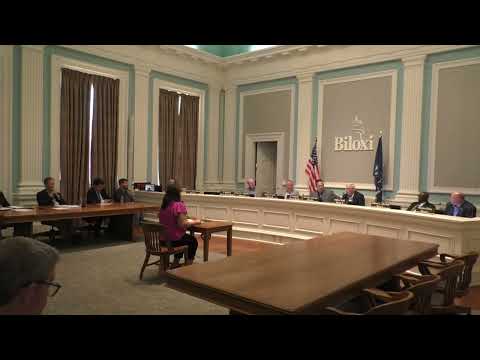
Biloxi council schedules workshop after debate over Save Our Sound funding and coalition role
Loading...
Summary
Councilmembers heard extended remarks on the Save Our Sound Coalition’s advocacy, funding and recent litigation wins and agreed to hold a workshop immediately after the Oct. 21 council meeting to review Biloxi’s financial commitment and coalition activities.
The Biloxi City Council agreed to a workshop immediately after the Oct. 21 council meeting to review the city’s financial commitment to the Save Our Sound Coalition, following extended council discussion about the coalition’s work, recent legal victories and the city’s budget obligations.
Councilman Jerry Creel proposed the workshop during council reports and the council scheduled it by unanimous consent. The workshop will focus on the memorandum of understanding among Harrison County, D'9Auberville (spelled in the transcript as "Deobreville"), and Biloxi regarding the Save Our Sound Coalition Fund and Biloxi’s financial obligations.
The workshop followed a lengthy council report praising the coalition's advocacy, litigation and grant successes and pressing the council to weigh continued support. The speaker described coalition achievements including litigation against the U.S. Army Corps of Engineers, a GoMeSA (spelled in the transcript as "GoMesa") grant for scientific studies and a proposed Northern Gulf Estuary Protection Act intended to address Mississippi River diversion impacts on fisheries and tourism. The speaker said coalition work contributed to national attention, a field hearing planned by Congressman Mike Gazelle and a first-ever water-quality gauge installation.
Some council members asked that the city reassess the level of Biloxi's direct funding amid a municipal budget shortfall; others urged support for the coalition's work, saying it protects the seafood and tourism economy. The debate centered on whether Biloxi's restricted fund contribution (referred to in the meeting as $250,000 placed into a restricted account) should be reduced or reallocated and how other local jurisdictions should share the cost.
Creel framed the workshop as a chance for the full council, including newly seated members, to review the earlier funding agreement and to hear direct presentations from coalition leaders and technical experts.
The council did not take any final vote at the meeting on altering Biloxi's contribution; instead members set the workshop so the request can be examined in detail and public questions addressed.
The council's scheduling of the workshop ensures that members will receive coalition materials in advance and allow time for invited experts to present technical and legal analyses about spillway openings, water-quality monitoring and economic impacts.
Why it matters: Biloxi council members tied the coalition's scientific and legal work to the health of local fisheries, tourism and commercial seafood operations. Any change in municipal funding or regional participation could affect the coalition's ability to pursue monitoring, litigation and federal advocacy.
Next steps: The council will convene the workshop after the Oct. 21, 01:30 p.m. business meeting. Coalition leaders, including Linda Hornsby (identified in the meeting as the coalition's executive director) were asked to attend and present findings for council review.