Citizen Portal
Sign In

Buckeye council approves permanent 3‑lane Monroe Avenue configuration and interim restripe; earlier motion to restore four lanes fails

5946619 · August 27, 2025

Loading...

AI-Generated Content: All content on this page was generated by AI to highlight key points from the meeting. For complete details and context, we recommend watching the full video. so we can fix them.

Summary

After public comment and extended debate, the Buckeye City Council voted Aug. 26 to adopt a permanent three‑lane configuration for Monroe Avenue through downtown and to authorize an interim three‑lane restripe.

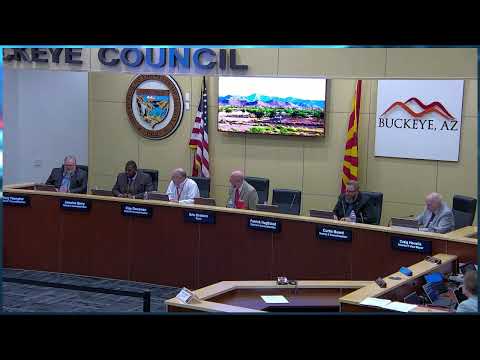
The Buckeye City Council on Aug. 26 approved a permanent three‑lane configuration for Monroe Avenue through Old Town and authorized an interim three‑lane restriping to be installed in the coming months, after staff presentations, public comment and council debate.

Development Services Director Brian Craig told council the decision would set the long‑term configuration for downtown and guide needed below‑grade utility and stormwater work. “Regardless of what lane configuration we choose as a community, as a council, we still have to reconstruct Monroe,” Craig said, noting the city must upgrade paving, water, sewer and storm systems and that much of reconstruction cost is below grade.

The discussion included public comments raising safety and visibility concerns at crossings and calls to preserve parking and business access. A resident, Jose Silva, said the crossing at Ninth Street is dangerous and urged a pedestrian signal: “I’ve seen a lot of times where kids almost get run over. And I think it’s very dangerous, and we need an actual light.” Candi Yonker, president of the Buckeye Main Street Coalition, urged support for a design that encourages people to stop and visit downtown businesses: “Main Street is more than pavement. It’s our front porch,” she said.

Council debate was robust and divided. Councilmember Jermaine Berry moved to direct staff to reconfigure Monroe back to four lanes (two lanes each direction) and to implement that change within nine months. That motion failed on roll call (2 yes, 6 no). After further discussion the council voted to approve staff’s recommendation to establish a permanent three‑lane section (two through lanes and a center turn lane) and to authorize an interim restripe approximating the permanent configuration. The motion to approve the staff recommendation passed by roll call; council’s recorded ayes outnumbered nays and the mayor declared “Ayes have it.”

Craig described the interim restripe schedule and steps staff will take, including survey and “destructive potholing” this spring to locate utilities, business outreach during the fall/winter event season, and major pavement and striping work in the slower summer months. He estimated the interim work could be completed in roughly nine months, with some thermo‑stripe warranty items possibly spilling into the school year. Staff said funds for the interim restripe are included in the current fiscal year downtown budget.

Council members emphasized tradeoffs: supporters said a center turn lane would improve safety for left turns and reduce backups; opponents raised concerns about removing travel lanes before sufficient downtown businesses and pedestrian destinations exist. Councilmember Berry urged returning the street to four lanes immediately and said many district residents oppose the change: “Leave the road put the road back the way it was because that's what the people like.” Council members who supported the three‑lane plan noted it aims to calm traffic, improve pedestrian safety and create space for sidewalk amenities and parklets that could encourage downtown economic activity.

Formal actions recorded for the item include a failed motion to restore four lanes and a passed motion to adopt the three‑lane configuration and interim restripe. Council directed staff to proceed with design concept review, survey work and community outreach tied to the restripe and future reconstruction.