Get Full Government Meeting Transcripts, Videos, & Alerts Forever!
Get email alerts on the Student Mental Health topic
No spam. Unsubscribe anytime.
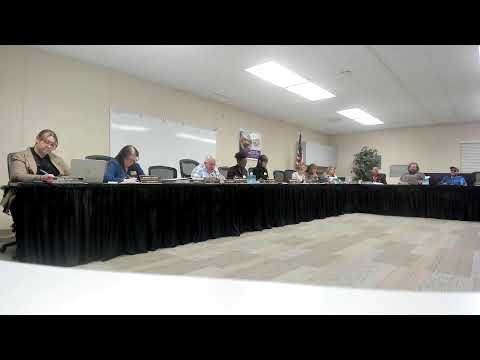
Southern Kern Unified officials hear detailed report on Hope Squad peer mental‑health program
Summary
District staff and board members heard a presentation on Hope Squad, a student‑led peer support program active across grade levels. Presenters described training, events and curriculum aimed at reducing stigma and increasing referrals for students in crisis; board members asked for follow‑up updates and wider staff involvement.
Cheryl, a Hope Squad presenter, told the Southern Kern Unified School District board that the student‑led program “educates the entire student body to reduce stigma and change their school's culture both at school and on media.”
The presentation described Hope Squad activities at elementary, middle and high school sites, teacher/adviser involvement, and a multi‑year curriculum. Cheryl said the program trains students to notice warning signs, “offer support to others” and “provide resources, to go to trusted adults,” and that students’ outreach includes weekly events, an open‑door lunch, schoolwide banners, friendship‑bracelet activities, a color run and Special Olympics events.
The program adviser said parental buy‑in has been strong: at recent nomination nights “we usually get a really good turnout,” and in three years only one parent declined participation because of a scheduling conflict. The presenter noted alarming suicide statistics presented during the talk and said the program’s peer approach matters because, in her words, “kids who are struggling don't tend to go to adults. They tend to talk to their friends.”
Board members and staff asked clarifying questions about scope and implementation. A board member urged administrators to involve school counselors in identifying incoming students who may need Hope Squad referral, saying administrators and counselors should “identify these students coming in and getting kicked over to Hope Squad for some help.” Another board member asked that the district provide regular updates on the program, suggesting a quarterly report to the board.
Presenters outlined the Hope Squad curriculum by grade band: a two‑year sequence at elementary (grades 4–5), three separate middle‑school lessons (grades 6–8) and a four‑year high‑school curriculum (grades 9–12). Topics listed by presenters included suicide prevention, responding after suicide, emotional intelligence, inclusion, conflict resolution, resilience and digital wellness. The presenter said printed newsletters for families and separate materials for staff are distributed monthly and include intervention strategies and signs to watch for.
The presenter described community partnerships and in‑kind donations from local businesses and noted some parents have requested a Hope Squad‑style support group for adults in the community. Board members praised the outreach and suggested expanding visibility by posting materials on the district website.
Board direction and next steps included a request that site administrators and counselors coordinate referrals to Hope Squad, and a board request for periodic (quarterly) updates to track program reach and outcomes. The presentation did not include formal board action or budgetary motions.
The district presentation emphasized prevention and school connectedness rather than new policy changes; presenters repeatedly framed Hope Squad as a training‑and‑awareness program that augments, but does not replace, professional mental‑health services on campus.