Get Full Government Meeting Transcripts, Videos, & Alerts Forever!
Get email alerts on the Waterway Restoration topic
No spam. Unsubscribe anytime.
Charlotte County commissioners kill Manchester cut‑through MSTU after months of public dispute
Summary
After months of public comment and technical review, Charlotte County commissioners voted not to establish an MSTU or pursue the Manchester cut‑through project and cancelled the pending RFP for design and permitting.
Charlotte County commissioners voted on Oct. 14 not to move forward with the proposed Manchester Waterway cut‑through Municipal Service Taxing Unit (MSTU) or the county design/permitting RFP, ending a multi‑year effort to reopen and restore three possible channel cuts in the Manchester/Alligator Bay area.
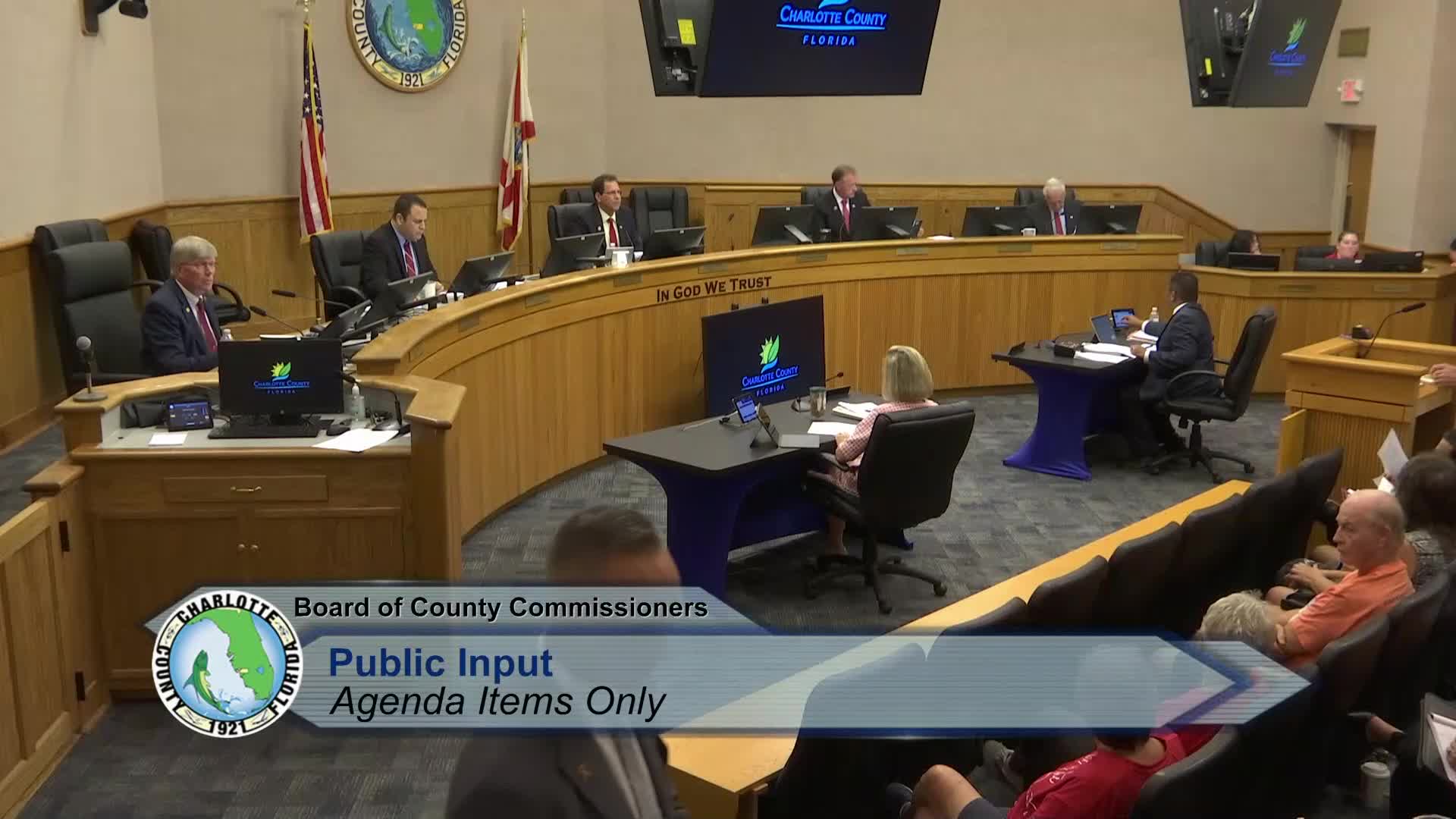
The action came after hours of public comment from waterfront residents, repeated technical briefings from county staff and differing views among commissioners on the project’s cost, environmental impacts and who would be taxed to pay for it.
The Manchester cut‑through project was presented to the board as a restoration and navigation proposal that could include up to three channel cuts. Public Works Director John Elias told commissioners staff had mailed 7,226 postcards, and that the county had received 612 responses in favor and 1,468 opposed. Elias said the design‑phase estimates ranged from roughly $1.32 million (single‑cut design) to $1.76 million (multi‑cut design) and that the estimated project total shown to properties in the mailing reached about $27.2 million; staff also reported a total account count of about 7,420 properties that would be in the MSTU boundary.
The proposal drew broad public comment both for and against. Brian Erwin, who said he had worked with residents on the project, criticized the county survey and its presentation of costs: “This was a horrible, horrible deployment from the county,” he said, adding that state and federal grant programs should be pursued to lower local costs. Several speakers raised concerns that dredging and cutting through mangroves could worsen storm surge or harm seagrass and protected species, while others argued restoration could improve flushing and long‑term resiliency.
Commissioners pressed staff on permitting and long‑term costs. Elias and others emphasized the county had previously met with permitting agencies and that federal and state reviews would be required; staff repeatedly told the board there was no guarantee of permit approval and that the federal funding that supported the project would bring more stringent requirements and the recipient (the county) would be responsible for any cost overruns if grants did not cover the total.
After discussion, a motion not to establish the MSTU and to cancel the outstanding RFP for design and permitting passed, and the board later reaffirmed denial of the MSTU (final recorded outcome: motion passed with four votes in favor and one commissioner not participating). The County Administrator’s office and Public Works said the county will not proceed with design or permit work under the current scope.
The decision leaves open other, narrower options discussed by residents and staff during the meeting: seeking alternative, smaller‑scope projects; pursuing targeted state or federal grants; or having property owners who would directly benefit fund more limited work. Commissioners and staff repeatedly said any future work would require additional studies, a clearly identified funding source and successful permitting before construction could begin.
The Manchester cut‑through proposal has a long local history: staff said a 2019 feasibility study paid for by the Manchester Waterway Civic Association and reimbursed through the county’s Boater Improvement Fund helped launch design work, and that prior dredging and a later lock installation had altered historic tidal connections in the area. Commissioners and residents referenced past dredging, lock removal and regulatory actions during the debate.
With the MSTU rejected, the county will not proceed with the current RFP or the design/permitting contract. Staff told the board they will collect and retain the technical analyses and mailer responses and can return with narrower options should community groups or property owners seek a different path forward.
The Manchester discussion dominated public input at the Oct. 14 meeting: roughly two dozen speakers addressed the topic during the allotted public comment period, and multiple commissioners joined the debate before the final vote.