Richmond Council retains $1.20 real-estate tax rate after heated public hearing
Loading...
Summary
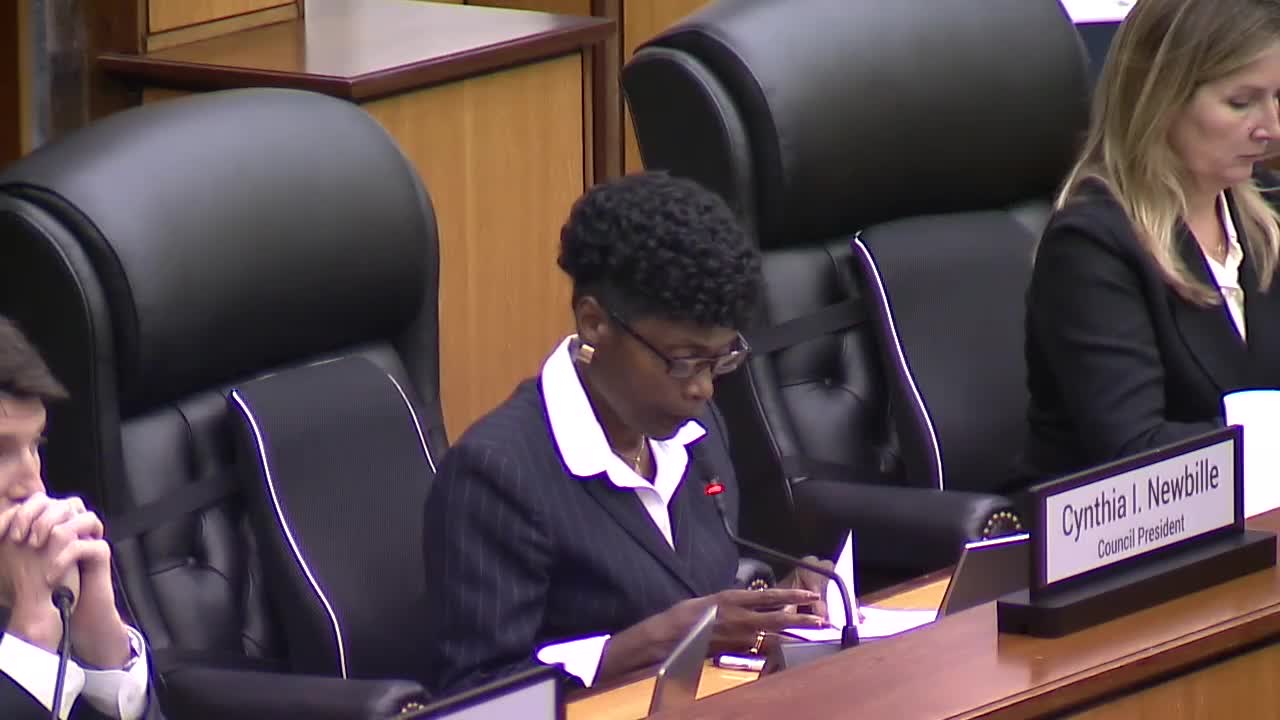
After more than two hours of public comment and council debate, the Richmond City Council voted to keep the real-estate tax rate at $1.20 for the 2026 tax year and rejected a proposal to lower it to $1.16.
Richmond City Council on Oct. 14 voted to keep the citys real-estate tax rate at $1.20 for the tax year beginning Jan. 1, 2026, rejecting an alternative proposal that would have set the rate at $1.16.
The decision came after a public hearing that drew dozens of speakers, labor representatives and community members who sharply disagreed over whether the city can afford a rollback. Supporters of keeping the rate warned that cutting the levy would force reductions to services and to priorities the council has recently funded; supporters of a cut argued it would provide relief to homeowners facing rising assessments.
Chief administrative officer Odie Donnell told council the administrations recommendation was to maintain the $1.20 rate, saying the city faces persistent obligations and limited flexibility in its operating budget. Donnell cited two financial constraints repeatedly raised during the hearing: the citys reliance on property tax as a major revenue source and an estimated amount of uncollected real-estate taxes in the citys records. He also described how large, essentially non-taxable properties in the jurisdiction shrink the taxable base.
Labor and service workers pressed council to retain the higher rate so the city can preserve pay increases and services. Latrice Gregory, speaking for SEIU 32BJ, said reduced revenue would jeopardize wages and programs for essential workers: "Any proposal that reduces the city's budget and in turn threatens programs and workers' wages and community supports is unacceptable," she told the council.
Firefighters and school advocates also urged caution. Adam Del Castro, representing International Association of Firefighters Local 995, said a 4-cent rollback would modestly reduce individual bills while costing the city millions and could harm public safety funding. Jason Kamris, a Richmond Public Schools superintendent speaking for himself, said RPS depends heavily on property-tax revenue and asked the council to keep the rate at $1.20 to preserve recent investments in the school system.
Council members debated multiple policy and process questions during the presentation and public comment, including the size and uses of last years surplus, the timing of budget and assessment numbers, the citys fund-balance target, and whether targeted relief (rather than a general rollback) would better serve low-income residents. Several council members urged further transparency about the surplus and the calculation used to set the levy.
After debate, council voted first on the $1.16 ordinance (Ordinance 2025-208) and did not adopt it. The council then voted to adopt the $1.20 ordinance (Ordinance 2025-207). The votes were recorded in the council clerks roll call.
The outcome preserves the revenue projection the administration used in the adopted FY2026 budget. Councilmembers and city staff said they will continue discussions about targeted relief programs, enhanced collections of delinquent taxes and other measures to reduce pressure on residents while protecting mandated and core services.
Votes at a glance
- Ordinance 2025-208 (establish tax rate $1.16 for tax year 2026): Failed. Recorded votes: Gibson (abstain); Jones (no); Robertson (no); Lynch (aye); Trammell (aye); Abubakar (aye); Vice President Jurden (no); President Newbill (no). Outcome: not adopted.
- Ordinance 2025-207 (establish tax rate $1.20 for tax year 2026): Adopted. Recorded votes: Bridal (aye); Gibson (abstain); Jones (aye); Robertson (aye); Lynch (aye); Trammell (aye); Abubakar (no); Vice President Jurden (aye); President Newbill (aye). Outcome: adopted.
What happens next: The $1.20 rate will be used in the citys tax levy for the next fiscal cycle. Councilmembers and the administration said they will continue work on collection strategies and targeted assistance programs and will review fiscal-year revenue developments when the city publishes its formal surplus numbers later this month.