
Orland Park board votes to join IPBC for employee health coverage; trustees approve FY2026 premium and ancillary amounts
Get AI-powered insights, summaries, and transcripts
Subscribe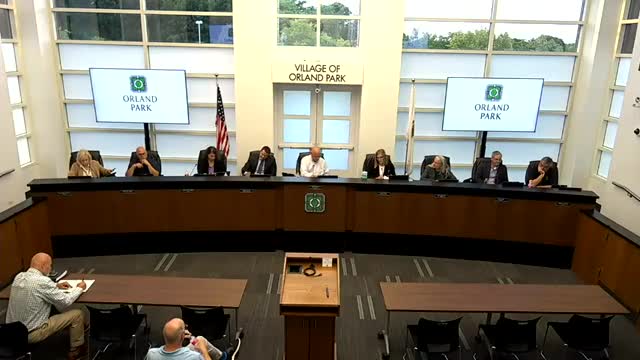
Summary
The Village Board voted to transition employee health coverage into the Intergovernmental Personnel Benefits Cooperative (IPBC) effective Jan. 1, 2026, approving FY2026 medical premiums and ancillary administration amounts.
The Orland Park Village Board voted to move the village’s employee health insurance program into the Intergovernmental Personnel Benefits Cooperative (IPBC) effective Jan. 1, 2026, and approved related premium and ancillary amounts for the plan year.
After introductory remarks from village staff, the board heard a presentation from Dave Cook, executive director of the IPBC, who described the cooperative model, membership, risk‑pooling mechanics and projected savings. Cook said IPBC membership gives municipal employers pooled buying power, monthly claim transparency, member governance and a lower internal stop‑loss attachment point; he presented a year‑one net savings figure for Orland Park of approximately $476,000 compared with the village’s stand‑alone renewal proposal. "What is different about the IPBC is really important… the members own and operate the cooperative," Cook said.
Representatives from Marsh McLennan Agency (which acquired Horton) presented a revised stand‑alone renewal that offered alternatives including higher stop‑loss attachment points and pharmacy‑contract review. MMA’s presenters said the village’s stand‑alone renewal could be reduced by plan design and stop‑loss adjustments but that, as a smaller group, Orland Park lacks the same level of pooled purchasing power. MMA staff also identified pharmacy‑contract savings opportunities and provided a revised renewal scenario with a $125,000 stop‑loss option that reduced that vendor’s renewal increase.
Trustees asked extensive operational and financial questions about stop‑loss layers, run‑out claims, reserve treatment, member exit rules and vendor administration fees. IPBC representatives said members receive monthly claim data and that IPBC applies a $50,000 internal attachment point for members while purchasing market stop‑loss above the cooperative’s self‑funded layer. Both presenters said a 12‑month run‑out would apply to claim liabilities when a member leaves, and both discussed governance and member protections.
Trustee Leafblad moved that the board approve the village’s participation in IPBC effective Jan. 1, 2026; the motion (as amended on the floor) authorized FY2026 medical premiums totaling $6,406,063 (an increase presented in the motion) and approved ancillary spend for dental, vision and life administration in the amount of $413,562, plus specified administrative items (approximately $40,000 for a standalone disability/admin program and a proposed $50,000 optional navigation program). The motion authorized the village manager to execute the necessary agreements, subject to village‑attorney review.
On roll call the motion carried; trustees and the mayor voted to approve the switch to IPBC and the FY2026 premium and ancillary amounts.
The board and staff emphasized that the year‑one projected savings are estimates based on current data and that future year results depend on claims experience and market trends. Trustees requested robust communication during the transition and noted flexibility to reassess options in future years.