
Panelists flag data centers and oil-and-gas activity as emerging threats to water quantity and quality
Get AI-powered insights, summaries, and transcripts
Subscribe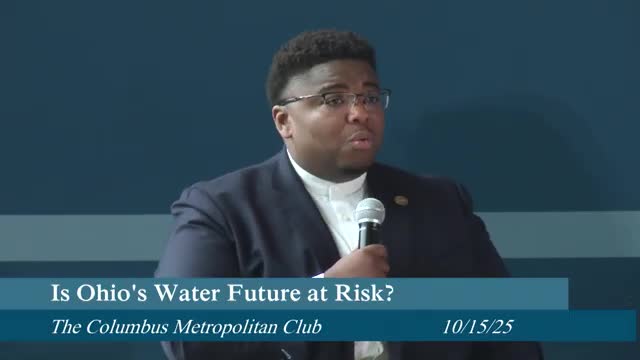
Summary
During a question-and-answer session, panelists discussed how rapid growth of data centers and potential oil-and-gas impacts (including fracking-related leaks) could strain local water supplies and pose contamination risks; the Columbus region’s daily use was cited at about 157 million gallons per day.
Audience questions at the Columbus Metropolitan Club forum shifted the discussion to water quantity and other emerging threats.
Representative Dontavious Jarrells said the Columbus region currently uses about 157,000,000 gallons of water per day and warned that data centers and new large industrial users will increase demand. "It is incredibly important, for businesses to think about recycling initiatives of the current water usage that they have," Jarrells said, urging water conservation and planning by both businesses and households.
When asked about oil-and-gas activity and fracking-related leaks in private wells, panelists agreed the issue merits attention. Jarrells described constituent reports and legislative interest: he noted that Representative Tristan Rader introduced a bill addressing related concerns. "Most folks don't know that the water is polluted until it's too late," Jarrells said, speaking about private-well contamination concerns.
Bill Stanley said The Nature Conservancy opposes fracking under state public lands and emphasized that land-use and energy decisions intersect with water management. Panelists said planning, monitoring and enforcement, as well as corporate recycling and on-site reuse, will be necessary to manage growing industrial demand for water and to protect drinking-water supplies.