Officials warn Ohio still has hundreds of thousands of lead service lines; infrastructure funding seen as critical
Loading...
Summary
Representative Dontavious Jarrells and other panelists highlighted the scale of lead service lines in Ohio — cited at 745,000 — and described the consequences for children’s health, water affordability and the need for targeted replacement programs and funding.
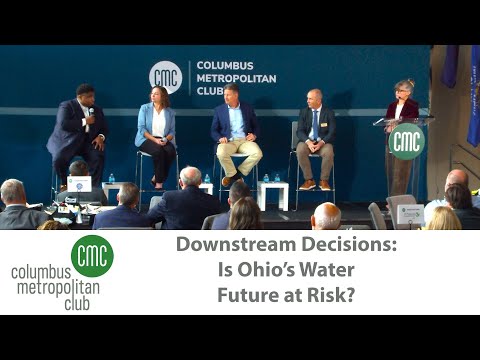
Panelists at a Columbus Metropolitan Club forum raised lead service-line replacement and aging sewer systems as a public-health and equity issue that depends on continued funding.
"We have 745,000 lead service lines that are still active in Ohio," Representative Dontavious Jarrells said, adding that the state ranks among the top in the nation for active lead service connections. Jarrells linked lead exposure to long-term cognitive harms for children and called lead-line replacement a high-return investment.
"Case in point, for every $1 that we invest in lead service line replacement, we get $31 of value returned to us," Jarrells said, citing an economic-return estimate that advocates use to press for replacement funding.
Panelists also discussed the expense of sewer and septic repairs and upgrades, noting that both community-scale gray infrastructure and private septic systems are costly and often unaffordable for households. Adam Sharp noted the spring bonding measure that moved money toward large-system upgrades but said many communities and homeowners still face steep costs.
Speakers framed infrastructure investment as complementary to nutrient and wetland work: treating source problems and protecting public health requires both treatment upgrades and replacement of hazardous service lines.