Linn County planning panel drafts limits on battery storage: noise, setbacks, safety measures proposed
Loading...
Summary
At a Linn County Planning and Zoning workshop, commissioners and staff reviewed a draft zoning ordinance for battery energy storage systems (BESS), focusing on noise limits, setback distances, site footprint limits, environmental assessment and emergency-response requirements; no formal vote was taken.
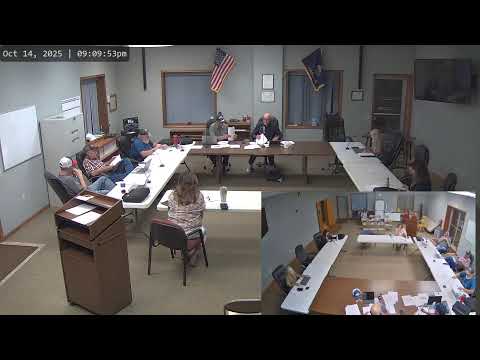
The Linn County Planning and Zoning Commission met in workshop session to review draft zoning regulations for battery energy storage systems (BESS), centering on noise standards, setback distances, site-size limits and safety measures. The commission did not vote; staff will redline the draft and return it for further review and a future public hearing.
Commissioners and planning staff said the immediate priority is to create rules that allow the county to review BESS proposals while protecting neighboring residents, livestock and wildlife. Staff reported three tiers of BESS by capacity (tier 2, 81–600 kilowatts; tier 3, greater than 600 kilowatts) and presented draft setback, noise and height standards tied to those tiers.
On noise, participants proposed a maximum of 50 A-weighted decibels (dBA) measured at a nonparticipating dwelling and repeated that noise must be expressed as a numeric standard at the property line; the draft calls for a measurement protocol based on an average (24-hour) metric and requires operators to work with an acoustician to model, mitigate and verify levels. The commission discussed peak versus average limits, the intermittency of operations, and whether site topography can cause echoes; staff said baseline (preconstruction) noise readings should be taken and a post-construction compliance test required.
Commissioners and staff discussed monitoring frequency. The group settled on requiring an initial noise study after construction (participants generally favored a test within six months of operation) and periodic checks thereafter, and they added that tests should also follow material changes or upgrades. The draft requires the applicant to provide modeled noise predictions and to coordinate with an acoustician during design.
Setbacks for nonparticipating properties and sensitive uses were debated. For higher-capacity projects (tier 3), the workshop text settled toward a 200-foot setback from nonparticipating property lines and a 500-foot setback from nonparticipating dwellings; participants also proposed 300 feet from active livestock operations and 500 feet from designated state or federal wildlife areas. Public-road setbacks were discussed at 75–100 feet depending on tier; commissioners suggested standardizing roadside setbacks across tiers to reduce confusion.
Regulatory limits on structure size and site area were discussed separately from overall leased acreage. The commission clarified that the “footprint” — the ground area covered by battery containers and associated equipment — should be capped (the draft uses a 20-acre cap for container footprint), while the overall fenced site area could be larger (the workshop participants penciled in a 30-acre site area as a working limit). Members noted footprint limits help ensure container placement, setbacks and emergency access are practical without allowing vast arrays of containers across a property.
Safety, environment and emergency planning were recurring themes. The draft requires an environmental assessment by a qualified third party addressing impacts to wildlife, water quality, stormwater and erosion, and listing necessary mitigation measures. Commissioners recommended adding language explicitly requiring compliance with applicable Kansas and federal wildlife regulations. They also discussed containment measures (berms or barriers) to limit runoff or contamination in the event of a thermal event or fire and recommended pre- and post-construction soil sampling and a stormwater management plan.
On emergency response, the draft includes a requirement for a project-specific emergency response plan (ERP) that details coordination with local first responders and training for incidents including thermal events and medical emergencies; participants discussed whether the operator must provide specialized equipment or training and requested clear expectations in the ERP. Fire risk for lithium-ion systems—where traditional water suppression may be ineffective—motivated discussion of containment, specialized firefighting procedures and requirements for coordination with local fire districts.
Commissioners raised construction-related issues: temporary increases in noise during build-out, reasonable construction hours for heavy equipment and the need for a construction-phase noise baseline and monitoring plan. They suggested limiting construction activity to ordinary daytime working hours and requiring that applicants disclose construction noise expectations and mitigation measures in their applications.
The workshop concluded with no formal actions. Staff were directed to redline the draft zoning language to reflect the discussed figures and clarifications (including explicit references to state and federal wildlife rules, the monitoring schedule, and the footprint/site-area distinction) and circulate the revised draft to commissioners before wider distribution and a public hearing. The commission emphasized these numbers remain draft policy to be refined during formal notice, public comment and subsequent votes.