Get Full Government Meeting Transcripts, Videos, & Alerts Forever!
Get email alerts on the School Funding Formula topic
No spam. Unsubscribe anytime.
School board hears analysis showing state funding formula shifts more money to charter schools
Summary
At a special budget work session, Newberry County trustees were shown slides and district analyses indicating a recent funding formula and proviso changes would shift a larger share of new state education dollars to charter schools than to traditional districts, potentially reducing available funds for local priorities.
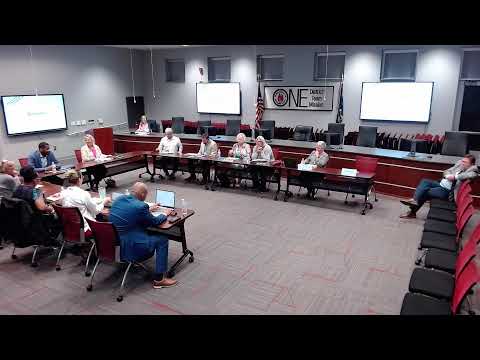
Newberry County Board of Trustees members on Wednesday reviewed a presentation showing how the state's new funding formula and a recent change to Proviso 1.3 would alter allocations between traditional public schools and charter schools.
The presentation, prepared by district staff, showed that under the House Ways and Means projections and the proviso changes presented in mid‑March, charter schools would receive a substantially larger share of new funding in the coming fiscal year than their share of students. The slides highlighted that charter students represent roughly 7–8% of statewide enrollment in the presenter's analysis, while the presentation projected roughly 45% of total new funding flowing to charter districts for fiscal year 2026 under the modeled allocation method.
The nut graf: trustees were shown weighted pupil unit calculations, proviso language, and comparative charts intended to explain why the district's projected aid to classrooms and overall revenue picture could change materially. Staff said the changes arrived quickly after spring break and that superintendents and CFOs statewide have been coordinating to clarify the estimates.
District staff walked trustees through the mechanics the state used in the projection: statewide student counts converted to weighted pupil units (WPUs), a target student‑teacher ratio (11.2:1 in the example), and use of a master's teacher salary benchmark in the allocation calculation. The presentation highlighted several weightings (for example, certain special education classifications at a 2.6 multiplier and a 1.25 weight for brick‑and‑mortar charter students vs. a lower weight for virtual charter students) and showed how those multipliers increase funding per weighted pupil unit when applied to charter enrollments.
Trustees asked for clarification about how additional weights (gifted and talented, limited English proficiency, pupils in poverty and others) stack on top of base weights and how those combined weights affect per‑student allocations. Staff said they would provide a list of the state's definition of "teacher" and the precise components the state used to calculate ratios and allocations.
The presentation noted a $112 million pool of new state funding intended in part to cover the state minimum salary schedule increases; staff said that pool did not fully cover all districts' needs and that the allocation methodology produced uneven impacts across districts. Staff also summarized recent legislative actions described as an amendment to Proviso 1.3 and an adjustment to the virtual charter weighting (from 0.65 to a lower figure in the house amendment discussed). A conference committee was expected to reconcile differences between the House and Senate versions.
Staff emphasized this is an evolving situation: the numbers in the slides were based on mid‑March projections and subsequent house adjustments, and the district's final first‑reading budget numbers will reflect any later legislative changes. Trustees pressed staff for plain‑language breakdowns they could share with the public and said they would review the district-level figures staff said they had compiled in coordination with other CFOs.
Ending: Staff said they would bring refined figures to the board's next meeting and provide the supporting spreadsheets used to compare charter and traditional funding under each projected scenario. The board's discussion continued into other budget areas and later into executive session on personnel matters.